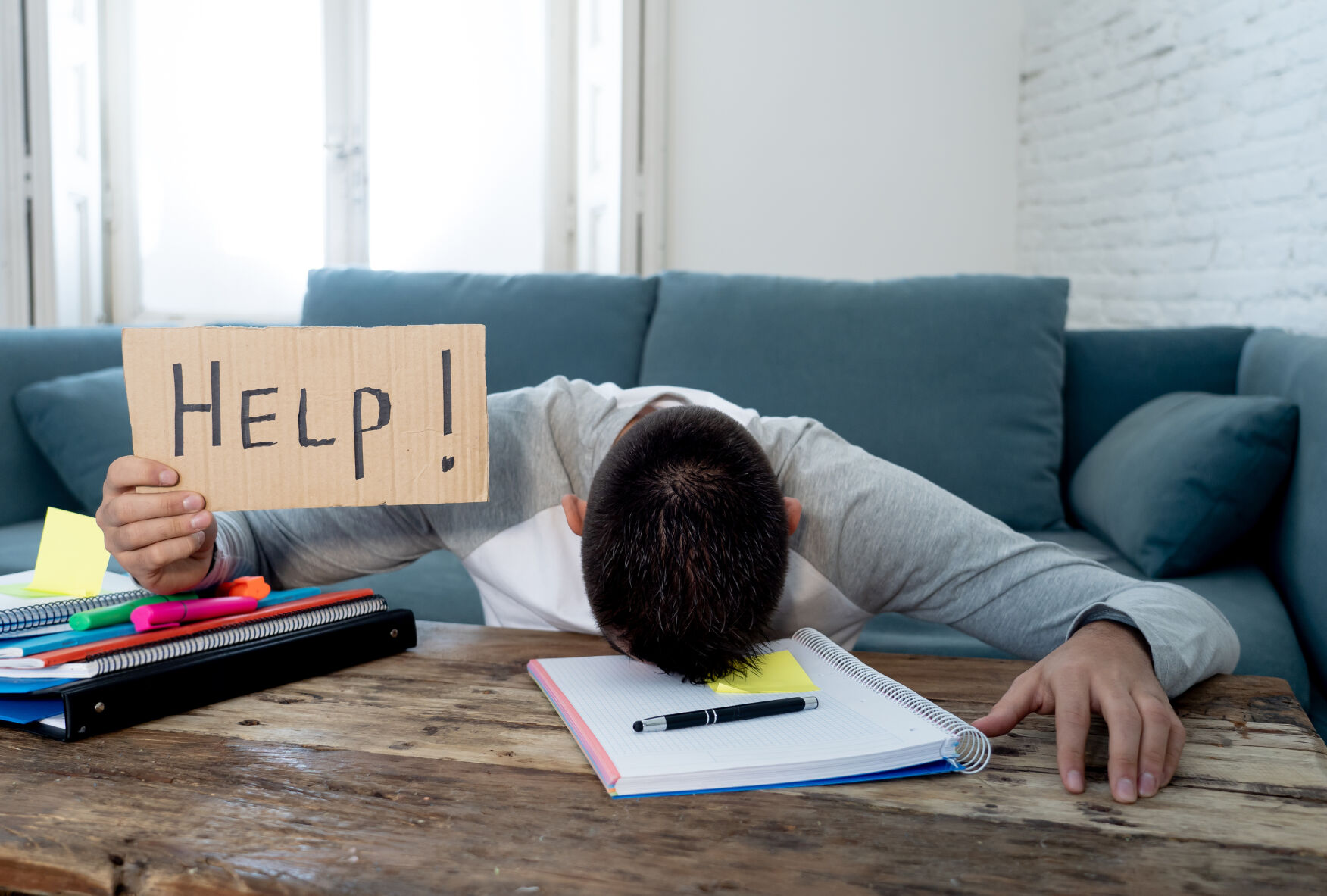
You may feel uncomfortable when faced with the prospect of slowing down to smell the roses, sipping your coffee or, heaven forbid, meditating. That twitchy, anxious feeling you get when someone suggests you slow down to stretch at the end of a workout has a name: relaxation-induced anxiety, or RIA.
Typically, in a relaxed phase, your heart rate slows, your blood pressure lowers and your breathing becomes slower and deeper. Your mind becomes quieter, almost drifty. However, if you suffer from RIA, the complete opposite occurs. The body and bloodstream become flooded with stress hormones such as adrenaline and cortisol, leading to both physiological and psychological symptoms of anxiety. The effect can be as minor as a slight unsettled, nervous feeling to chest tightening, sweating, a racing heart or an overactive mind. In other words, the very things that are supposed to make you feel better actually make you feel worse.
This happens because humans, especially in our modern age of always being connected via devices, have been conditioned to feel guilty when relaxing because there is an expectation that every part of our day is supposed to be filled with something productive. Staying busy is a coping mechanism for those who suffer from anxiety, and the idea of being less productive results in more anxiety. Similarly, if you have a strong need for control, you associate relaxing with loss of control, which leads to more anxiety. Per Newton’s first law, a ball in motion stays in motion. And those with RIA fear that a ball that’s not in motion will fall apart.
I suffered from RIA for years but had no idea what it was or why I had such a difficult time unwinding. I assumed I was just too busy or type A to relax. To be honest, I wore my inability to downregulate as a badge of honor. At the time, it allowed me to work 100-plus hours per week in investment banking and train for marathons in my non-work time. I burned the midnight oil and told people, “I’ll sleep when I’m dead.” Looking back, this was a coping mechanism and, sadly, one that was rewarded by a society that celebrates productivity and shames self-care.
Name it and tame it
Like anything, once you can name it, there is a greater chance you can tame it. And if you suffer from RIA, learning to tame it is a good idea for both your short- and long-term physical and mental health. Your body needs time to rest, digest and reset. Being in a constant state of fight or flight is exhausting and leads to burnout. This can present itself in the form of physical exhaustion, illness, disease or emotional breakdown. For some, it shows up as hormone disruption, digestive issues, headaches, fertility issues or chronic pain. For others, it is a tax on mental health.
If you want to tame it, following are a few suggestions.
• Be present. Just taking the time to read this column and reflect is the first step. Sometimes the awareness of the relationship between relaxation and anxiety is enough to break the pattern.
• Be patient. The worst thing someone with RIA can do is force relaxation. Rather than resulting in downregulation, it will do the opposite. Give yourself grace and space to work on this over time. Be flexible and try different things. It’s unlikely that one approach will universally work for everyone or work every day.
• Breathe. Breath is a gateway between your brain and your body and is a major tool for inducing relaxation. But breathing mindfully doesn’t mean you have to sit in stillness. You can focus on slowing your breathing throughout the day, which will slowly condition you to slow your heart rate and get more comfortable with being in a relaxed state. My favorite times to focus on breath are while at a red light, while falling asleep at
night or while checking my email.
• Move, slowly. Sitting crisscross on a meditation pillow with your eyes closed and your mind calm doesn’t work for everyone, and it may never work for you. At the same time, running, cycling or lifting as much or as fast as you can to burn off nervous energy may not be the answer either, as it may accentuate the anxiety. Try keeping the ball in motion but slowing that motion. This is a good compromise for your brain and your body.
• Roll. I’ve never been one for savasana or meditation, until recently. My on-ramp to fully embracing relaxation came in the form of rolling. Inspired by the work of Jill Miller, founder of The Roll Model, I use both her signature massage balls and rolling techniques to slow down and unwind. The somatic experience of rolling combined with the inherently slower pace of self-massage is a double win. It gives your brain and body something active and productive to focus on and at the same time forces your body and breath to slow down. I like to think of rolling as a moving meditation.
Alkalign offers a rolling class called Recharge on Sunday mornings. We welcome you to join us.
Erin Paruszewski is founder and CEO of Alkalign Studios in downtown Los Altos and the author of “It Doesn’t Have to Hurt to Work.” Email questions to [email protected].