Abisai Moreno, a Sunnyvale resident, was nervous about the birth of her only daughter three years ago. Though she didn’t realize it, she had internalized a belief that she was weak. Doubting her body’s strength, she feared the pain of childbirth would overwhelm her – that was until she met Jasmin Olvera-Dena.
Olvera-Dena is the founder of Oxomohco Birth and Body Work, a Los Altos-based maternity resource center rooted in Mexican Indigenous tradition that provides expectant mothers with care that prepares them mentally, physically and spiritually for birth and the weeks following.
Olvera-Dena was able to alleviate Moreno’s fears by listening, Moreno said. Moreno, who had some background in mental health, said that many of the conversations she had with Olvera-Dena were similar to those one would have with a therapist.
“Anyone else would have been like, ‘Yeah, that’s normal,’ because you hear (birth is) very painful. I didn’t know that it was very loaded when I said that I’m very scared about how much it’s going to hurt and I don’t know if I can do it,” Moreno said. “And (Olvera-Dena) said, ‘Let’s talk about that, why do you think that? Tell me more.’”
Olvera-Dena said she initially went to school for business, and while she served as an accountant for a time, she always planned to start her own business. While an accountant, she enrolled in massage therapy classes and decided that being a doula called to her in a special way. While she also provides pregnancy and post-pregnancy massages to clients, she provides the other doula responsibilities. The work of a doula is to guide a pregnant woman and her family through pregnancy, birth and the days after, providing information, resources and support. Since then, she’s also started hosting trainings for prospective doulas, especially emphasizing outreach for Spanish-speaking doulas.
Olvera-Dena started as a volunteer doula at the Santa Clara Valley Medical Center in 2019, and in 2020 she founded Oxomohco Birth and Body Work. Olvera-Dena’s decision to start her own practice was inspired by the women in her family and the care they have for each other, from pregnancy loss to birth. She said her paternal grandmother even dabbled in midwifery in her Mexican hometown, and Olvera-Dena felt a deep connection to that.
“I learned that my grandmother had all 12 (of her) children at home, either by herself or with my grandpa, or if somebody else was around, they would help her,” Olvera-Dena said. “But she pretty much did it on her own, and she shared with me that after she had her children, she would go check in on the people in her community that were also pregnant, and there were times where they would volunteer her as their midwife. She would have to stay and help them have their babies, even though that wasn’t like her plan or her goal.”
Unlike other doula and birth practices, Olvera-Dena’s approach is heavily influenced by her indigenous Mexican roots. She provides her clients special care related to the latido, or pulse, that many believe is centered in the belly.
“It’s believed to be connected to the spirit,” she said. “So I’m paying attention to that pulse in the belly and checking in with the clients about how their emotional and mental well-being is doing.”
While she doesn’t provide mental health services to her clients, Olvera-Dena said that she provides guidance and resources to those that need them.
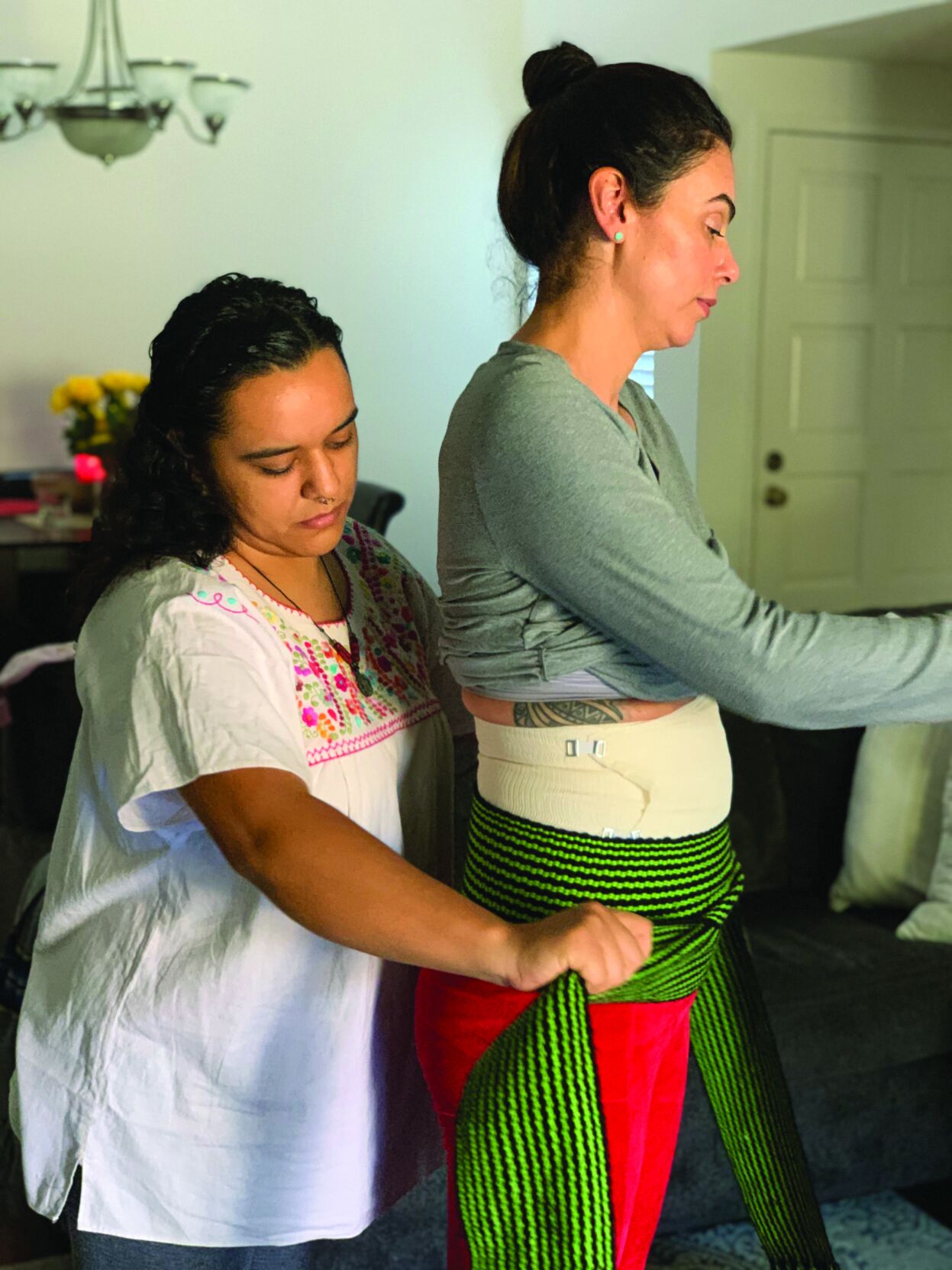
Moreno said her birth experience – unmedicated at the Redwood City Kaiser Permanente hospital with a Kaiser-provided midwife – was made easier not only by Olvera-Dena’s presence, but her support before, during and after birth. Olvera-Dena’s preparation of and words to Moreno, reminding her to remain calm and keep her breathing low, made the birth a beloved memory for her. After the birth, Moreno said she benefitted from a practice Olvera-Dena provides, the rebozo de fajada, or binding of the belly.
“(Rebozo de fajada) is something that I offer if someone is going through their fertility journey, if somebody has lost a baby – whether by choice or by chance – and also in the postpartum period,” Olvera-Dena said. “So whether they’ve had a vaginal birth or a cesarean, I do postpartum belly bindings in a safe and sustainable way, in addition to connecting to that traditional aspect of like supporting the body, making sure they’re not hurting themselves, but also maintaining the body warm.”
Part of the cuarentena – the 40 days after birth that are observed by many in Latin America – keeping the body warm after birth is crucial to the healing process that Olvera-Dena provides clients. During the 40 days after birth, she provides services like an herbal body bath, bodywork including the rebozos and full-body wrapping.
Birth – which Olvera-Dena said is a “cold” process – needs to be followed by a period of warmth and restoring warmth. In addition to the wrappings, she makes warm, aromatic foods like Atole and Mexican hot chocolate, that not only warm the body, but the soul.
Moreno said the cuarentena made her feel connected to her ancestors, like her grandma in Oaxaca, Mexico, who were cared for after giving birth the same way Olvera-Dena took care of her. Moreno said she’s more connected to her culture as ever and she’s grateful that the positive experience Olvera-Dena provided.
Moreno noted while she was in Mexico visiting her grandmother, “I felt so much more connected to my heritage and my culture, and just so proud. And my daughter, I feel like it’s spilling over to her, because I only speak Spanish to her and it’s like a little seed that just keeps growing, and it’s just amazing. I’m so thankful that I came across (Olvera-Dena).”
For more information on Oxomohco Birth and Body Work, located at 4546 El Camino Real, ste. 246, visit oxomohco.com.