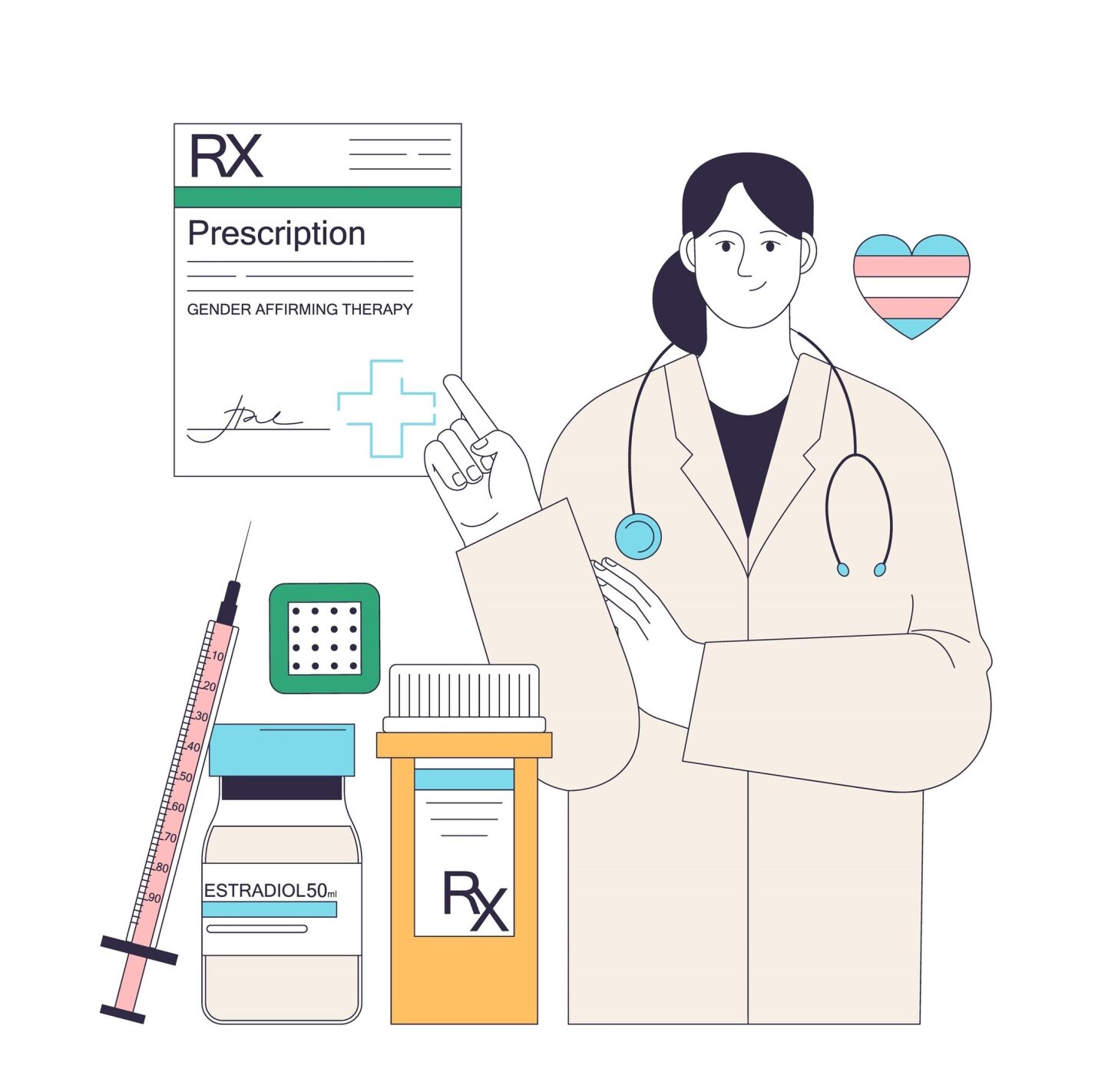
Gender-affirming care saves lives. This statement (although hotly debated) is grounded in scientific evidence and the experiences of the people most affected by gender-affirming care – transgender and gender nonbinary people.
As a licensed therapist working with transgender clients, multiple people told me they would not be alive right now if they had not received gender-affirming care. This sentiment is backed up by a recent survey, the 2022 US Trans Survey, which collected data capturing the personal experiences of the gender-expansive community. Researchers of the largest survey of transgender people in America, the 2022 US Trans Survey, interviewed 92,329 transgender and non-binary participants from all 50 states and most U.S. territories. The survey results were published in June, making it recently accessible to the public. As the sociopolitical landscape has changed drastically since 2022, reviewing the findings helps compare periods when gender-affirming care is more accessible to times like now, when there are significantly increased barriers to accessing gender-affirming care.
The 2022 US Trans survey highlights the importance of gender-affirming care. It is not a form of mutilation instigated by parents or healthcare professionals. It is a lifeline for many in the gender-expansive community, across age groups. Over half of the survey participants received some form of medical transition (like gender-affirming hormone therapy or surgery). Medical transition was reported to be a profound source of life satisfaction, happiness and thriving. For example, 98% of participants on gender-affirming hormone therapy (GAHT) and 97% of participants who had received gender-affirming surgery reported being more satisfied with their lives afterward.
Araceli (one of the participants in the 18 to 24 age range) stated, “Ever since I have been able to medically transition, I have been happier than I have ever been. I can actually look at myself in the mirror and recognize who I am.”
As a licensed therapist working with transgender clients, I’ve heard similar stories about how gender-affirming care increased clients’ quality of life and reduced the distress haunting them daily. Many of my transgender clients want to discuss medically or socially transitioning. Despite what anti-transgender rhetoric might claim, I do not push clients to medically transition. Instead, I provide a safe place for clients to talk about their goals.
One of the concerns voiced about gender-affirming care is that people who medically transition later detransition. In other words, people reverse or halt their gender transition. All survey participants in the 2022 US Trans Survey currently identify as trans or nonbinary, but 9% went back to living as their sex assigned at birth, at least for a period of time. Only 4% of those participants went back to living in their sex assigned at birth because gender transition was not for them, representing only .36% of all participants who medically transitioned. The majority of participants who detransitioned stated doing so because of pressure from their community or loved ones. Approximately 33% started detransitioning due to experiencing too much harassment and discrimination for being transgender.
The 2022 US Trans Survey researchers stated respondents who were verbally harassed, denied equal treatment or service at businesses, government agencies, in public, etc. or were physically attacked had a higher prevalence of considering, planning and attempting suicide.
Coming out as transgender requires a great deal of courage. For those medically transitioning, it also involves in-depth conversations about sensitive topics like reproductive decisions, body anatomy and mental health. Particularly for transgender youth, it requires significant trust building with their families and healthcare providers to have these conversations. Unfortunately for many transgender youth, sensitive information discussed during medical appointments may be shared with the public without their consent. The U.S. Department of Justice sent subpoenas for private health records from major hospitals and healthcare systems that provide gender-affirming care. The subpoena to the Children’s Hospital of Philadelphia demanded the name, date of birth, social security number as well as address and parent/guardian information of patients receiving GAHT. By doing this, the Department of Justice violated these patients’ rights to confidentiality, a pillar in the medical and mental healthcare fields.
I wonder how safe a teen in this situation would feel about receiving important medical care? How likely might they be to even go to the doctor if they knew their medical information was not private? One could argue that using confidential health information without consent is substantially more invasive than healthcare providers discussing potential risks and benefits of surgery with youth and their families.
The participants in the 2022 Transgender Survey (43% of whom were ages 18-24) chose to share their medical and mental health information. If we truly care for the health and well-being of youth, we need to listen to their perspectives and support their right to privacy. Let the transgender community share what is needed, not policymakers.
Susie Driscoll, LMFT, is a licensed psychotherapist. For information on her practice, email [email protected].