The city of Mountain View last week began the process of transitioning its rent protections for mobile home renters.
Two seminars, one for renters and one for mobile home park owners, reintroduced the idea of creating a memorandum of understanding (MOU) that would exempt specific mobile home parks from the provisions of the city’s Mobile Home Rent Stabilization Ordinance passed in September 2021.
With the cost of housing the first thing on many Bay Area residents’ minds, mobile home dwellers can be especially vulnerable in Mountain View. Emily Ramos, member of the city’s Rental Housing Committee, said mobile home residents have been fighting for protections since 2000.
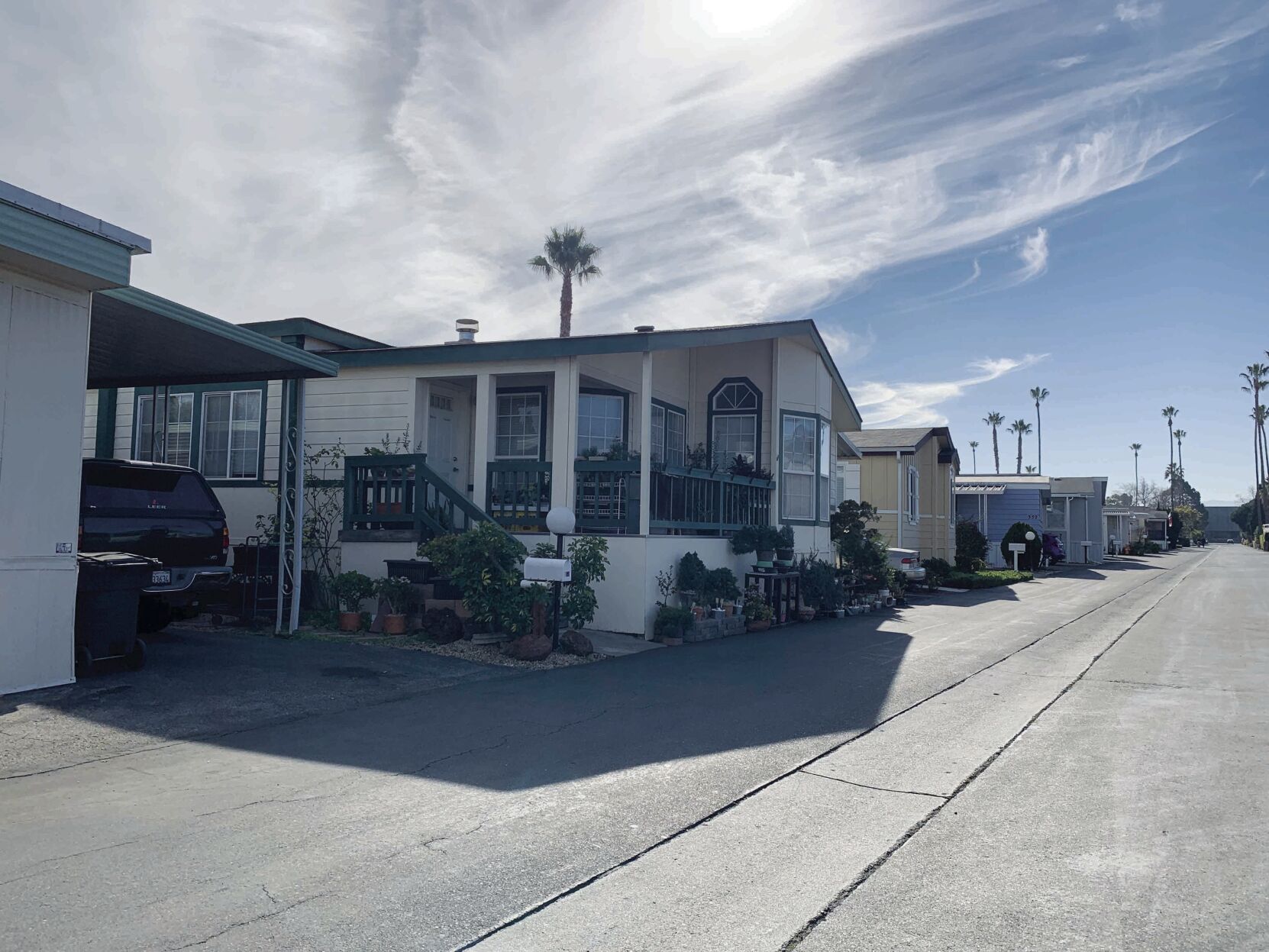
Mountain View’s six mobile home parks house 1,130 households. Of that number, approximately 57% have members over age 65 and 69% earn $75,000 or less per year. That’s half of Santa Clara County’s median
income.
Background
When the city initially passed a rent stabilization ordinance in 2016, neither those who own a mobile home and rent park space nor those who rent both a home and a space were covered by the law. Last year, the Mountain View City Council voted to extend rent control protections to renters at the city’s six mobile home communities.
The initial legislation limited rent increases, tied to inflation, to one per 12 months and set locked base rent amounts to rents on March 16, 2021. Finally, the legislation limited evictions by establishing “just cause” evictions. Park owners can now only evict residents for failure to pay rent, breach of lease and criminal activity, among other violations.
The new law also created a back door, however, for a second way to negotiate rent – an MOU. In the debate last September, landlords favored MOUs, as they believed rent control shifts the balance of power too far in favor of tenants. Neighboring Sunnyvale followed the MOU approach for the majority of its mobile home parks.
Ramos said this is likely because Sunnyvale had no rent stabilization on the books.
“Mountain View is coming from a different place,” she said. “We already have rent stabilization.”
An MOU creates an agreement between the city and park owners. Residents still get a say, as 80% of renters must approve of an MOU before it can be adopted.
Residents’ concerns
Many mobile home residents are nervous about the MOU process, however. Questioners at the city’s meeting for residents expressed concerns about retaliation if they didn’t support an MOU and wondered how the city will address grievances in the event an MOU is broken. Ramos said those are valid concerns, especially if people take the Sunnyvale MOU as the
model.
“It will only be a worse outcome to mobile home residents if (they) don’t hold firm to the rights that they already have,” she said.
Ramos added that she thinks the council is “sensitive” to the needs of renters, and that participation “could be an opportunity for them.”
The city’s next step is to bring a group of residents and other stakeholders together to begin talks.