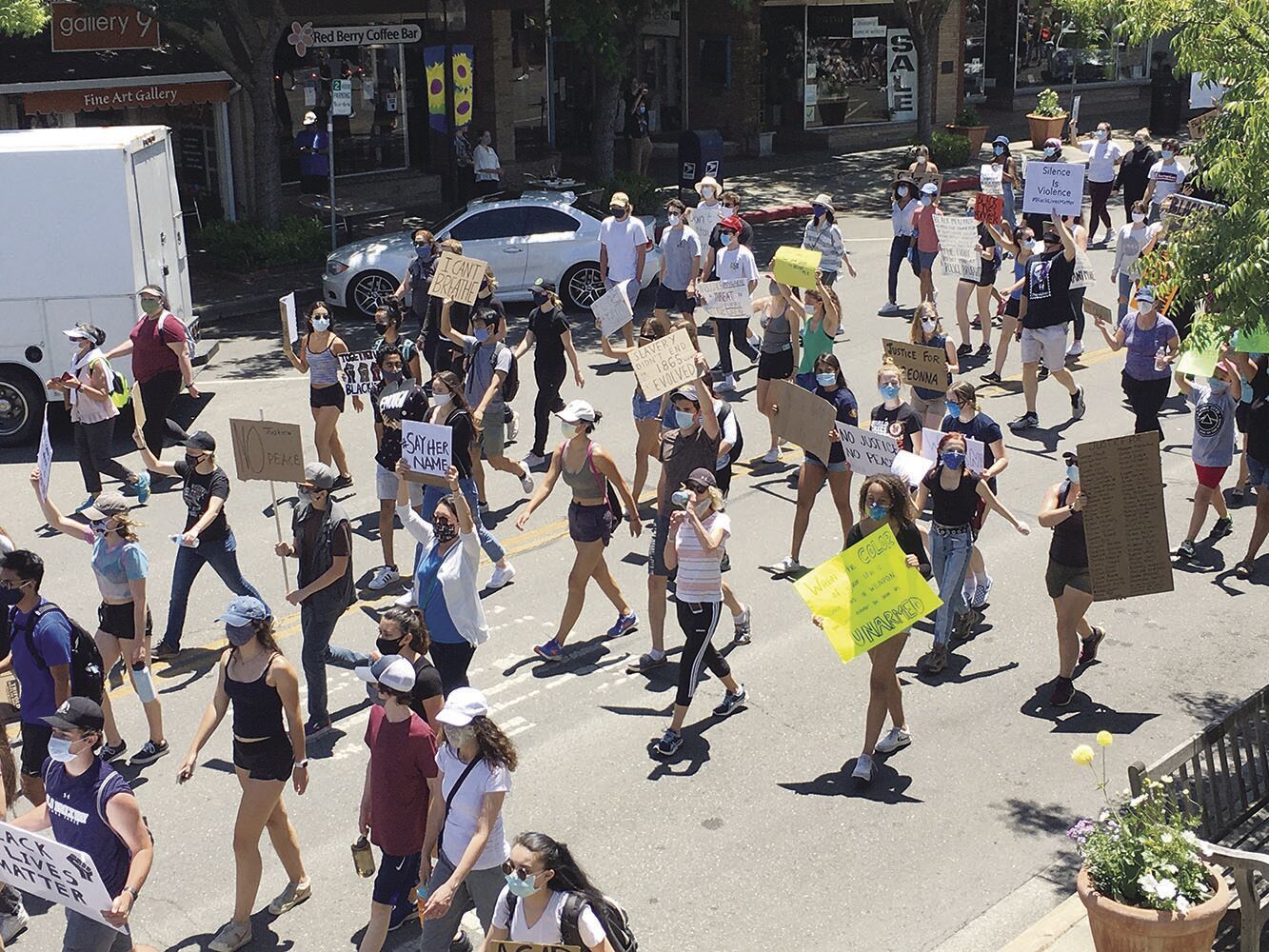
The Los Altos Citizens’ Police Task Force, formed in September 2020 in the wake of the murders of George Floyd and Breonna Taylor to review police practices, build trust and promote reform, was only intended to remain active for six weeks. But some residents are calling for its return.
Comprising nine local residents, the task force discussed policing issues and submitted recommendations to the Los Altos City Council at the Nov. 10, 2020, council meeting.
While the task force initiated change, including the recommendation to eliminate the school resource officer program at Los Altos High School, which the council approved, the group disbanded after the November 2020 meeting.
But as council members continue to implement policies that involve police and impact residents – including approving an automated license plate reader policy that would bring 15 Flock Safety cameras to neighborhoods across the city – some local residents, including Renee Rashid, president and co-founder of Los Altos for Racial Equity, support resurrecting the task force.
“I do believe it should come back – and I speak on behalf of myself and of Los Altos for Racial Equity,” she said.
The ALPR policy, proposed by Los Altos Police Chief Angela Averiett to the council Feb. 9, drew scrutiny from both residents and council members in the months following its introduction. Concerns included privacy of the information tracked, length of data storage and what data could be used for and with whom it could be shared.
The council approved the final iteration of the ALPR policy last month after amendments addressing privacy and data-use issues from Councilmember Neysa Fligor, the council’s liaison to the task force; Averiett; and City Manager Gabe Engeland.
Flock Safety is also used by Los Altos Hills and other law enforcement agencies across the country, but the company has come under fire by organizations like the American Civil Liberties Union, particularly for the misidentification of cars and individuals, resulting in harm.
Rashid and other local residents have spoken out at council meetings about the risks ALPRs and their implementation pose for the city.
Specifically, she noted, when audits of the ALPR policy occur, the city should have required that the findings be made public – a directive not included in the final policy.
While Rashid acknowledged that the city is making progress, she added that more must be done for true accountability.
“In the last few years, we’ve seen not only how police departments across the country have failed people of color, but also how policing can be reimagined to make safer communities for everyone,” she said. “We could be a progressive example to small cities across the country by implementing things like banning pretext stops … having independent auditors and having a strong policy on military equipment usage.
“Let’s implement these so we can have more trust in our police and support them in solving crime.”