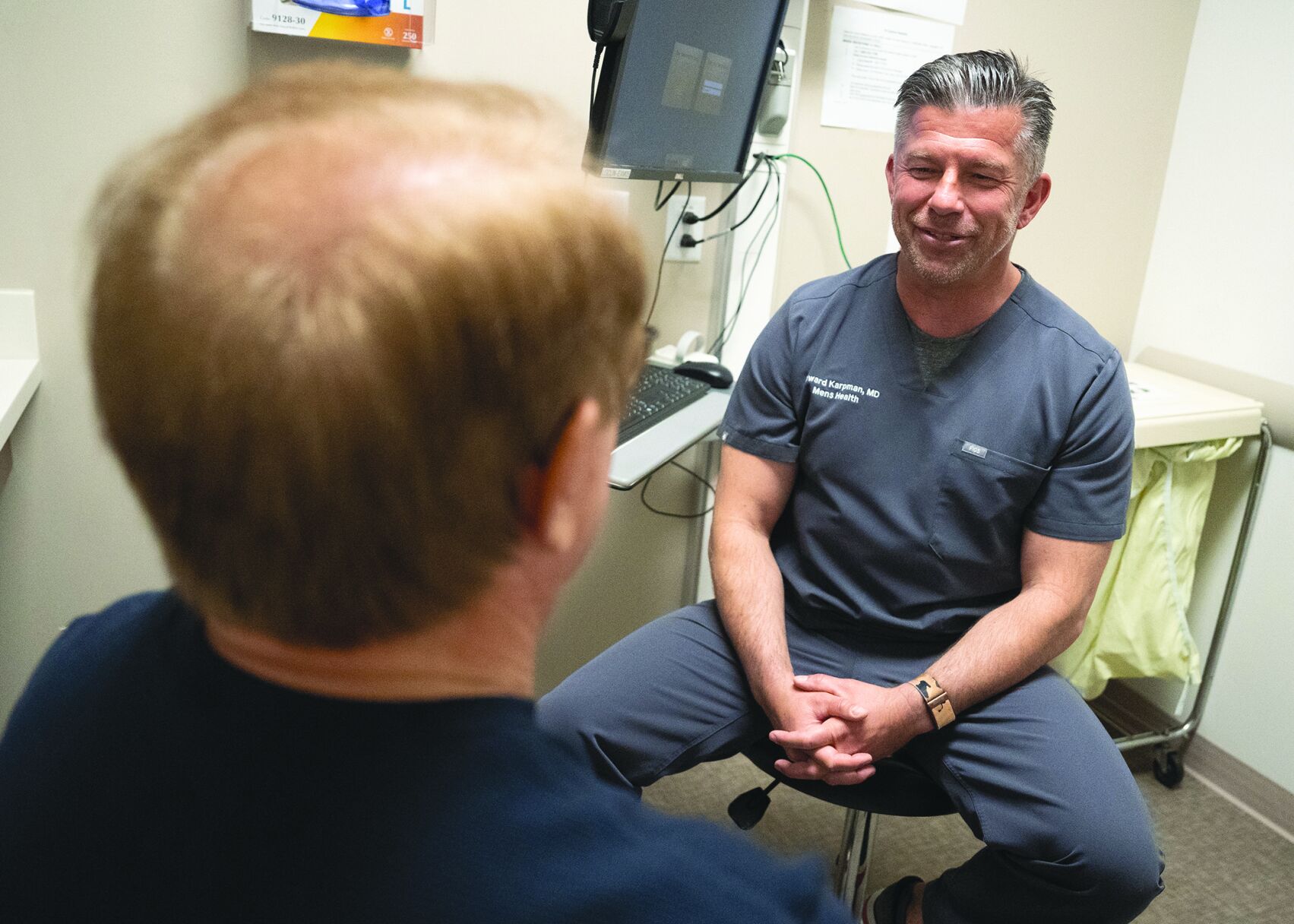
The inability to get hard during sex can often be more than a frustrating experience for men – it can also signal health issues that need to be addressed, according to Dr. Edward Karpman, urologist and leader of the Men’s Health Program at El Camino Health.
Many go to the doctor with erectile dysfunction (ED) thinking that it by itself is something that needs to be treated, but Dr. Karpman said it can actually signal issues like cardiovascular disease.
“It’s a blood flow issue,” he said in a phone call. “We didn’t know this until the discovery of Viagra.”
The little blue pill, released by Pfizer commercially in 1998, works by temporarily increasing blood flow to the penis, aiding sexual excitement, according to Mayo Clinic. It was heavily marketed as a miracle drug, helping better relationships and allowing for a better quality of life for many men. But as time passed, doctors noticed trends developing.
“What happened was that about five years after its release, we started hearing a lot of cases of patients coming back and saying, ‘Hey, Doc, I had my first heart attack,’” Dr. Karpman said. “And this was kind of before we knew the association (between cardiovascular health and ED) but we started looking into it. And so around 2005 we started seeing publications coming out of the sort saying that there’s an association between erectile dysfunction and heart disease.”
ED is just one of the issues commonly associated with a man’s masculinity and perceived strength that Dr. Karpman said patients are reporting and seeking to treat.
According to a national survey of men conducted by El Camino Health, ED was the third leading symptom among respondents that would lead them to seek medical care. Approximately 63% of respondents would get care for fatigue, 42% for erectile dysfunction and 45% for frequent urination. Many fewer reported they’d seek medical help for coughing (29%) or heartburn (24%).
The reason? Dr. Karpman said men don’t want to be seen as weak.
“It’s part of that ‘I’m tough, I can’t show weakness, the other guys are going to get sick – I’m great. I don’t have a problem’ mentality,” he said. “But when it comes to their manhood, or to getting an erection, they’re quick to come see us and ask for help, because it’s very important to them.”
The other leading reasons men reported for which they would seek medical help – fatigue and frequent urination – are often issues patients report to Dr. Karpman. Like ED, these common issues in men are connected to diseases like low testosterone, sleep apnea and an enlarged prostate.
Men’s testosterone begins to dip around the age of 30, Dr. Karpman said, which can often lead to a decrease in energy levels, muscle mass and bone density. Fatigue can also indicate sleep apnea, as low-quality rest can lead to feeling tired throughout the day.
As men get older, their prostate naturally enlarges; this is known as benign prostatic hyperplasia (BPH). This can lead to pressure on the bladder and urethra, leading to increased urination and a bladder that is seemingly harder to empty.
Dr. Karpman noted there has been an increase in patients seeing him and other experts in the El Camino Health Men’s health program because not only is the general population living longer, but the internet has made access to resources and education about potential conditions more widespread.
“I think the internet has been actually good, because I find that historically, guys have been resistant to come to the doctor. They’re in a relationship, where they’ve let their wives kind of manage the health care because they weren’t interested,” he said. “I think the internet has allowed a lot of people to be their own personal health caretakers and being responsible for their own health care.”
For more on the El Camino Health Men’s Health Program, visit elcaminohealth.org/services/mens-health.