In a strange and controversial move, Los Altos Hills Mayor Linda Swan asked the city council to appeal a Planning Commission decision that granted a building variance for an aging home, attempting to bypass town staff operations and the commission.
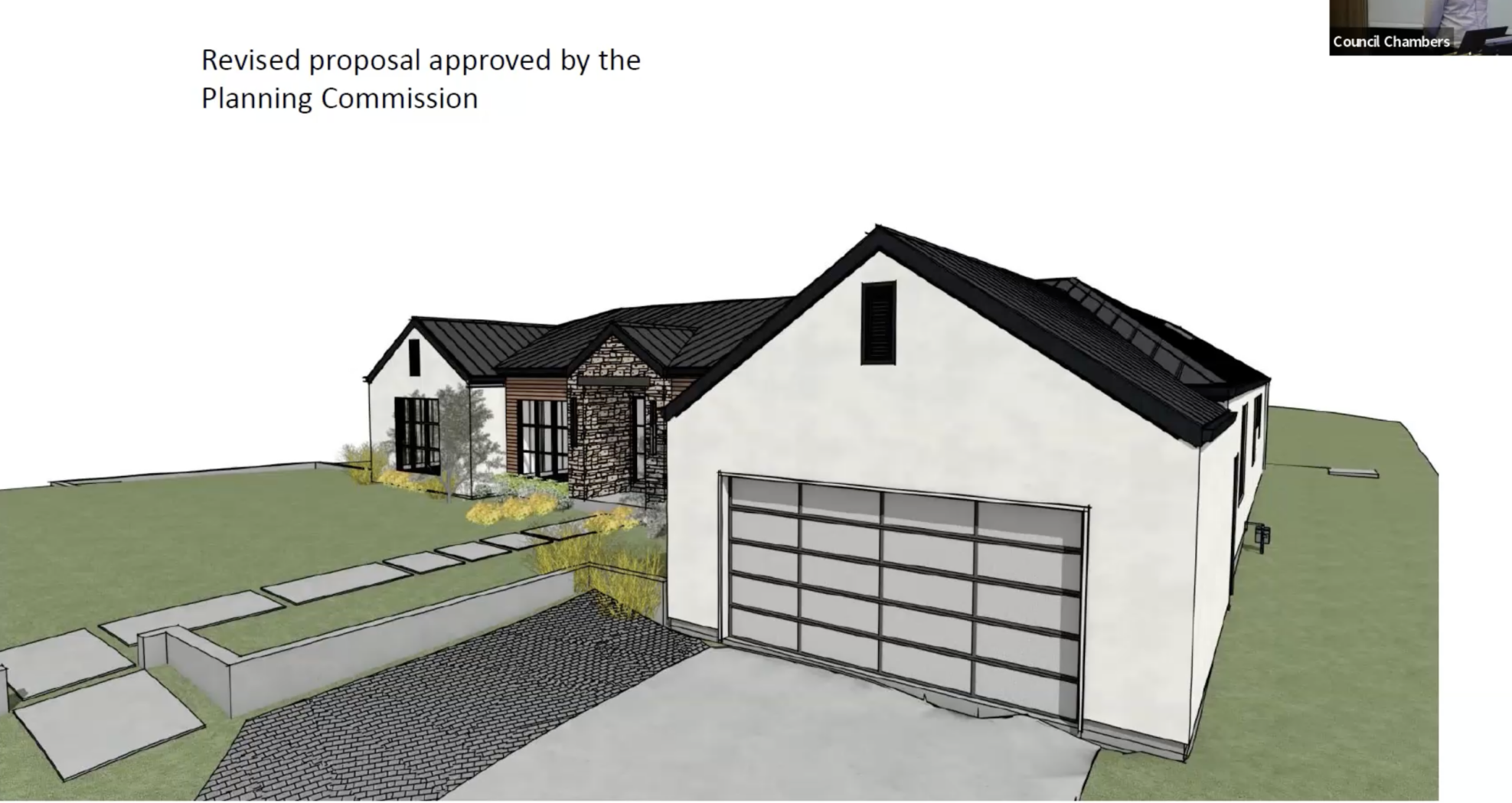
Applicants Brendon and Taryn Merkley’s home on Estacada Drive was built prior to the town’s incorporation in 1956 and therefore is considered a “legal nonconforming” building for its half-acre lot and side setbacks at approximately 15 feet, rather than the usual 30 feet. The Merkleys’ proposed renovations, which would include infrastructural modernizations and an increase in floor area, would not further encroach on the setbacks but would result in a 3- to 4-foot higher roof.
“It is close to not livable – it needs a major renovation,” said homeowner Brendon Merkley. “Sewage has failed repeatedly, the plumbing is failing and the home is in desperate need of a remodel.”
After several Planning Commission meetings, several hours of discussion and many compromises, the commission approved the Merkleys’ request for variances Aug. 1, noting the home’s “exceptional circumstances” and the fact that neighboring homeowners of similar properties have been granted privileges in the past.
Swan, however, opted to bring an appeal of the decision to the council Thursday, contending that the increased square footage near the edge of the Merkleys’ home would increase the property’s nonconformity. More than anything, the mayor said, she is afraid that approving the variance would set a precedent for decades to come, and that “variance creep” could occur and that the municipal code should prevail.
“It’s the precedent that worries me most – if one property owner is allowed a variance that does not satisfy the core criteria, then other property owners are going to expect the same privilege,” Swan said.
Broken process?
Merkley opposed the mayor’s model of thinking.
“I find the logical fallacy arguments about ‘slippery slope’ unfounded because all of these lots come to the Planning Commission for approval, so there is plenty of opportunity for the city to say next time that ‘this doesn’t work for us,’” Merkley said.
Several public speakers at the council meeting spoke on behalf of the Merkleys, attesting to the family’s character and admonishing the mayor for bringing the appeal against them.
A couple of residents spoke against the variance, saying that they don’t feel like the direct neighbors were considered in the decision to grant the variance and that they, like Swan, hope that it doesn’t set a precedent.
Direct neighbor Barry Smith argued that the discussion should not be about the Merkleys’ home in particular but about a “broken process” in Los Altos Hills, noting that the town planning department is abandoning the traditional process.
There was little discussion following staff, public and appellant presentations.
While Councilmember Stanley Q. Mok conceded that the process was broken, he preferred to deny the appeal to prevent potential resident turnover of the property.
Councilmembers Kavita Tankha and George Tyson, however, were unabashed in their opinion that the appeal was ridiculous.
“I can’t believe we’re still here,” Tyson said. “I am really embarrassed about this process. I deny this appeal.”
Tankha concurred.
“Yes, we have substandard lots in town and as a group we have decided not to box ourselves by having special rules for them. That’s why we have variances, because that allows us the flexibility of treating each house individually given its own special nature. … And that’s exactly what the Planning Commission did,” Tankha said. “And to say that a system is flawed? No, we chose to have it this way so that we can make individual decisions for each of these substandard lots that puts residents in a very difficult situation.
“I am upset that this has actually happened that all of us are sitting in this room at 10:30 at night just because we chose to appeal a 4-1 decision of the Planning Commission.”
The council voted to deny the appeal 4-1, with Swan being the sole vote in favor of the appeal. The decision met with light applause and awkward laughter from the audience in the council chambers.