

The Los Altos City Council is back in session after a summer hiatus – and back on the housing beat.
The council at its Aug. 23 meeting approved a 172-unit multi-family housing development at 5150 El Camino Real, with 29 below-market-rate (BMR) units. Council members are tentatively scheduled to review Los Altos’ first all-affordable housing project, at 330 Distel Circle, in September.
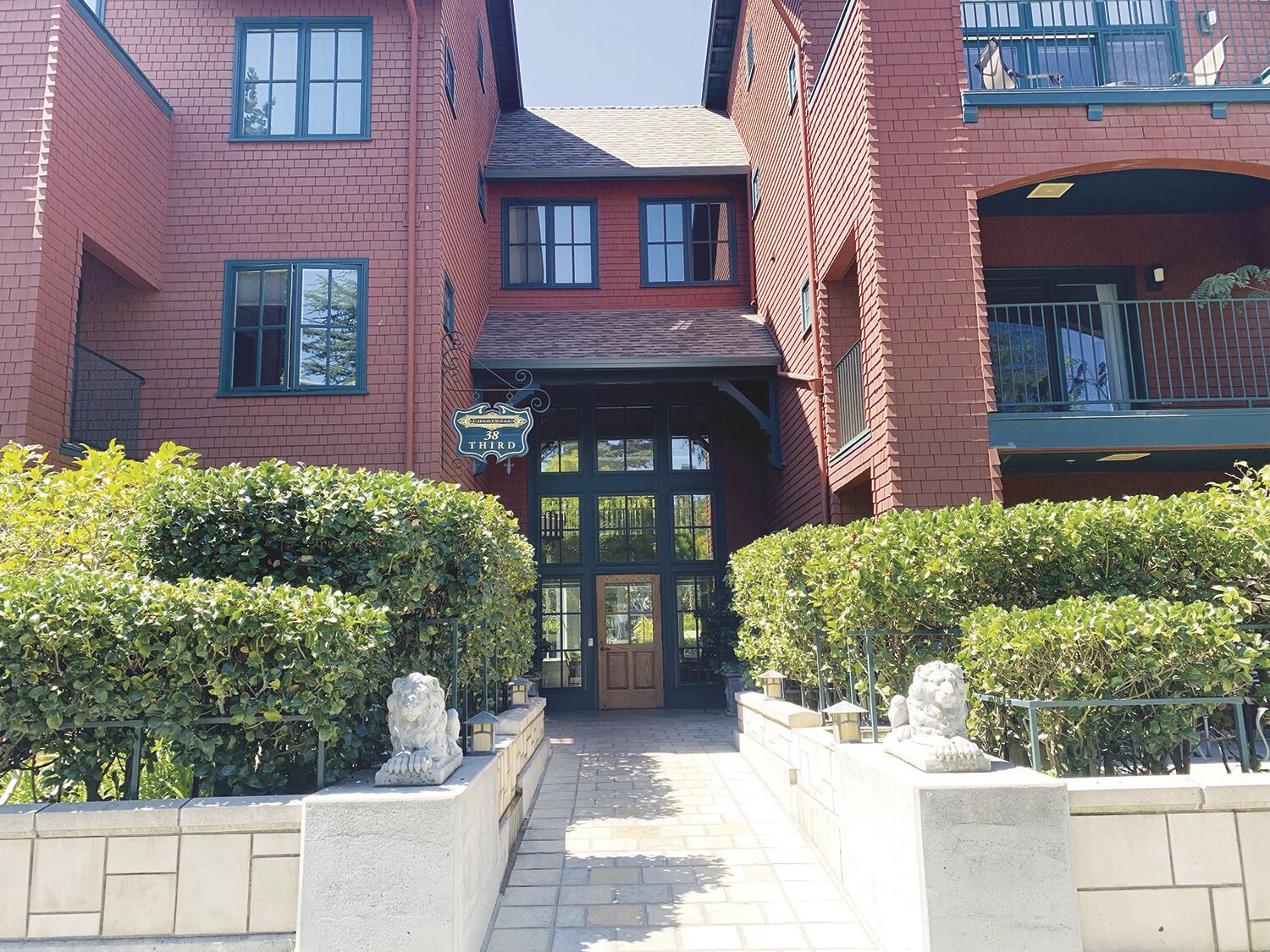
With so many units up for approval and in the construction pipeline, the council is poised to at least double the number of BMR units in the city. Los Altos currently has 105 affordable housing units – 54 ownership and 51 rental – and all of them are occupied.
The city’s lack of affordable housing has made waiting lists and BMR programs a common talking point.
At last week’s council meeting, resident Jacob Sterling Silver addressed the city’s priorities for who gets placed in Los Altos’ affordable units. Silver volunteers with combat veterans at Palo Alto and Menlo Park Veterans Affairs facilities and wants Los Altos to consider adding veterans to its list of prioritized individuals.
The VA provides housing vouchers for veterans, Silver said, but “if they’re being put out into downtown San Jose, it’s a little stressful for them. There’s nothing more relaxed than Los
Altos.”
Questions such as who is prioritized and why, and how the list is compiled, come up often.
Richard Draeger, owner of Draeger’s Market on First Street, advocated for adding grocery workers to the list for low-income housing at a Los Altos Community Coalition meeting July 29.
Nick Zornes, development services director for Los Altos, confirmed the city doesn’t have any vacancies in its affordable housing stock but noted that the city is preparing to add at least 100 units in the next few years.
“We’re in a good trend. In my mind, it’s just the sprinkle before the storm,” he said.
Application process
Palo Alto-based nonprofit Alta Housing manages Los Altos’ affordable units, notifying relevant stakeholders and serving as an application clearinghouse when units come on the market. The organization also has worked on projects with the cities of Mountain View, Palo Alto and Menlo Park.
Unlike neighboring Mountain View, Los Altos currently has no official waiting list, according to Georgina Mascarenhas of Alta Housing.
“If a city has a waiting list … (people) have to submit an application to be on the waiting list,” she told the Town Crier.
The list works almost like a form of pre-approval. To qualify for a BMR unit, applicants must provide verification of residency and income level.
Generally, the qualifying threshold for rentals is approximately 50% of area median income, or in the “very-low income” category, Mascarenhas said – that’s an annual income of $67,400 for a household of two in Los Altos. Ownership units have a slightly higher income threshold in the “moderate income” category – or $161,750 annually for a household of two.
Mascarenhas said Alta Housing holds contact and income data and tracks “preference” as applicants wait for a unit. Most often, she added, cities simply prioritize individuals who live and/or work in that jurisdiction.
Los Altos’ preferences are a bit more complicated. Council members adopted four “priority categories,” which they reviewed at their May 24 meeting. First priority applicants include full-time staff who work at schools where Los Altos residents attend, salaried city employees and Santa Clara County Fire Department employees who work at Los Altos fire stations. Second priority includes people who have lived or worked in Los Altos for at least two years or have to relocate as a result of action taken by the Los Altos council. Third priority includes individuals who live or work in Los Altos at the time of application. Fourth priority includes individuals who live or work in Santa Clara County at the time of application.
Without a waiting list, Mascarenhas said, Alta Housing publicizes an available unit in Los Altos, advertising in the Town Crier and communicating with local schools to solicit applications. Once the application period closes, “we would go through the (applications) to see where they rank,” she noted.
“So, if the first person who applies is a teacher, for example, then we would start processing that person,” Mascarenhas said. “However, if the first person is, let’s say, in the fourth priority (group) … we would not process them if No. 5 (on the list) is a school teacher.”
In other words, priority categories serve to trump the order in which applicants apply.
A waiting list makes for a slightly faster process, though the steps are mostly the same, Mascarenhas said. Alta’s Housing COO Sheryl Klein explained that a waiting list creates a group of interested applicants with pre-approved applications that need to be verified rather than solicited when a unit becomes available.
“Since there is no waiting list in Los Altos, we don’t have a group of people who we know are interested,” Klein said. “So, when the information comes out, it comes out to everybody.”
Los Altos council members have expressed interest in developing a waiting list for affordable housing units but have yet to take formal action, Klein said. Zornes added that whether for BMR units or Section 8 housing, “waitlists are truly a tricky thing.”
“There are so many different kinds of intricacies to it that having a third-party service like Alta helps prevent bias,” he said.
For more information on Los Altos’ BMR housing program, visit losaltosca.gov/communitydevelopment/page/affordable-housing.





