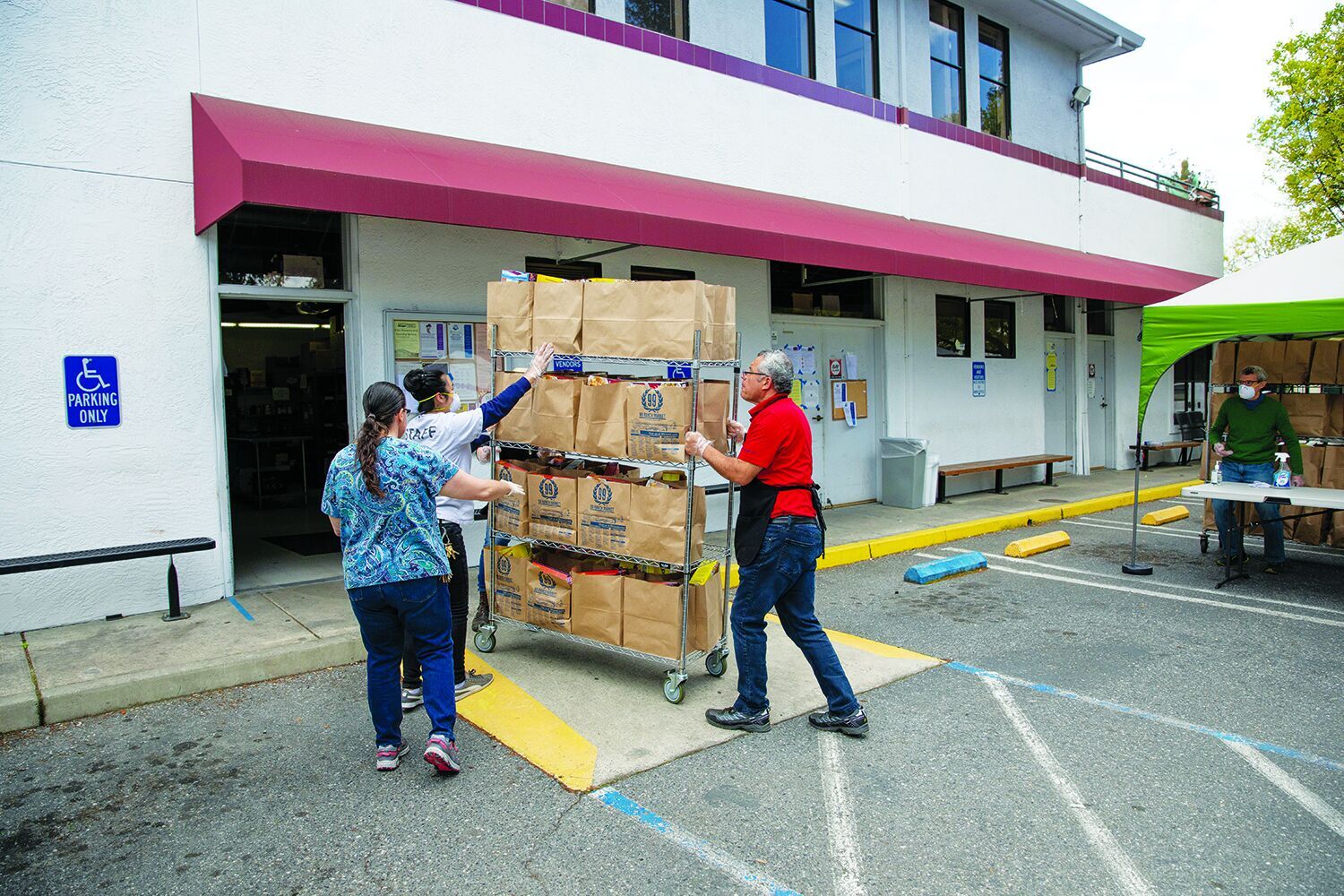
While California families are seeing a return of their Supplemental Nutrition Assistance Program (SNAP) benefits, some local organizations are still seeing an increase in demand for food assistance – and those that haven’t are gearing up for it.
SNAP provides food benefits to low-income families struggling to put healthy and nutritious foods on the table, according to the USDA. In 2024, approximately 13.5% of families in the state received SNAP benefits – known as CalFresh in California – and there are currently 133,000 recipients in Santa Clara County.
The largest nutrition aid system in the country, SNAP provided funds to approximately 4.7 million participants on average monthly in fiscal year 2024, which cost the feds approximately $99.8 billion.
As of Nov. 6, lawsuits filed by California and multiple organizations resulted in the order of the Trump administration to issue full CalFresh payments to the state’s 5.5 million SNAP recipients, according to a press release on California Governor Gavin Newsom’s website. But since the federal government shut down Oct. 1, distribution of funds to the 133,000 people in Santa Clara County benefiting from CalFresh has been confusing, and in many cases, delayed.
While it’s too early to provide hard data, Tom Myers, CEO of Community Services Agency (CSA), said the organization has seen an increase in people in need of food and the resources the food and nutrition center offers.
“The lines have increased going into our food center substantially, I can just look and see that the line is bigger than it was prior to Nov. 1,” he said. “So that’s one thing. The second thing is, anecdotally, I’ve been told that on a regular day we generally have somewhere between one or two new people signing up for food. Right now, we’re looking at more like seven to 10 people signing up for food every day (in the first week of November).”
The food and nutrition center addresses food insecurity by distributing more than a ton of food every weekday to low-income families and individuals who would most benefit from spending their money on other necessities.
Last year, 3,312 people received nutritious groceries from the agency’s food and nutrition center, according to its fiscal year 2024-2025 report.
While a major part of CSA’s mission is food assistance through its food and nutrition center, the agency provides myriad resources to those in and around the communities of Mountain View, Los Altos and Los Altos Hills, including emergency financial assistance, homeless services, senior case management and lunch and nutrition programs. The agency’s senior lunch program, which provides warm meals to people aged 60 and older at the Mountain View Senior Center, has also had an increase in people in need, Myers noted.
“I’ve been told we are seeing more clients over there too,” he said.
Hope’s Corner – a nonprofit organization providing warm meals out of Trinity United Methodist Church in Mountain View – hasn’t seen an increase yet, Hope’s Corner board member Leslie Carmichael said, but they’re preparing for one.
“We are anticipating that we probably will see some increase in our numbers as the month goes by,” she said. “That’s pretty typical, even when the money is flowing, that people by the end of the month are a little shorter on their funds. … We’re ready and able to make adjustments if our numbers go up.”
The freezing of federal funds to some organizations began in January, an attempt from the Trump administration to ensure those benefiting fit his priorities, including ending “wokeness” and “financial assistance for foreign aid, nongovernmental organizations, DEI, woke gender ideology, and the green new deal,” per a Jan. 27 memo from the U.S. Office of Management and Budget.
While Hope’s Corner doesn’t receive many direct federal funds, Carmichael said Second Harvest, one of the organization’s biggest food donors, does. CSA used to receive federal funding through United Way Bay Area, the local branch of a worldwide nonprofit that helps communities across the country with food and nutrition access, but the $40,000 funds it would have received was frozen by the federal government.
Currently, CSA has allocated $30,000 for non-perishable items, like rice, pasta and beans, but organization leaders expect additional funds will be needed in the near future. Though funds are tight, the agency expects to allocate emergency funds as needed.
For both CSA and Hope’s Corner, there’s a need for donations – both monetary and otherwise. Myers and Carmichael said non-perishable donations, like beans and rice, can go a long way – but monetary donations are preferred as they can be used where and when needed.
“Money is better simply because we can stretch the dollars further than they can. We have the ability to buy in bulk and to buy wholesale,” Myers said. “Because of that we can, we can make monetary donations go further. That said, if people would like to donate food, we absolutely need that too, no question.”
Carmichael also encouraged people who would like to help to contemplate volunteering directly with Hope’s Corner.
To donate to CSA, visit csacares.org/donate/. To donate to Hope’s Corner, visit hopes-corner.org/give.