

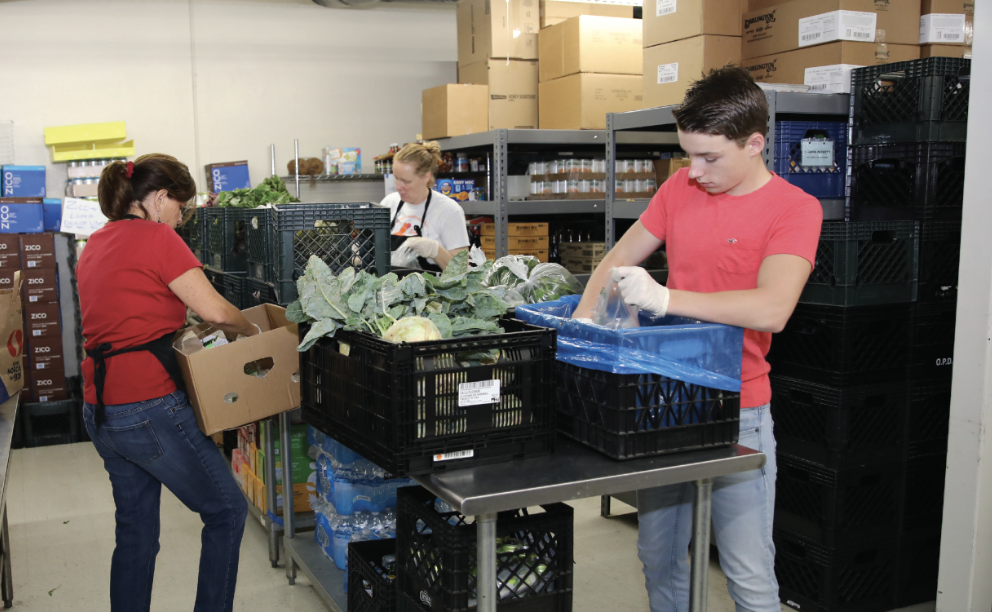
Community Services Agency (CSA) has served the local community since 1957, and it will continue doing so despite obstacles posed by the federal government, CSA Executive Director Tom Myers said.
The Mountain View-based nonprofit announced in a letter to the community last month that federal funds distributed by United Way Bay Area – the local branch of a worldwide nonprofit that has helped communities across the country with food and nutrition access, education and health for more than a century – had been frozen by the federal government. Myers noted funds of at least $40,000 were being held from United Way.
“And we don’t know when it will be unfrozen, if it will be unfrozen,” he said.
The freeze comes after a controversial Jan. 27 memo from the U.S. Office of Management and Budget that froze federal funds from being distributed so the office could assure organizations promoting President Donald Trump’s priorities, including ending “wokeness” and “financial assistance for foreign aid, nongovernmental organizations, DEI, woke gender ideology, and the green new deal,” per the memo.
After outrage and questions about the legality of the memo, it was promptly rescinded.
CSA provides programs including senior case management and a senior lunch and nutrition program, homelessness services, emergency financial assistance (for those who can’t make rent, utilities), and a food and nutrition center, which provides a food pantry and one ton of food daily to low income individuals and families.
From 2023-24, CSA provided aid to more than 6,000 people. The money that was frozen was slated to support the agency’s food and nutrition center, which last year provided 3,213 people with nutritious groceries. Approximately 1,110 people accessed CSA’s mobile food pantry.
According to the CSA 2024 Annual Report, the food and nutrition center has served more people who are unstably housed – meaning they have no access to a kitchen or cooking facilities – and need ready-to-eat items.
“It seems outrageous that you would cut funding for food for low income people,” Myers said. “So my hope is that people in Washington will come to their senses and understand that you don’t cut food funding for food programs.”
In addition to the withheld funds, CSA receives federal support for their programs in the range of several hundred thousand dollars per year. The money ends up at the agency indirectly: It passes through the city and other organizations before the funds reach the organization.
Myers said they’re fortunate that the funding streams are diverse; while the city distributes some of the federal funds it receives to CSA, it also provides aid on a citywide level.
According to Lenka Wright, city of Mountain View spokesperson, the city provides financial support to a variety of CSA programs and services.
In addition to $1 million for capital improvement ($2 million total for fiscal years 2024-25 and 2025-26), the city distributed $177,000 to CSA, including its housing case management ($120,000), outreach to the living-in-vehicle residents ($42,000), and facilitation of a portable restroom ($15,000). Approximately $38,029 of the city’s general fund grant process is dedicated to senior nutrition, Wright said.
“The city also has an agreement with CSA to provide the Mountain View Senior Center’s Social Hall and kitchen for the Senior Nutrition Program at no cost,” she said.
However, the loss of federal funding would have a significant impact on the long-term health of the agency if the funds are continually held.
“It’s one of those things that we will be able to take care of this year,” Myers said. “What we will not be able to do, though, is be sustainable. If this money goes away forever, that’s a problem.”
Wright said the city “contiunes to monitor the evolving situation concerning federal grant funding and how any policy changes at the federal level might impact Mountain View.”
Although a cessation of federal funds would be a hit to CSA and its long-term operations, Myers said the most important source of funding of CSA is provided by individual donors.
“The most important thing for people to remember is that CSA has been here for a long time, and we’re going to continue to be here,” Myers said. “But right now, the question of funding is concerning, but we’re going to make sure that we have some answers for folks at some point.”
For more on CSA, visit csacares.org. To donate, visit csacares.org/donate.





