

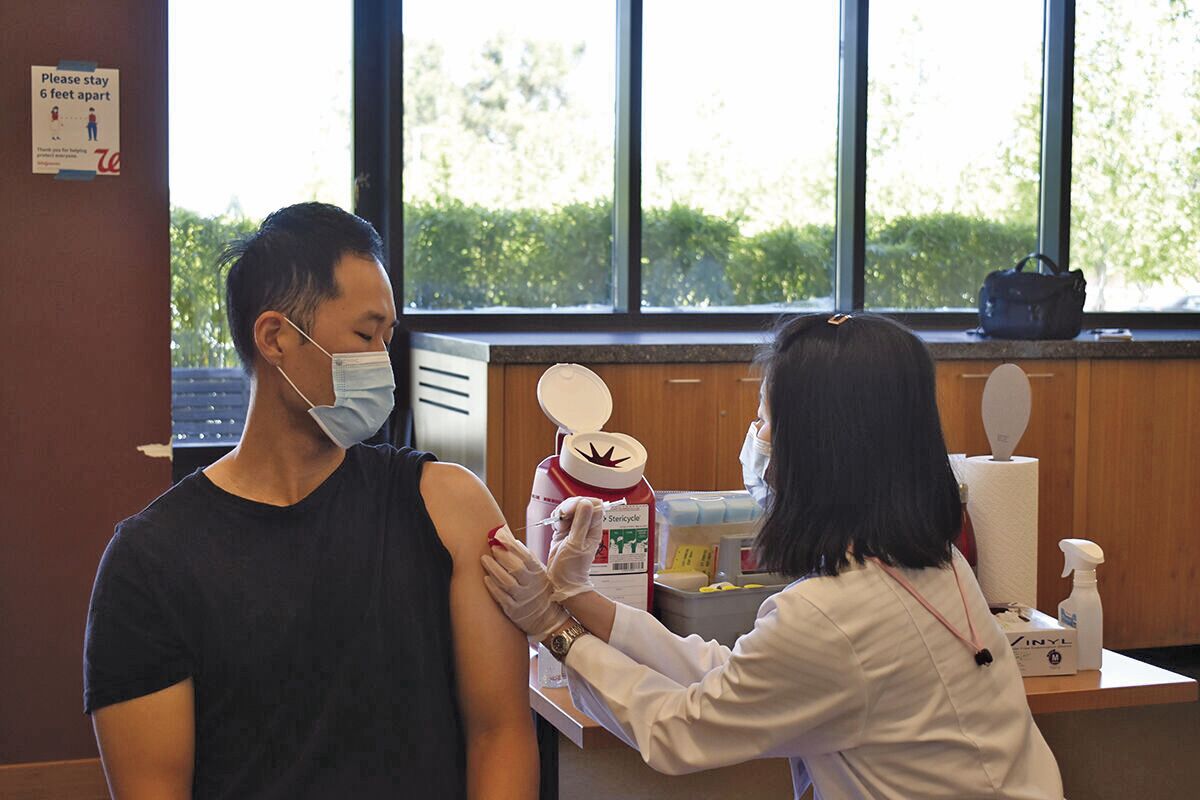
COVID levels are at an all-time high in the area, as indicated by wastewater monitoring by Santa Clara County.
Palo Alto Regional Water Quality Control Plant, which serves five cities including Los Altos, Los Altos Hills and Mountain View, showed the highest concentration of the virus it has ever recorded, reaching an all-time peak on Jan. 2. This far surpassed the maximum concentration during the omicron surge of Jan. 2022, by about 27% to be exact. The concentration of COVID in this corner of the county currently towers above that of the three other wastewater treatment facilities in the region, with San Jose’s detection of COVID at about two-thirds of Palo Alto’s on the same day.
Now that fewer people are taking tests (much less sharing the results), monitoring wastewater is one of the most comprehensive ways to detect levels of COVID infection within a community and track the prominence of new variants. Wastewater samples are processed within 24-48 hours of collection, meaning more immediate insight to the level of the virus in the area.
Despite a staggering peak recorded earlier this month, concentrations of the virus seem to be on the downturn since Jan. 2’s peak.
Up-to-date vaccinations high locally, but low all around
Residents of Los Altos, Los Altos Hills and Palo Alto are among the most vaccinated in the state. Between Los Altos and Los Altos Hills’ three residential zip codes, about 38.53% are up to date, meaning they have received the 2023-2024 updated vaccine released in the fall of last year. Mountain View’s rates are a bit lower, at about 29% of its population.
Up to date vaccination rates are low overall – only about 19% of Santa Clara County residents and just 12% of state residents have received the latest jab.
“Overall, the number of people who have received the updated COVID vaccine is low, and we encourage people to visit sccphd.org/ProtectThem for information about how they can schedule their vaccine appointment today for both the updated COVID shot and this year’s flu shot,” said Aaron Groff, Santa Clara County Department of Public Health communications officer.
JN.1, a strain of omicron, is the most common variant in the country right now, estimated to account for approximately 62% of all currently circulating COVID variants in the United States, according to a Jan. 5 report by the CDC. Preliminary studies show that the updated shot, which was developed against another omicron strain, is still providing a “robust” immune response against JN.1.
Hospitalizations across the state have risen, but pale in comparison to the numbers Californians were seeing before the vaccine rollout, and even from last year. The most recent available data shows that 158 COVID patients were admitted within Santa Clara County during the last week of 2023, compared to 675 in one week during the arguable height of the pandemic in Jan. 2021.





