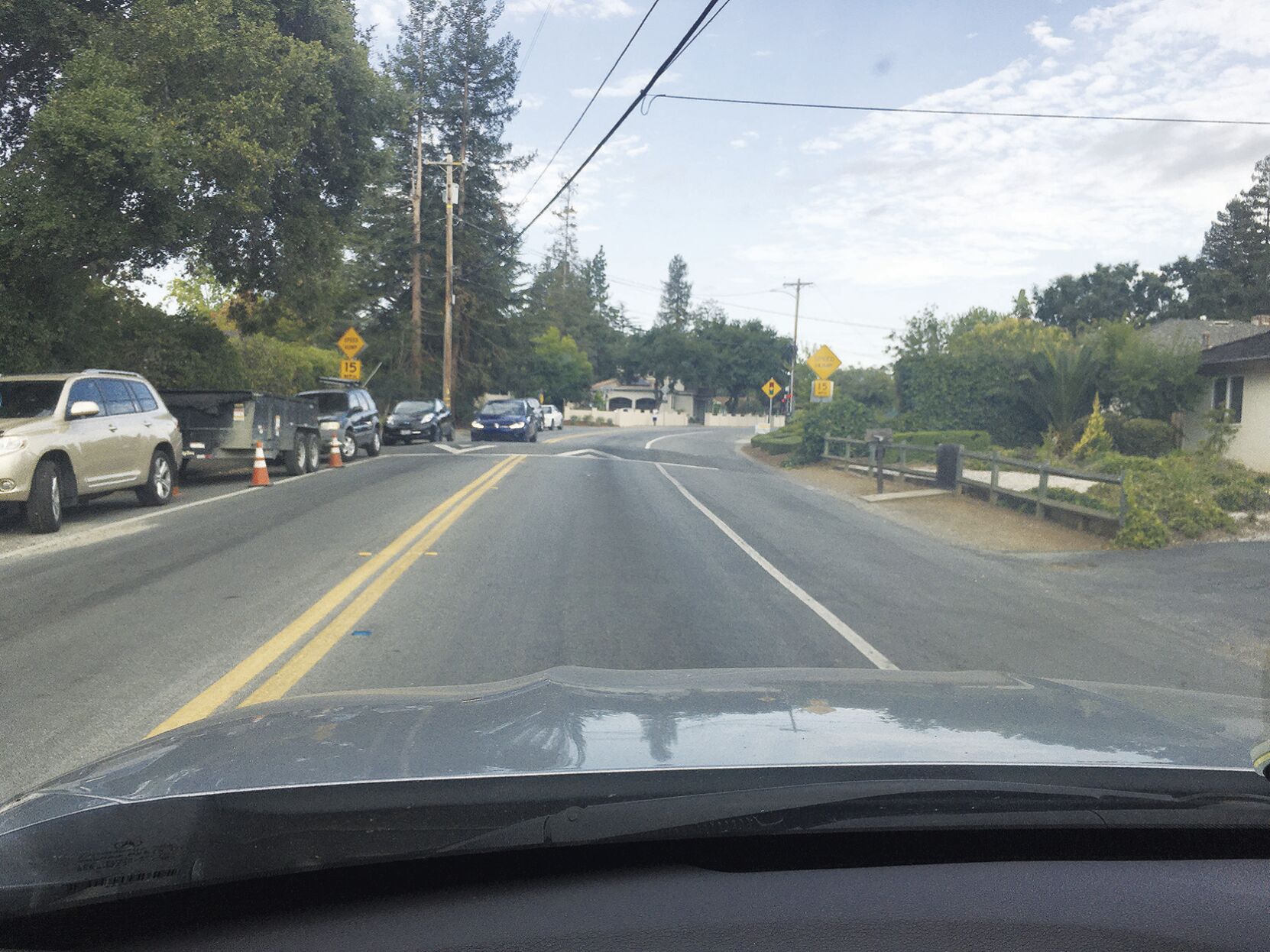
The days are numbered for the existing, oversized speed humps along Cuesta Drive in Los Altos – traffic-calming elements that some residents on Cuesta love but others loathe.
The city’s Complete Streets Commission last week unanimously approved a plan to replace the current asphalt humps, rising 4.25 inches or more, with rubberized ones no higher than 3 inches. City staff plans to have the current humps removed and replaced sometime in the fall.
Commissioners were given three options at their July 27 meeting and went with the city staff recommendation of Option A: installing offset, split-lane tables agreed to by the Santa Clara County Fire Department; installing Botts’ Dots on the street centerline; installing flexible, vertical posts at road’s edge to deter motorists from weaving out of the roadway; placing an additional stop sign at Cuesta and Arboleda Drive; and posting speed feedback signs.
City Manager Gabriel Engeland prefaced commission discussion last week by noting that changing out the speed humps is something the city must do.
“The current speed humps we know are outside of any acceptable design traffic standard,” he said. “We know that they haven’t been permitted or approved by (the Santa Clara County Fire Department), which is a requirement.”
Engeland said the current humps “impair public safety response – they put the city in a position of liability and reduce the safety for Los Altos residents.”
Cuesta connects with Grant Road and El Camino Hospital. Engeland said the impact of a regular speed bump reduces emergency medical response by 9.52 seconds.
“With the five that we placed on Cuesta, with their size, we can imagine the emergency medical response is slowed even more,” he said.
Under the new plan, the current speed hump closest to Arboleda will not be replaced. The new stop sign will serve as the additional traffic-calming element.
“We all certainly recognize that this is an unfortunate situation – not the outcome we were hoping for with this project,” said Marisa Lee, the city’s transportation services manager, who joined the city after the first humps were installed.
Fixes required
The original humps, or speed tables, as city staff calls them, were installed on Cuesta between El Monte Avenue and Springer Road in 2020. Speed tables are flat-topped, approximately 22 feet in length and cover the entire wheelbase of a vehicle.
The project was the culmination of years of discussion between residents and the city over speeding traffic along Cuesta. The city actually made two passes at installing them – the first effort resulted in the conclusion that the humps were not high enough to slow traffic to the desired overall speed of 25 mph. So, city officials made them higher. The resulting project, which cost more than $500,000, had commuters complaining about their height and questioning whether they were in compliance.
Initially, there was conflicting information among city and fire officials regarding whether Cuesta was considered an evacuation or emergency route and whether fire department approval was needed. But Complete Streets Commission members discovered last October, after Engeland had joined the city, that fire officials confirmed Cuesta was considered an evacuation/emergency route, and the humps were not in compliance and needed to be replaced.
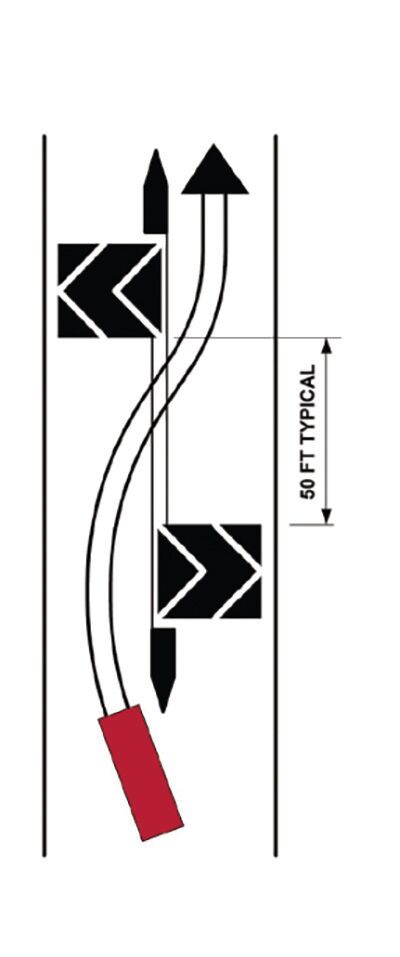
City staff incorporated design changes based on commission and public feedback at the commission’s May 25 meeting. Among the changes was narrowing the width of the new speed humps to 10.5 feet from the original 12 feet to avoid interference with bicyclists and pedestrians.
Residents sound off
Commissioners and staff heard an earful from residents at the May meeting about the failed project. But there also were questions about whether the goal of reduced traffic speed would still be met under the new plan – a point commissioner Nadim Maluf drove home at last week’s meeting.
“How do we establish metrics? How do we know that this will ultimately lead to what we’re trying to establish?” Maluf said. “We’ve been directed by city council numerous times to reduce speed. That has always been the metric that has been tied to residential safety. How do we establish the goal that we can meet given Option A?”
Engeland said, “If councils or commissions are giving direction to artificially reduce a speed to ‘x’ amount, that doesn’t necessarily have a corresponding increase in safety. What we want to look at is: How do we increase safety?”
He added that prior to implementing the traffic-calming measures, the city did not find a “meaningful correlation” between accidents and speed.
Residents’ comments and questions covered topics ranging from vehicles weaving between the split-lane humps to speed enforcement. Discussion touched on Assembly Bill 43, passed last year, which enables cities to enforce speed based on policy rather than “speed traps,” or artificially increasing speeds to allow for enforcement. AB 43 won’t take effect until summer 2024.
Some residents didn’t want to see the current speed tables go, while others wanted nothing in their place. Several speakers agreed Option A was a good compromise between traffic calming and the improved vehicle accessibility along Cuesta.
“It’s really disappointing that County Fire is forcing removal of the speed tables,” said Cuesta resident Jeremy Wright. “Having said that, Cuesta should not be left without effective traffic calming. … The rubberized lane-split speed tables are preferable to not having any traffic-calming devices on Cuesta.”
Cuesta resident Jaya Kamath, a leader in the initial traffic-calming effort, acknowledged the current bumps are too large.
“We’re glad the city staff worked with us to come up with this new solution (Option A),” she said.
Dan Cohen, who has led vocal opposition to the current humps, presented a 700-signature petition to the city last year seeking their removal.
“We just need to move forward and correct this mistake,” he said.
According to Engeland, “There’s not a speed hump design that doesn’t cause an unintended consequence. Any time you obstruct the roadway, people are going to be trying to avoid that obstruction.”
“What is in front of us is a question of what to do once we remove those bumps,” Maluf said, noting that “the goal post has changed” regarding the correlation between speed and safety.
Maluf suggested attaching conditions to Option A, including consulting with residents on the placement of the new humps, improvements for bicycle travel and establishment of metrics.
“If not speed, we need to know what it is,” he said, “and not leave it in a subjective fashion.”