After a season of tumult and controversy that drew international headlines, Hidden Villa in Los Altos Hills has resurrected its summer programming and underscored its commitment to supporting both its staff and campers.
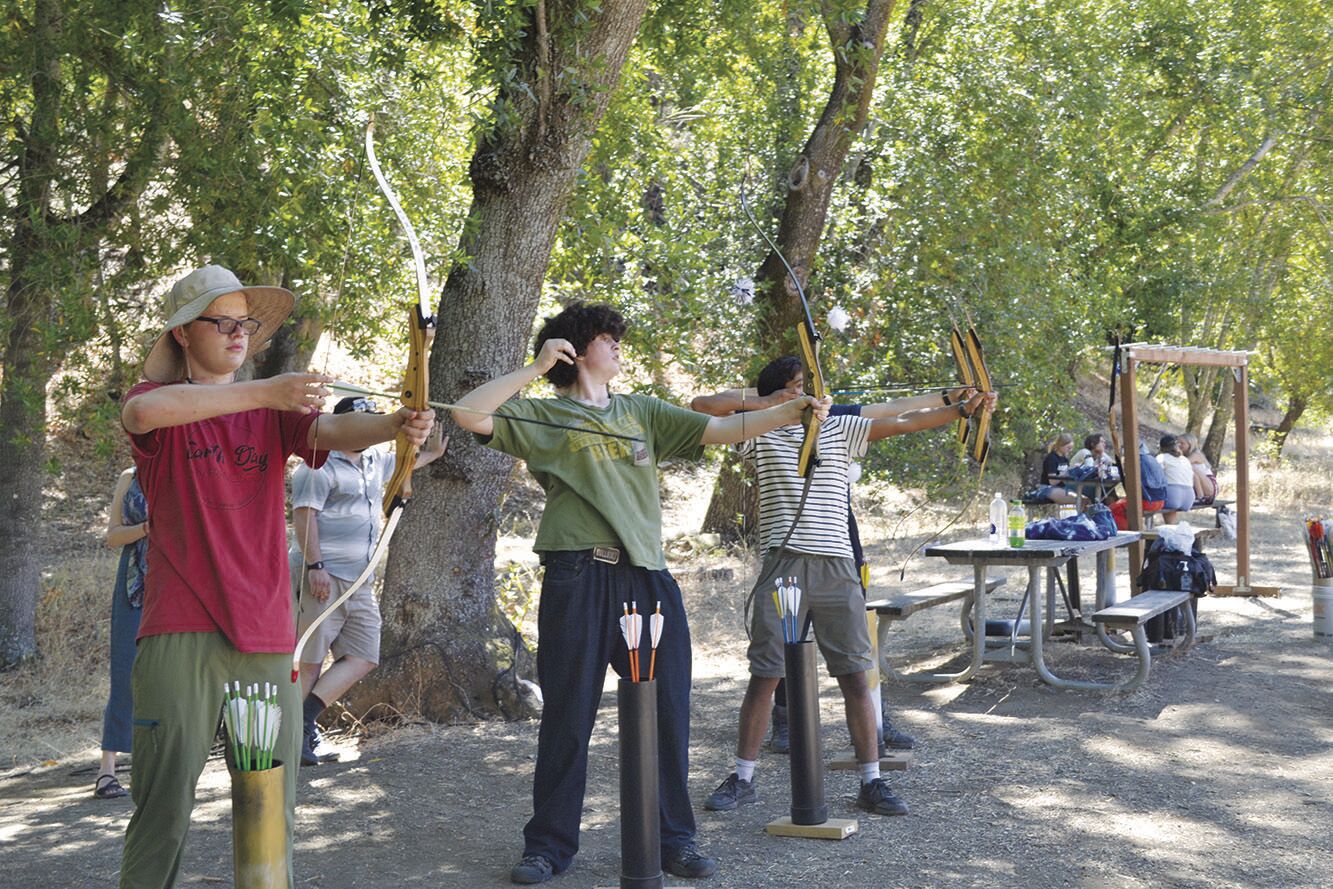
On an especially hot day in mid-July, Hidden Villa was vibrant with life as summer campers enjoyed some of their last days on the organic farm and nature preserve.
Even in the 90-degree heat, which can render some people grumpy or lethargic, kids and adults were going about their activities – practicing archery, visiting the newborn animals, splashing in the pool, crafting floats for the next day’s end-of-camp parade – with an air of joy and little urgency. By the late afternoon, most finished their daily chores and were free to spend their time at camp how they pleased.
The good vibes were palpable in a way that almost seemed cinematic. Seeing kids of all ages immersed in nature, connecting with one another and receiving an education without the proxy of screens felt novel in the year 2023, and the backdrop of Hidden Villa’s natural landscape made it all feel downright idyllic.
Workers at Hidden Villa have experienced many years of picturesque summer programs and are happy to have camps return after a few years of interruption. In 2020, the in-person camps were canceled due to the pandemic and replaced with an educational program over Zoom; 2021 brought a small number of campers back to the farm in pods with limited programming, trying to offer the best experience while complying with recommended health practices at the time. The summer of 2022 was supposed to be the year that kids were brought back to Hidden Villa at full capacity, but just six days before programming was set to begin, the camps were entirely canceled, affecting 900 campers and 28 seasonal staff.
Questioning inclusion
Staff resignations triggered the unprecedented cancellations – four critical camp leaders resigned amid a dispute over how Hidden Villa administrators were addressing staff concerns about racism and inclusion.
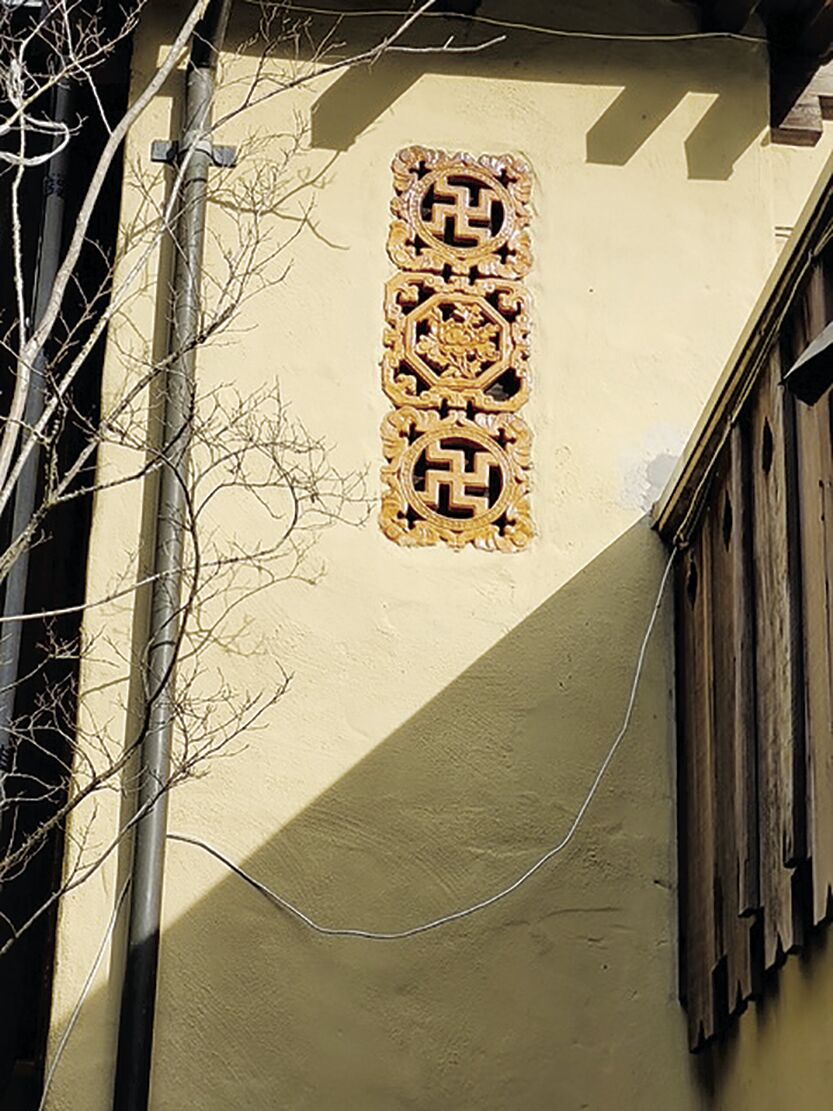
The flashpoint for staff members was the presence of, and failure to remove, a swastika design on tiles on the exterior of Hidden Villa’s Duveneck House, built circa 1929. The tiles were purchased in Asia and built into the house during an era when the swastika was a religious symbol not yet co-opted by Nazism and white supremacy.
The camp directors, who both identified as people of color, were uncomfortable with the presence of the swastikas but acknowledged at the time that the incident, and what they perceived as a dismissive and untimely response, was just one of their concerns about racism and inclusion at Hidden Villa.
Then-camp director Philip James told the Town Crier last year that he had faced repeated challenges when raising issues about structural racism within the organization.
“Every time I bring (racism) up, I feel like I’m punished for it. We all talk about it,” James said, referring to private conversations among both white staff and staff who were Black, indigenous and people of color.
The resignations in conjunction with severe staffing shortages meant there was no safe or functional way the camps could proceed.
While the tiles were eventually removed, the damage was done. Last summer, no kids were on Hidden Villa land tending to the animals or learning archery – the grounds were empty.
The matter made international news, and Hidden Villa was thrust into the spotlight as a martyr in the “war on woke.” Publications including the San Francisco Chronicle, Yahoo News and the Daily Beast picked up the story from the Town Crier.
Managing the fallout
According to comments directly to the Town Crier and on online platforms such as Twitter and Reddit, readers were overwhelmingly not sympathetic to the camp staff who resigned over the swastikas. Their sentiments ranged from disappointment at the misinterpretation of the symbol’s cultural meaning within Hinduism and Buddhism to conservative angst in light of what they interpreted as a culture that is socially sensitive to the point of self-implosion.
Looking back on the story, the swastikas seized the spotlight, and the two camp directors’ comments about the institutional issues they faced fell by the wayside in the discussion surrounding the incident. The swastika tiles were something visible and tangible, and accusations of institutional racism have historically been ignored without hard evidence.
Notably, Hidden Villa administrators don’t fault the staffers who quit last year the way some in the public might, believing it offered the organization the opportunity to re-evaluate its structure and processes to create a stronger program where staff and campers alike would be better supported.
“I think that we are stronger as an organization than we have been in a few years,” said Nicky Crummett, Hidden Villa’s senior director of programs. “I think that there was a lot of hard learning that was ushered in that has really set us up to be successful and more resilient together as we move forward.”
Navigating the nuance
After Hidden Villa was left to forgo last year’s summer camps, among its most foundational educational services, it was apparent that, swastika tiles or not, addressing the problems experienced by people of color on staff was needed at the nonprofit farm. The work began, starting with taking a critical look at what led to the resignations.
“The people that departed our organization last year were colleagues that we cared about,” Crummet said. “They were folks that had invested love, heart, passion and hard work into our organization. And the issues we were exploring were complicated and nuanced. We were really looking, I think, for space to navigate that nuance and come together as a whole community to really find something that felt OK to move forward with. And I don’t think we allowed ourselves the space to make that happen in a timely manner, unfortunately.”
Crummett did not mince words when she said the work wasn’t always easy. It involved major internal restructuring, including the formation of a formal human resources department; consulting with Justice Outside, an organization that aims to advance racial justice in the environmental sector; and holding many additional trainings and meetings to coordinate a mutually understanding relationship between staff and administration. The staff underwent extra weeks of training for this year’s summer program.
Internal restructuring meant two seemingly contradictory things: The HR department could be the clear, central place where staff members could go to solve problems that arise, but also all staff members take on the effort of inclusion and transparency so the responsibility for safety and equity is shared.
“I feel like there was a lot of work (put toward) clarity and structures and distributing the leadership, and it does take time,” said Jessica DuVal, Hidden Villa’s director of development and communications. “So, there are challenges that arise there, too, with decisions just being slower. … We’re working on that. But also, it’s culture change. It takes time. And I see it happening in all different places, which is super heartening that everyone is taking this on.”
“It does cost money,” said Ben King, Hidden Villa’s new camp director, “but it’s a really worthwhile investment to help our counselors really feel prepared for the summer in both those hard skills – like our ropes course, or hiking and going out on backpacking trips – and then the soft skills as well, like, how do we lead a group here that really is fostering a kind environment where our kids are given the opportunity to receive and treat each other with kindness, and then feel comfortable to be exactly who they are?”
From an external perspective, it seems that the efforts are paying off – according to Crummett, this year’s staff has already taken opportunities to come forward and work to resolve issues. The kids present, including the high school seniors in the counselors-in-training program, shared their high regard for this year’s program.