Sacramento lawmakers agreed last week to scuttle a bill helping the journalism industry in favor of a compromise agreement with Google that commits $70 million to AI.
The total $250 million deal, announced Aug. 21, would pay for journalism initiatives and improve AI tools. It has the Mountain View-based search giant paying $110 million, plus $70 million for strengthening AI tools, over five years. State taxpayers are on the hook for the remaining $70 million, although that money is not guaranteed.
The agreement left lawmakers and industry leaders praising a “first of its kind” public-private partnership while journalists and their unions were left outraged.
Democrat Buffy Wicks’ Journalism Preservation Act would have assessed a fee for use of local news content, with 70% of the profits going to journalism jobs. The Town Crier supported the act in an editorial last week. But officials at Google and Facebook were vehemently opposed and threatened to cut off news content.
The so-called compromise agreement, with its AI component, had Google’s digital footprints all over it.
“This public-private partnership builds on our long history of working with journalism and the local news ecosystem in our home state, while developing a national center of excellence on AI policy,” Kent Walker, president of global affairs and chief legal officer for Google’s parent company Alphabet, said in a statement.
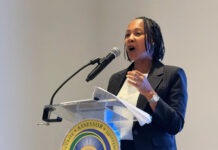
Wicks supported the agreement, as did the California Newspaper Publishers Association. But journalists and their supporters dismissed the compromise agreement as promising far less over a shorter period of time than Wicks’ bill. Terms like “back-door deal” and “shakedown” were used to describe it.
“The publishers who claim to represent our industry are celebrating an opaque deal involving taxpayer funds, a vague AI accelerator project that could very well destroy journalism jobs, and minimal financial commitments from Google to return the wealth this monopoly has stolen from our newsrooms,” read a scathing statement from Media Guild of the West.
In the compromise, Google will pay fixed fees to a fund administered by the UC Berkeley Graduate School of Journalism. The state would add an even larger contribution, but funding would have to be approved first by the legislature every year.
The agreement is scheduled to take effect next year.