

The city of Los Altos’ recent citywide road restriping and signage project has served as a source of bewilderment to some and downright concern to others.
“What the heck does this mean?” asked Nancy Schneider, sending over photos of newly painted intersections near Almond School. “The roads in town have been painted like crazy! It’s almost like graffiti.”
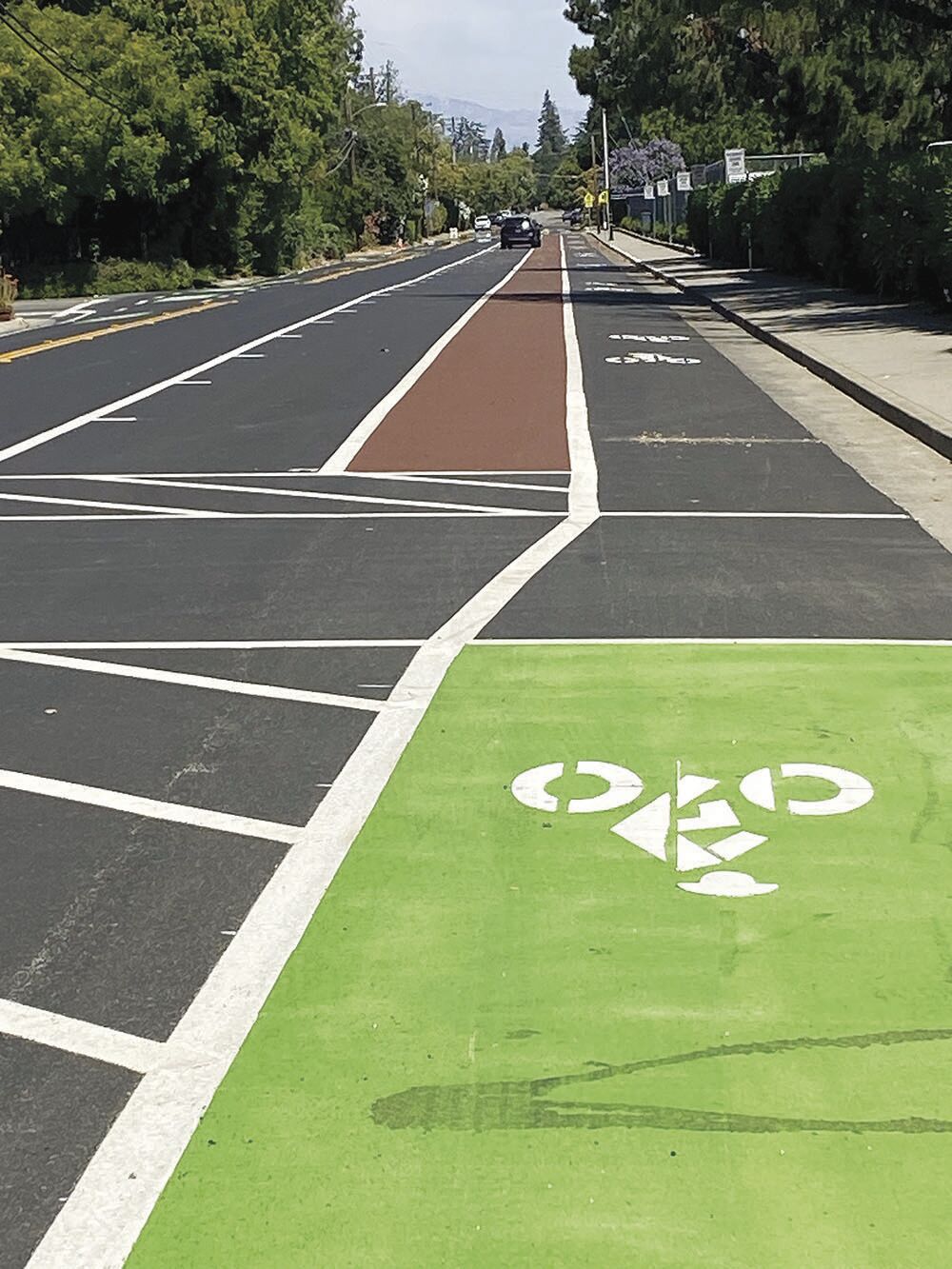
At any particular intersection near a school, residents will see burgundy and bright green along with the usual yellow and white marking crosswalks. The colors all serve a purpose for keeping bicyclists and pedestrians safe, noted Marisa Lee, the city’s transportation manager.
The burgundy colors indicate what’s called a “painted curb extension,” she said. “Curb extensions provide value by shortening crossing distances for pedestrians, providing a landing space for pedestrians – especially in rural Los Altos where there is often no existing sidewalk – and making pedestrians more visible to drivers. The city used these treatments at high-pedestrian areas near school zones.”
Lee added: “They are a cost-effective alternative to concrete curb extensions, which can cost as much as $50,000 per corner, and they make more sense for the context of Los Altos in areas where there is no contiguous sidewalk.”
The green dashes, or “skip boxes,” as Lee calls them, are considered another safety improvement to show the intended path of cyclists.
“They guide bicyclists on a safe and direct path through intersections, including driveways and ramps,” she said. “They provide a clear boundary between the paths of through bicyclists and either through or crossing motor vehicles in the adjacent lane.”
Traffic experts said they provide benefits including: making both bicyclists and motorists aware of potential conflict areas; reinforcing that through bicyclists have priority over turning vehicles or vehicles entering the roadway (from driveways or cross streets); guiding bicyclists through the intersection in a straight and direct path; reducing bicyclist stress by delineating the bicycling zone and making bicycle movements more predictable; increasing the visibility of bicyclists; and reducing conflicts between bicyclists and turning motorists.
Street markings that show a bicycle symbol and arrows above it are called shared lane markings, or “sharrows,” to show the lanes are for both bicycles and automobiles. Among other benefits, experts said the sharrows reinforce “the legitimacy of bicycle traffic on the street.”
‘Accident waiting to happen’
The striping project, which has the blessing of the city’s Complete Streets Commission and Los Altos City Council, is meant to improve bicyclist and pedestrian safety, and features tried-and-true safety measures, Lee said, used nationwide and all over the world.
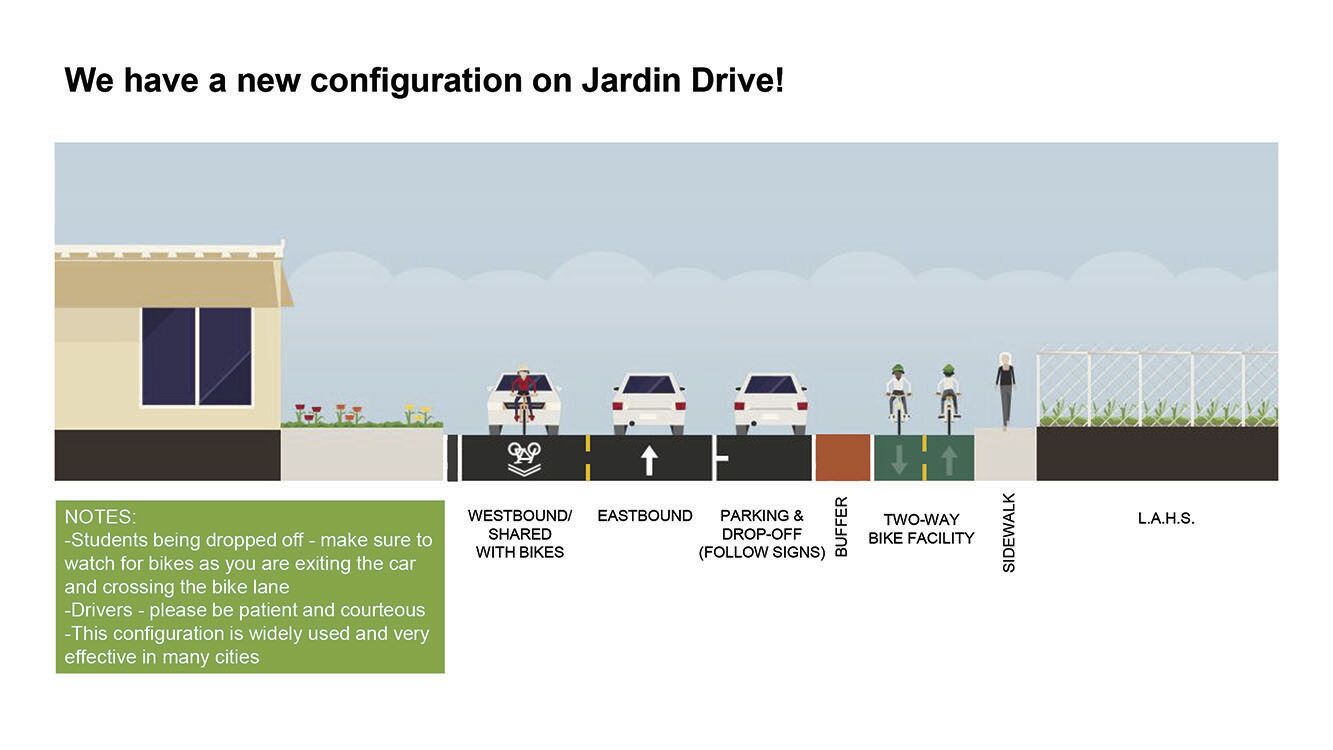
Still, some residents wonder whether the new striping will cause confusion, especially among automobile drivers, and trigger more collisions. Of particular concern are the new markings along Jardin Drive at the rear of Los Altos High School. Students and parents will be negotiating the new traffic markings when the new school year begins Aug. 9.
“This whole situation is an accident waiting to happen,” wrote Lisa Bourgeault in a Town Crier letter to the editor (see page 8). “The changes were made in order to make students safer as they make their way to and from campus, but the road markings with no apparent legal meaning, a very limited set of roadway signs and the strange two-way bike lane in a one-way lane of car traffic all add up to driver confusion.”
Added resident Bob Sutis: “Not only is it less maneuverable when driving, it is dangerous for cyclists and pedestrians on the side of Jardin opposite the high school. Plus, it did not solve the real danger of no red striping to prevent parking on the corners the first 20 feet or so of the side streets to Jardin, where cars trying to make a right turn from Jardin onto one of those streets cannot see oncoming traffic.”
But it was traffic congestion – and confusion – that informed the traffic safety changes to begin with, city traffic officials said. Jardin had become particularly congested after construction at the front of the high school prevented students from entering off Almond Avenue.
City officials continue to monitor traffic and listen to feedback as the city looks to improve safety while encouraging more people to cycle or walk instead of drive.





