

The drought baking California has rendered water-restricting local lawns and yards arid, but mosquitoes have fared well this summer nonetheless. Santa Clara County Vector Control District surveillance identified mosquitoes with West Nile virus in parts of Cupertino and started spraying insecticide to target the insects last week, with similar spraying last month in parts of Sunnyvale, Santa Clara and San Jose.
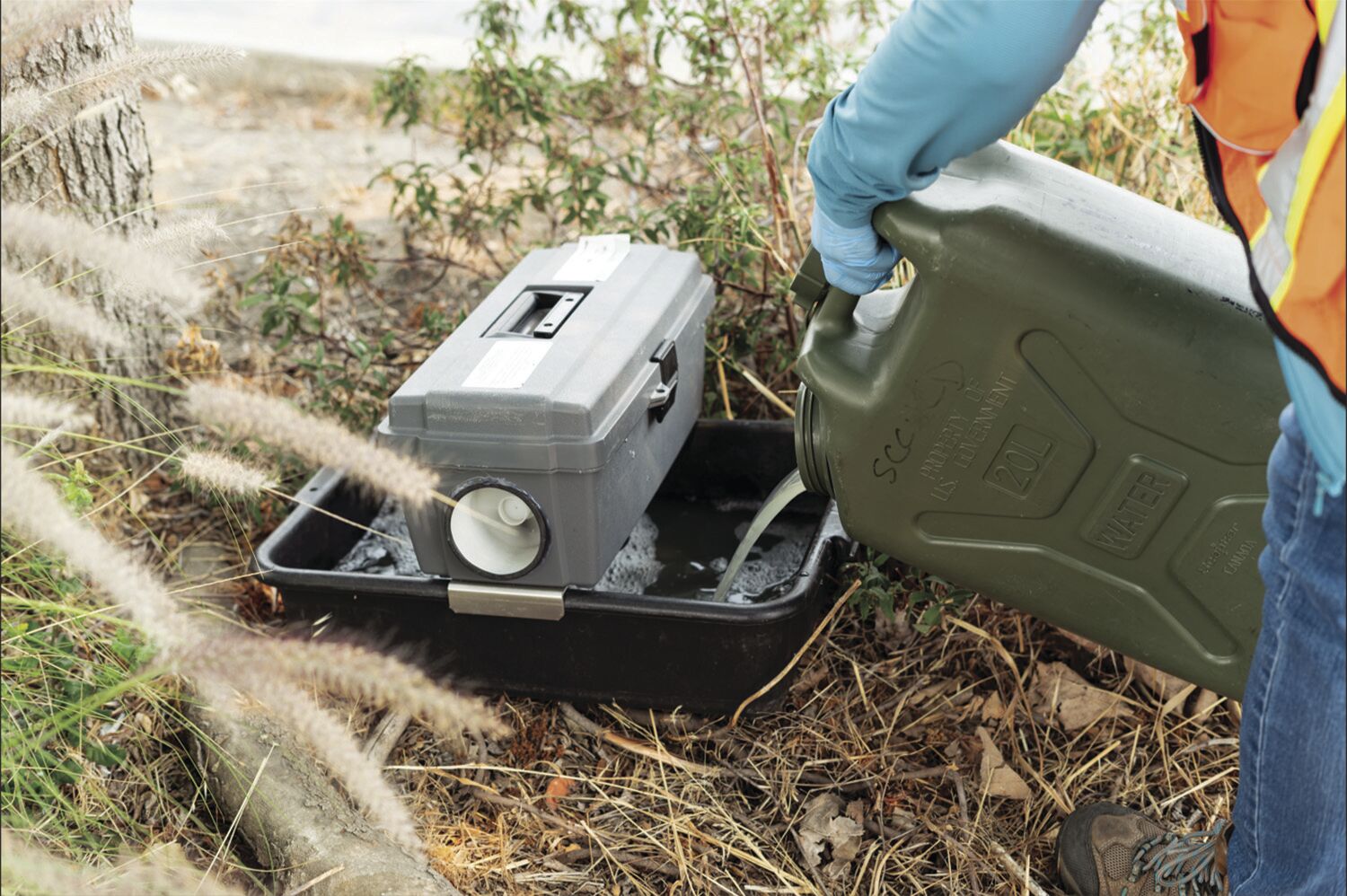
The county maintains surveillance throughout local cities including Mountain View and Los Altos using carbon dioxide traps – which attract hungry adult mosquitoes seeking the exhalations that indicate a likely mammalian meal – and gravid traps, boxes of standing water baited with the funky aroma of rotting alfalfa to attract pregnant mosquitoes ready to start a new generation. The district also uses light traps – a green metal device with a light bulb and a jar of captured insects at its bottom – to monitor the ambient abundance of mosquitoes in the area, which fluctuates seasonally and tends to rise with warm summer weather.
The county’s vector control monitors mosquitoes based on their impact on (human) public health, and thus focuses on urban and suburban areas where the mosquito-to-bird-to-mosquito cycle of virus transmission may accidentally snare a human as a host. They do not carry out eradication or West Nile monitoring in forests or preserves where mosquitoes may be abundant but less likely to cause a public health crisis.
“Disease is our main focus,” explained Beverly Perez, a
community resource specialist with the county’s vector control. “Mosquitoes tend to thrive in areas where humans live because of all of the stagnant water that we provide for them.”
Overwatering plants, leaving a leaky faucet unfixed or an inflatable pool forgotten in the backyard all can create mosquito breeding sources. There has been some evidence to suggest that drought seasons could actually lead to higher incidence of West Nile virus, Perez said, because there may be more small pockets of standing water in the area as bodies of water diminish in size and flow.
What to watch for
Mosquito eggs, larvae, pupae and adults are present in the region every summer, but they do not always carry West Nile virus. Sightings of dead birds can signify virus activity returning to the area, notably crows and jays, which are particularly susceptible, Perez said.
Vector control encourages residents to report dead birds so they can be picked up and tested proactively. Note the cross streets at which you see the carcass and visit westnile.ca.gov, which walks you through a series of general questions about the bird species, its condition and approximate location. The county doesn’t test waterfowl or pigeons, but for a long list of other species, from goldfinch to swallow and robin, they may come out to make a pickup.
If residents notice mosquito activity in their neighborhood, they can call vector control and a technician will visit to inspect the neighborhood for mosquito sources.
“They can look around your home and pinpoint mosquito breeding areas and provide options for control,” Perez said.
The county also provides mosquito fish at no cost to residents for use in locations that hold standing water, including open rain barrels, ornamental ponds and abandoned pools. The fish eat immature mosquitoes.
“West Nile virus is basically here to stay, it’s well established in California,” Perez said. “We’re just trying to manage it as best as possible and prevent a human stage as best as possible. We need the help of residents to reduce the sources (of mosquito proliferation), and protect themselves from mosquito bites.”
Although most people infected with West Nile virus do not develop symptoms, an estimated one in five develop a fever, headaches or body aches. Seniors, children and people with some medical conditions are at most risk of developing the rarer neurological conditions caused by the virus, which can include coma and death. There is no known treatment for West Nile virus, making prevention the only line of defense.
For more information, call the county’s West Nile Virus Hotline at (408) 282-3114 or visit sccvector.org.





