

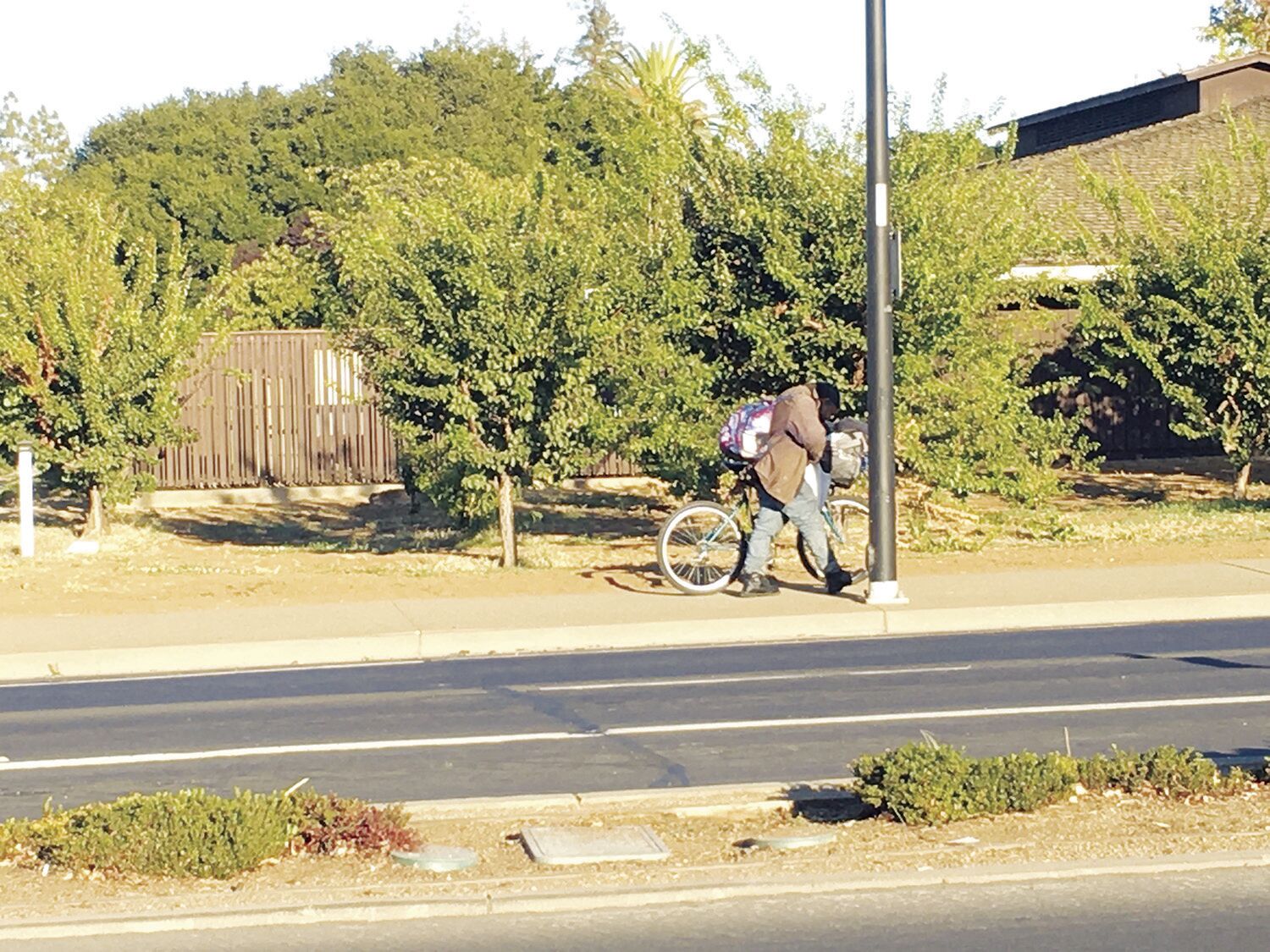
Los Altos residents are drawn to the city for a variety of reasons, among them its reputation as a quaint, safe community with top-rated public schools. Those attributes are also attracting a small group of vehicle dwellers and the unhoused.
Brandi Jothimani, director of services for Mountain View’s Community Services Agency, said she has noticed a small but steady uptick in CSA clients who live in their vehicles parking overnight in Los Altos – particularly families.
When accessing services from the nonprofit CSA, which serves as a social-service safety net for the low-income, elderly and homeless, clients must demonstrate they spend at least 50% of their time living in Los Altos, Los Altos Hills or Mountain View. Jothimani said when caseworkers establish an address or general area for people living in their vehicles in Los Altos, many clients find they have moved over the border from Mountain View into Los Altos without realizing it.
According to Jothimani, Mountain View had been a “haven” for vehicle dwellers in the region because it was easier to park there. But Measure C, the city’s Narrow Streets Ordinance passed in 2020, banned parking of RVs and other oversized vehicles on city streets 40 feet wide or narrower, effectively limiting where vehicle dwellers can park to 10% of Mountain View’s streets. A group of RV dwellers sued the city over the ordinance, prompting the plaintiffs and the city to agree to a moratorium on ticketing and towing through Aug. 30.
The ongoing controversy has raised uncertainty among residents, she said.
“We’re starting to see that more with transient populations coming through,” Jothimani said, adding that many residents are “fearful of becoming stranded somewhere” far away from their children’s schools or connections to organizations like CSA, making Los Altos an attractive alternative location to park.
Mountain View’s continued attempts to limit oversized vehicle parking on city streets means people who live in vehicles must reconsider where they are parking. For the most part, they want to stay where their roots are and, if they have children, where their children can remain enrolled in local schools.
Jothimani said clients tell CSA case managers they feel safe in Los Altos.
Lost in the statistics
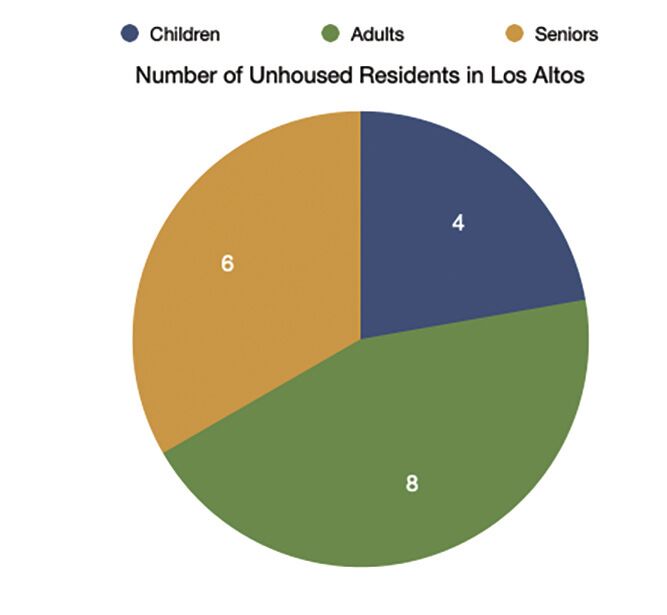
According to CSA’s estimates, there are approximately 12 unhoused families in Los Altos. Los Altos Police officer Ryan Burke estimated that 10 unhoused individuals live in Los Altos, mostly parking either on El Camino Real or around the main library and community center. The Town Crier reached out to two individuals who park in the area for comment, but they declined to be interviewed.
CSA executive director and Los Altos resident Tom Myers said that though the Los Altos ZIP codes 94022 and 94024 are very high income, unhoused residents can get lost in the broader statistics.
“People … should be very aware that the homeless population is larger … than they think it is,” he said.
Myers added that though most people picture “homelessness” as someone walking down the street with a shopping cart or a car full of belongings that always seems to be parked in the same area, the stereotype isn’t always accurate.
“Oftentimes, homeless individuals are very hidden,” he said.
Often, people living in vehicles will park overnight in a friend’s driveway or behind a business, Myers said.
Similarly, Jothimani said people living in vehicles are not a separate category of people, but rather ordinary citizens who, for whatever reason, couldn’t keep up with the soaring costs of housing in the Bay Area.
“It could be like your next-door neighbor,” she said. “Any of us could fall on hard times, and the next thing you know, you’re living in your car.”
People who have fallen on hard times, Jothimani said, have children who “go to school with your children, you could be working with someone who’s struggling and living in their vehicle.”
CSA is working to help people move their vehicles into a safe-parking lot or find traditional housing, even if it means moving to Sunnyvale or San Jose.
The economic turbulence the country is currently experiencing is going to affect people on the lower end of the economic spectrum, according to Myers.
“I think that the biggest issue for us is that there is no sign that the people living in poverty and homelessness are decreasing,” he said.





