The gods of comedy are awaiting you at the Pear Theatre. In Ancient Greece, a plethora of great plays were written, and many people enjoyed them to reflect on their society. They even worshipped and revered this art form by honoring Dionysus, the god of theatre, wine and joy, and Thalia, the muse of comedy.
“The Gods of Comedy,” a play written by Ken Ludwig in 2019, brings the delight and mystical aspects of silly humor back into the theatre. Not only was ancient Greek culture explored in this show, but it also demonstrates how relevant it is in both academia and the arts. Ludwig allows audiences to see how the main features of comedy, such as parody, slapstick and satire, all originated in the ancient world and are still explored in modern times.
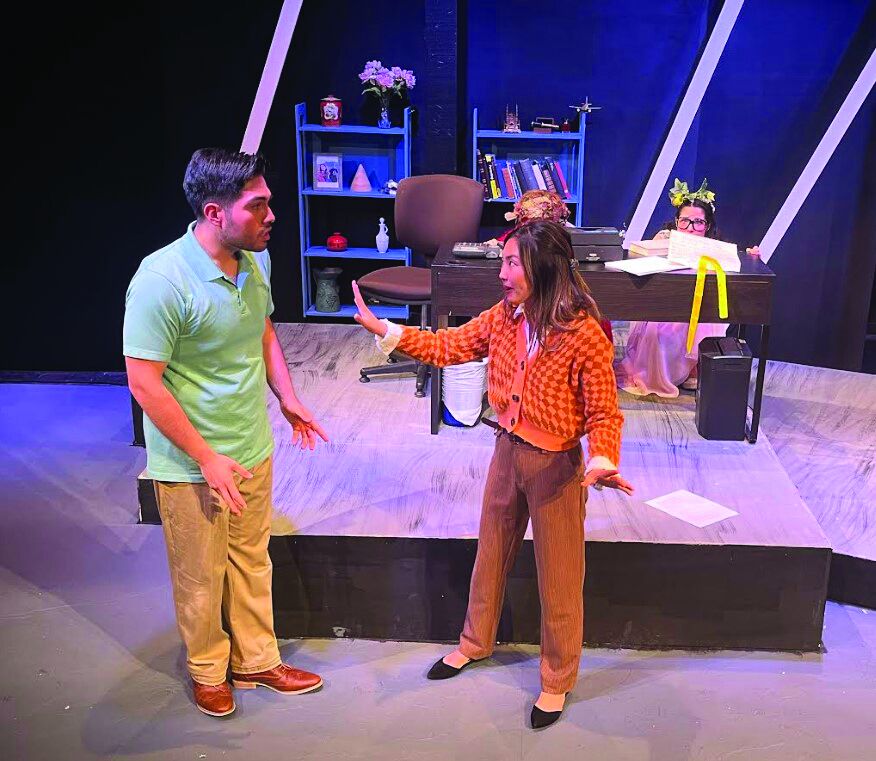
The play opens with Daphne (Mai Abe) and her colleagues Ralph (Arturo Montes) and Dean Trikcett (Mary Hill), professors within the classics department at their university, while abroad in Greece. Daphne, an A-type personality who finds herself lost in her work, does not have time to fool around and becomes flustered when asked to hang out with Ralph. Aristide (Jamiel St. Rose), a shopkeeper where Daphne is working, encourages her to be with Ralph, but as she is about to leave, she rescues Aristide’s son from being hit by a car. Daphne was declared a hero by the shopkeeper, who awarded her a magical amulet for her bravery.
Everyone soon returns home, but big news awaits them. Ralph finds a copy of “Andromeda,” a lost tragedy written by Euripides in 412 B.C.E. Ralph rushes over to tell Daphne and soon hopes to tell everyone they know about it. Daphne is tasked to watch the manuscript while Ralph goes to spread the news, but she soon misplaces it after the dean requests her assistance. Daphne finds herself spiraling and can’t believe how it could just disappear. Only the audience knows that the Russian custodian Aleksi, also played by Jamiel St. Rose, threw it away in the trash by accident.
The play soon takes a turn and allows our imagination to run free with the introduction of Dionysus (Matt Regan) and Thalia (Jaime Melendez). After Daphne pleads to herself that she needs help in locating the manuscript, the gods appear from thin air and are eager to relieve her sorrow. Daphne at first does believe them, thinking they are actors for an upcoming drama on campus, but she soon realizes their capabilities by their manipulation of the weather and moving objects.
The gods bring a great deal of enjoyment to the play. Every character up until their appearance was stuck in their ways, but they managed to bring everyone some joy. The gods come to the play for a memorable time and critique the actions of the characters. The gods have been around forever and reference everyone they have helped, such as Abraham Lincoln, John Lennon and Ernest Hemingway. They are not known for being serious gods, but they still attempt to satisfy their mortal’s needs.
It was a great deal of entertainment to see the gods interact in the modern world and mess with the characters. The gods break the fourth wall, sometimes speaking to the audience and even sitting among them while they see how their actions play out. They do their best to assist Daphne by distracting and playing pranks on the characters such as the dean, Ralph and Brooklyn (Krista Joy Serpa), an actress who wants to appear in “Andromeda” and tries to make a move on Ralph so she can ensure she is involved.
Their abilities include creating love and passion in the air which enables Daphne to write interesting plot lines for a new play she must write to replace the missing one, becoming invisible to spy on other characters and shapeshifting into various characters to manipulate and lie to get what they want. The whole play shows them trying to fix their messes while also trying to honor Daphne’s requests.
Despite all the play’s sexual innuendos, silliness and fantasy themes, a lot is on the line for the characters and there is a sense of urgency awaiting them until the end of the story. Both the gods and mortals want to get the respect they deserve among their peers and are determined to finish their tasks.
All the actors brought their all throughout the entire performance. Each character showed all sides of their personality and conveyed the stress of their situation. Daphne most of all unleashes fear and sadness in the story, feeling overwhelmed with the regret of losing the manuscript and knowing many of her colleagues will be greatly affected by it. The story also explores all of the characters’ greatest pleasures and what gives them a kick out of life. The story mimics a great deal of Greek storytelling, pleading to the gods for help, having them mess with their characters for their enjoyment and including many elements of drama and laughter that do not hold back.
For times, tickets ($42) and more information, visit thepear.org/whats-playing.