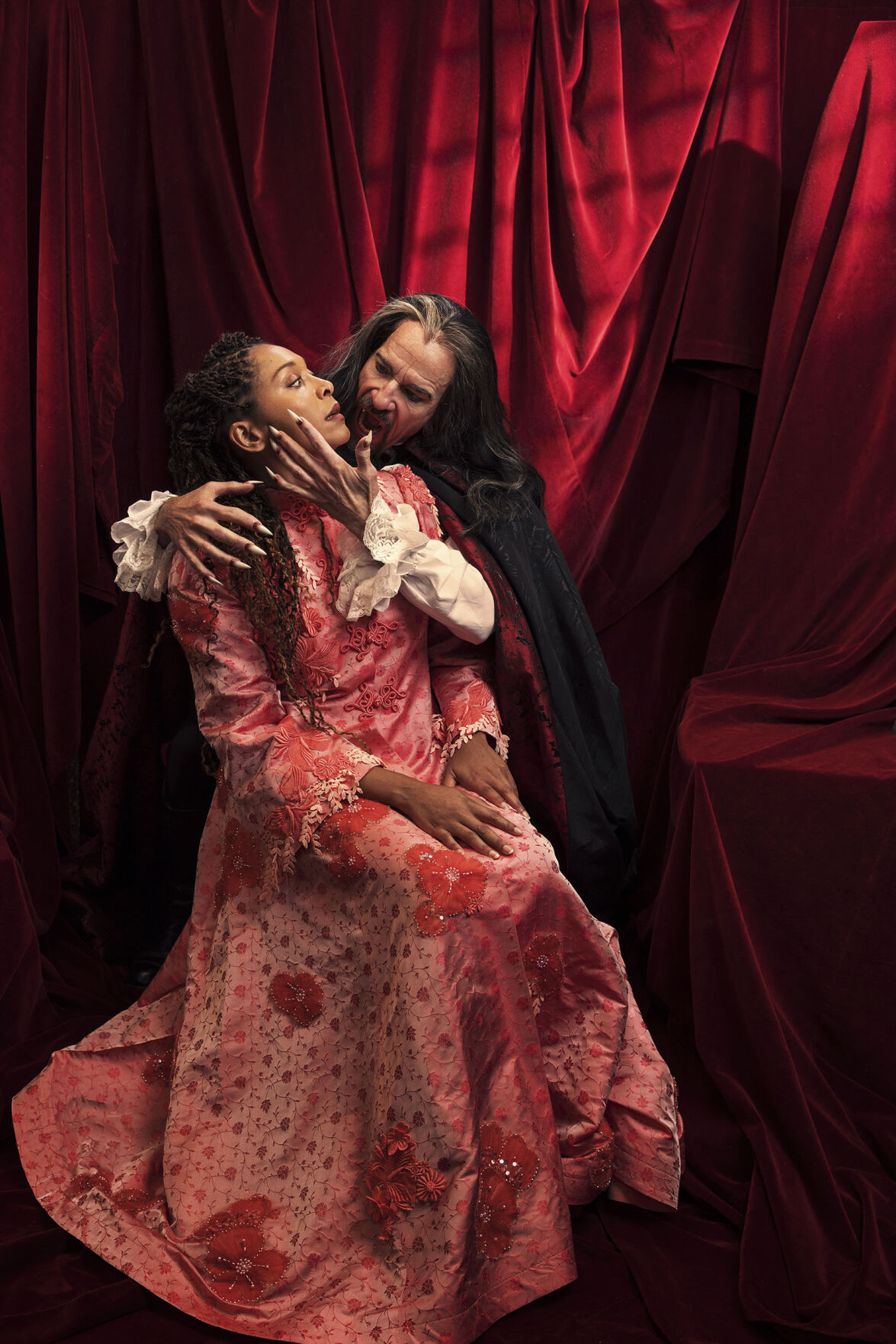
From showers of blood to eerie vocal tracks that bounce from wall to wall, TheatreWorks Silicon Valley’s “Dracula” is starting the spooky season off with a bang. The play runs through Nov. 1 in Mountain View.
The show began with a sudden blackout, followed by a crackling thunder that set the tone for the rest of the night. Divided between anticipation, amusement and fear, I alternated between sitting on the edge of my seat and pressing my back as deep into it as possible.
When the lights came up, Renfield – played by Max Tachis – dove into an impassioned monologue. Sitting in a tuxedo behind a silver platter, he appeared a well-put-together narrator. But nothing could’ve prepared me for the scene’s ending: a crazed Renfield, yanked out of his suit – revealing an asylum gown – trying to drop a wiggling (animatronic) rat into his mouth while being dragged off stage. As the theater erupted in applause, I knew I wasn’t the only one successfully hooked.
Like any theater taking on a show as widely performed and sensationalized as “Dracula,” TheatreWorks was faced with a difficult task: separating it from its “campy” alter ego, and putting their own creative twist on it. And I must say, the production was hilarious without ever being unserious. Count Dracula, played by Scott Coopwood, was a chilling character – not needlessly evil or overdone, but desperate for blood. Watching him seduce and manipulate in order to survive, I understood his character as a harrowing lesson of what desperation can drive people to do.
Renfield is also desperate: desperate for food, for Count Dracula’s approval, and for freedom, both physical and mental. Caught between abiding by Count Dracula’s wishes and protecting his own soul, Renfield’s psychological breakdown was equally horrifying as it was entertaining. Constantly rocking and muttering to himself, Tachis served as an absolute masterclass for staying in character, even if the spotlight wasn’t on him. This happened often because the stage was elaborately sectioned so multiple scenes could coexist. Renfield’s asylum holding, for example, was a platform on the stage’s top right.
The humor, too, was unmistakable. Thanks to the actors’ seamless comedic timing, I don’t think any joke went unnoticed by the audience, and I was giggling out loud alongside everyone else. Especially noteworthy was a monologue from Dr. John Seward, played by Vincent Randazzo. He confessed his love to an entranced Lucy, played by Emily Newsome, but – much to Lucy’s confusion – talked himself into believing she didn’t feel the same.
Lucy was Count Dracula’s first victim, and Newsome skillfully brought her possession to life. Her sudden uncanny movements and tone shifts were beyond unsettling, and later mimicked by the rest of Count Dracula’s prey. Sharp changes in lighting, along with building music, buttressed these character transformations and reminded me that the stage really was its own character, working in tandem with what the actors were trying to convey.
Physically, the stage was expansive. I thought I’d seen it all, until the doors to Lucy’s bedroom flung open, revealing an entire forest in her backyard. Playing with shadows, crawling fog and punchy sound effects, every scene felt concerningly real.
The audiences’ gasps were just as real, too. Every time the “crunching” sound effect filled the stage (a mystery best left to the theater), my hand flew straight to my mouth. And illusions stole the show: drawing blood from one’s own chest, and gold sand appearing out of nowhere to draw a chaotic scene to a close.
But through all its suspense and disarray, the show wasn’t thoughtless about gore. In fact, I found blood was used more sparingly than the advertisements suggested. Don’t worry – you’ll still get your fair share of fright and fangs. But to me, holding back helped separate this show from its more slap-stick adaptations, and made the few times they really went big all the more shocking and rewarding.
The stage’s magic and the mysteries we uncovered alongside the characters immersed me in the story as if it were my own, just as director Giovanni Sardelli said she hoped would happen. So, if you want a story just as enticing as it is spine-chilling, go see it. Just don’t forget your garlic.
For tickets ($54-$94), times and more information, see theatreworks.org.