While recipes may be handed down intact as heirlooms, the kitchens where they are cooked enjoy far less timeless handling. Fads, HGTV and the occasional fire have led to an upsurge in kitchen remodeling. With 2006 well into its fourth week, many Los Altans are considering makeovers of their cooking spaces.
What’s in and what’s out? A will to renovate isn’t always enough when pressing dilemmas loom: granite counter or quartz? Wok or deep-fat fryer? To kitchen-island or not to kitchen-island? One dishwasher or two?
While determining trends in remodeling might not be as easy as predicting fashion styles, designers are seeing a number of distinguishable patterns. Sarah Lloyd of Kitchens of Los Altos points to a recent tendency toward larger kitchens with a “big and open” feeling, linking to the family room.
“Children these days are doing homework in the kitchen,” she said. “We’re distinguishing less between the kitchen and other rooms of the house.”
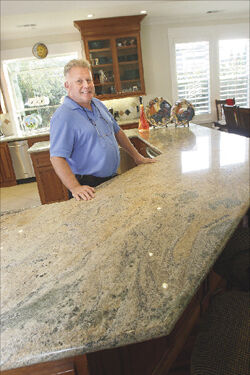
On the controversy of granite versus quartz as the countertop of choice, Lloyd foresees the sunset of granite’s long tenure: “Just the other day a customer said, ‘I’m bored with granite.’ We’re seeing more of this now.”
As kitchens increasingly become the heart of the home, Lloyd sees new materials surfacing to suit her clients’ individual tastes. Limestone, she noted, gives a more Old World look, while experiments with slate have yielded results appearing more Japanese.
Joseph Cammarata, general contractor of Interior Enterprise in Los Altos, also notes a certain mixing of cultures in the kitchen. As Silicon Valley celebrates its diversity, Cammarata said, requests to shape spaces to better suit Indian and Japanese cooking are on the rise.
“The tastes and needs of the customer come first,” he said. In a region where woks are nearly as common as pancake griddles, contractors and designers must find new solutions to accommodate the diversified kitchens of their clients. Across his own countertop, Cammarata unfurled the schematic plans for a new project, which included, of all things, a deep-fat fryer. “One of the clients was raised in the South,” he explained.
The transition to central heating as well as innovations in oven ventilation have changed, “the entire way we live in our homes,” he said. As design is driven as much by new appliances as it is by the personal tastes of the homeowner, Cammarata’s job has experienced more interesting complexities.
There are, however, new complications in design that Cammarata would rather have avoided. Even more influential than current fads is the labyrinthine California building code, which underwent significant modification in October 2005.
From the stool of his kitchen table, Cammarata lamented the passing of incandescent lighting, which has nearly been prohibited by the new code. “The new law requires that 50 percent of wattage be fluorescent,” he explained.
Since fluorescent lights use marginal wattage compared to their incandescent counterparts, this means that most kitchens built this year will only support one or two of what he calls “incandescent stage lights.” As far as the state is concerned, it seems that energy efficiency trumps aesthetics.
While fads, appliances and building codes exert influence on today’s American kitchen, it may be impossible to say just what tomorrow’s trends will be. “Timeless design,” suggested Lloyd.
But as few designers are willing to make concrete forecasts of their industry, perhaps it’s best to stick to the easier questions. For instance: What’s for dinner?