Caring for a loved one is often exhausting, physically and mentally. Sometimes it’s the loneliest job in the world. It can seem like relief is nowhere to be found. Mental health providers are often ill-equipped to offer help. Are there solutions?
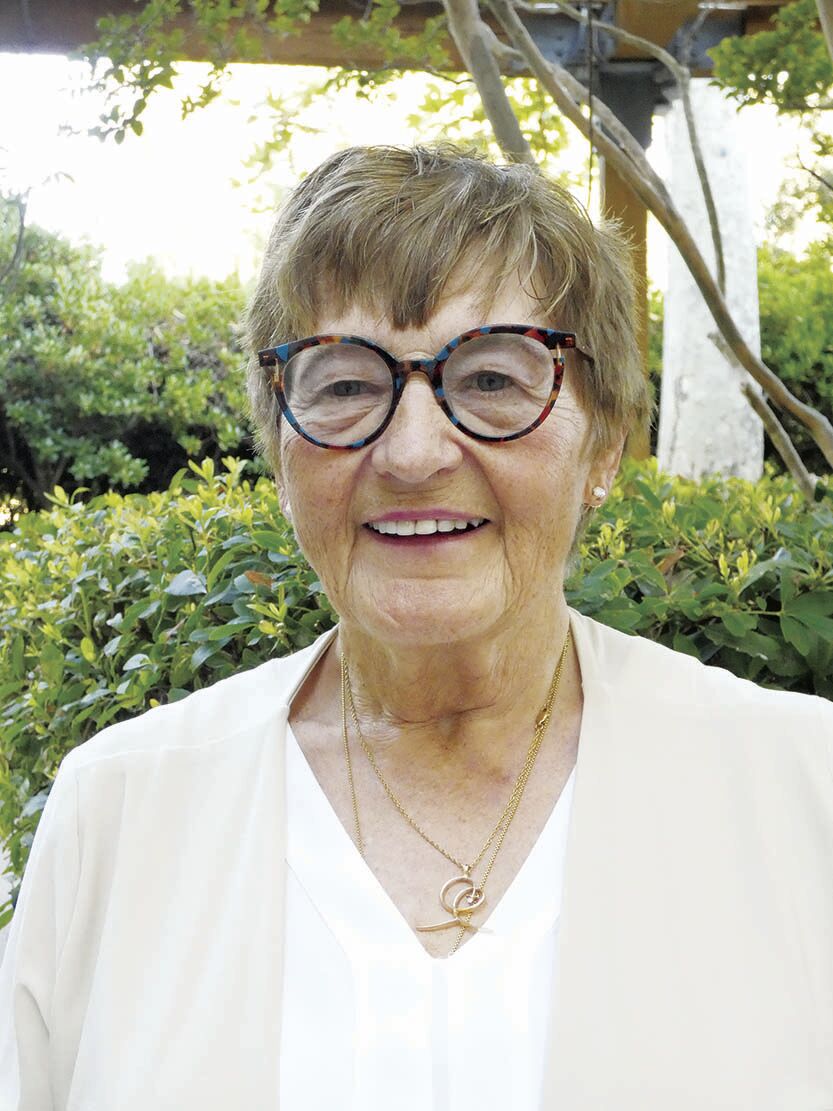
The answer is yes. In fact, Stanford University psychology professor emerita Dolores Gallagher-Thompson has spent decades working on the issue. And the longtime Los Altos resident speaks from experience as well as research: She cared for her aging mother for years, and now tends to her ailing husband of nearly 42 years.
Gallagher-Thompson collaborated with peers on a new book, “Family Caregiver Distress,” released earlier this year.
“This is the first book that takes a deep dive to answer the questions that mental health providers encounter when working with family caregivers,” according to promotional text for the book. “Just what are the unique issues family caregivers face? How does this impact their mental health? What can providers do to help?”
Specific focus is given to the caregivers of people with Alzheimer’s disease and other forms of dementia. Gallagher-Thompson’s book offers solutions for caregiver distress that include cognitive behavioral therapy, acceptance and commitment therapy, and other forms of small-group intervention programs that teach caregivers a variety of coping strategies to use in their everyday lives. A wide range of mental health professionals – from marriage and family counselors to social workers and nurses – can all benefit from the book’s information.
“The impetus (for the book) was that many providers that we speak with, people who are working in health care … find that caregivers are more and more acknowledging distress and seeking help for themselves,” Gallagher-Thompson said. “But most of these providers don’t have much education about caregiving. They completed their training before caregiving became such a hot topic, and so they typically don’t have a lot of up-to-date, specific information. So, this book was intended as kind of a primer.”
Gallagher-Thompson offers several options for providers and families that cover solutions for common mental health illnesses such as depression, anxiety and feelings of being overwhelmed. The solutions she stresses are “nonpharmacological. … We focus on the nonmedical ways that caregivers can be helped. And we even put in some information about billing codes that providers can use. Because that’s one of the first things they say – ‘Well, you know, I don’t get paid for seeing the caregiver. I get paid to see the patient.’ That used to be true, but it’s not any more. Medicare has introduced many new codes in the last year or two that allow for the family be treated as well as the patient … and so that’s what we’re trying to also get out to providers – that they can be reimbursed for the time that they spend with the family as with the patients themselves.”
Gallagher-Thompson said her aim is providing information “in a straightforward way so that people will be interested and follow through, and
they’ll act upon it.”
While it’s intended mainly for health-care providers, Gallagher-Thompson said families can learn about why they’re feeling distressed, what can be done and how they can get help.
Released over the summer, the book already has drawn a hearty endorsement from a medical colleague.
“This book is a treasure trove of practical guidance for psychotherapists who work with clients who are caregivers,” writes William E. Haley, professor at the School of Aging Studies at the University of South Florida in Tampa. “It is unique, exemplary, clinically relevant, inspiring, and will be required reading in my courses.”
Where to get help
Gallagher-Thompson, who has decades of experience in psychotherapy, points to “three pathways” for stress relief.
One is one-on-one therapy – such as cognitive behavioral therapy, wherein caregivers can learn to modify how they think about their stress and what they can do to manage it more effectively. Acceptance and commitment therapy teaches caregivers there are things they can control and others they must accept, which is the first step to learning methods of stress reduction.
The second is taking advantage of online programs. For instance, Stanford’s Neuroscience Health Center has community programs both for the patient and caregiver. Most are geared to those with neurological disorders such as Parkinson’s disease or dementia. The programs are free.
For the third pathway, Gallagher-Thompson recommended contacting social workers who will “help families help the caregiver figure out what to do, which oftentimes reduces the distress a lot – for example, getting someone enrolled in a daycare program. There are options that social workers know about and they’re good at arranging and helping you get hooked up with the right service.”
Other resources:
• The Institute on Aging’s “friendship line” for seniors in need, (888) 670-1340. For more information, visit
ioaging.org/friendship-line/california.
• The Alzheimer’s Association’s national help line, (800) 272-3900. For more information, visit alz.org/
help-support/resources/helpline.
• Health-care apps, provided by companies such as Photozig (photozig.com), some available 24/7.
To order Gallagher-Thompson’s new book, visit tinyurl.com/tmv9fjcz.