Children develop their earliest musical abilities by watching and listening to the musical world of the grown-ups around them – not through formal taught instruction.
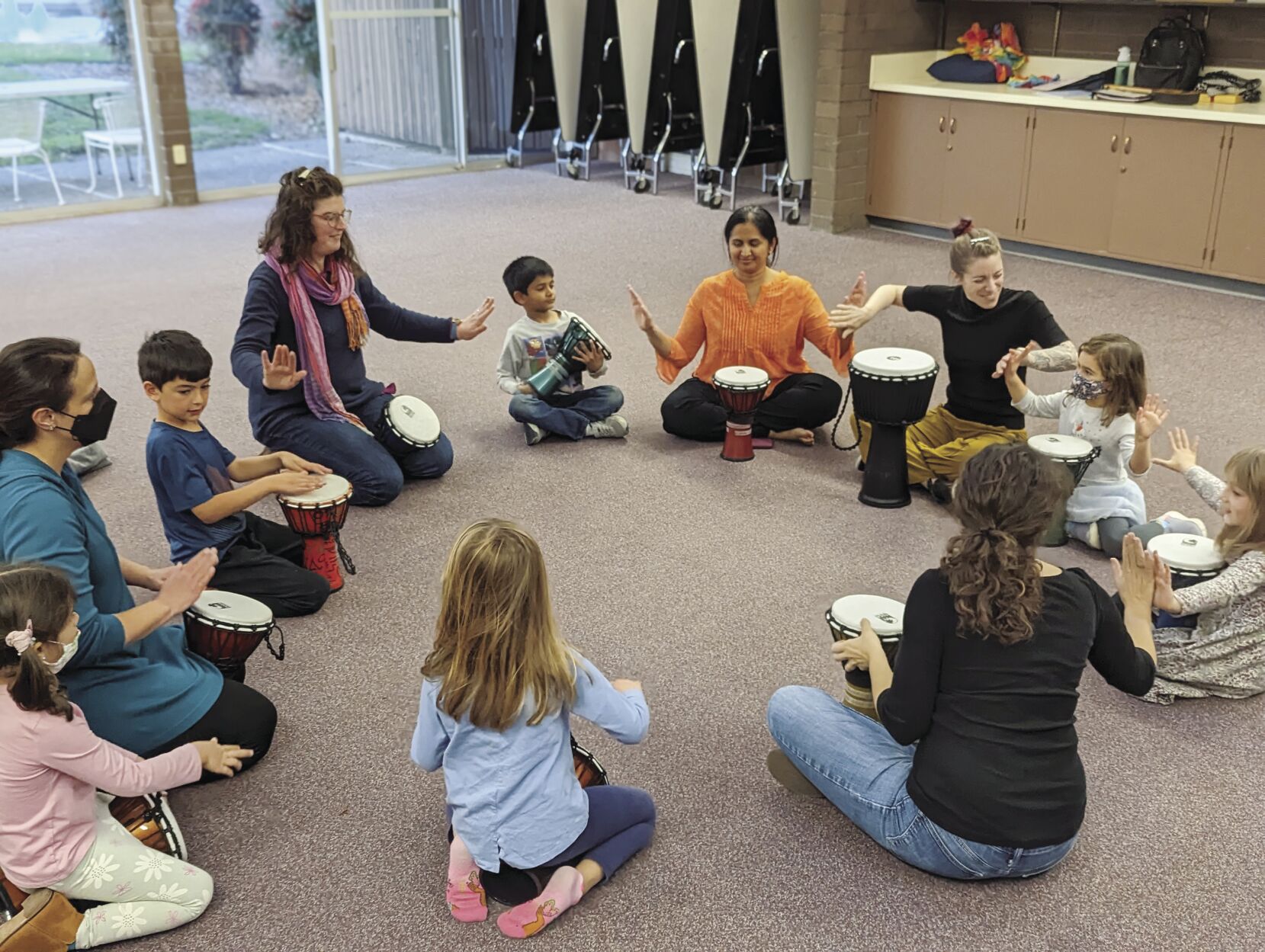
That’s why local early-childhood music educator Rizzie Vacketta includes parents in her music classes – and has even taught evening guitar classes as a bonus to encourage the eager beavers among her adult family participants. She teaches for Music Together, which gathers children and their caregivers from infancy onward at local venues such as Los Altos Lutheran Church and the Sunnyvale Community Center.
Vacketta’s a singer in the Bay Area band The Inciters and a multi-instrumentalist, playing saxophone, guitar, ukulele, piano and – as a teacher – a djembe drum, with which she leads a cohort of her “older” young people (ages 4-8) in curriculum that begins to introduce the rudiments of harmony and music theory amid collaborative musical games.
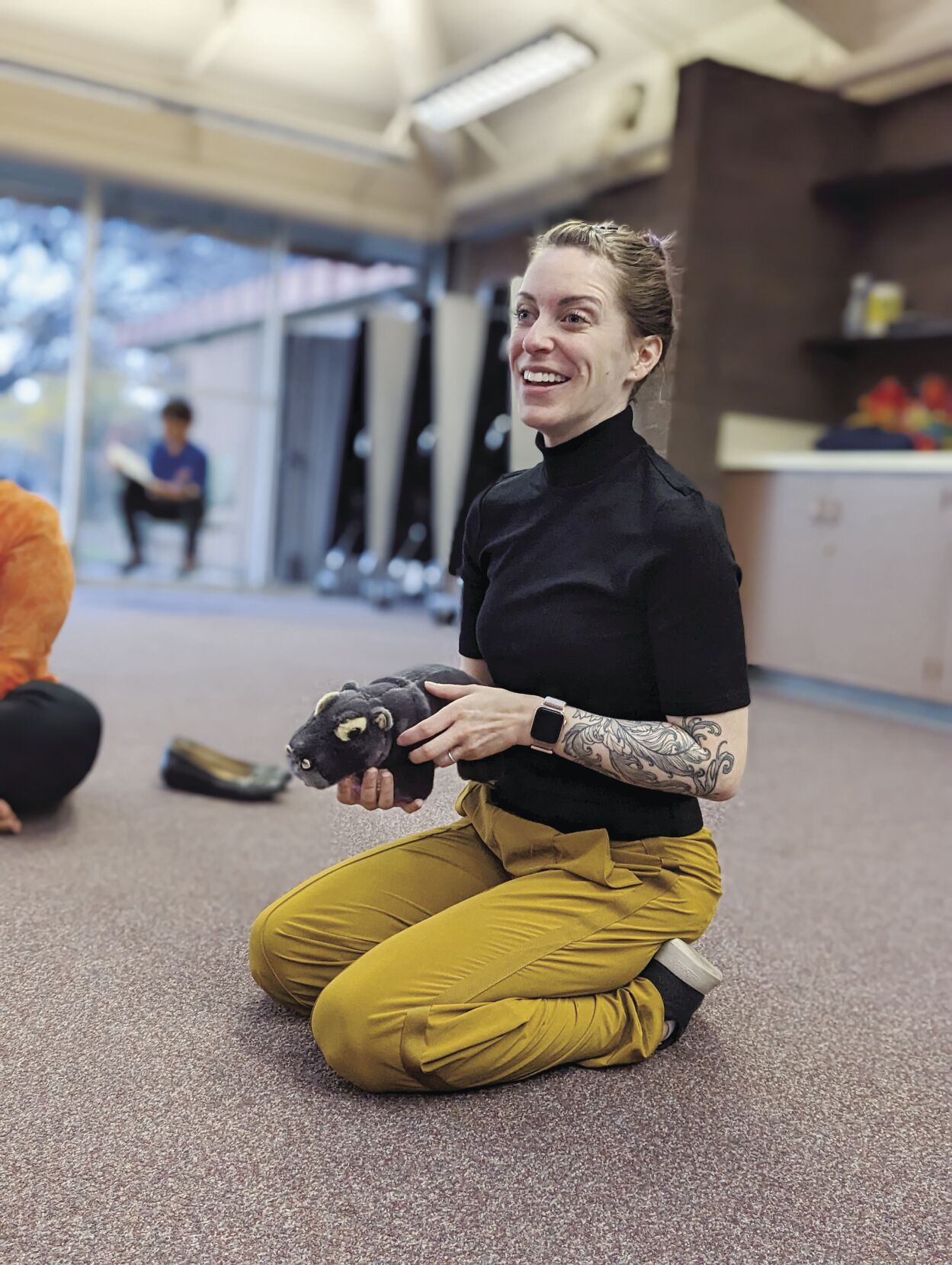
Practicing for hours at home alone was Vacketta’s idea of fun as a young person, but she wasn’t just born with that musical streak – she also has vivid childhood memories of listening to her dad play albums in his office while singing along and making up his own words to lyrics he didn’t know.
In a Q&A with the Town Crier, she discussed what she’s learned about the power of parents who can lean into musical play – even if they’re untrained (or untuneful) beginners. Our interview was edited for brevity and clarity.
Q: Why did listening to your dad’s Bob Marley backing vocals matter to you, in hindsight? It was the first thing you thought of when I asked about how families can spark music in a child’s life.
A: I didn’t think much of it when I was a kid, I used to just be playing with toys in the corner of the office while my dad was doing that. But now as an adult and as a music teacher, I know it was really meaningful – that authentic enjoyment of music from somebody who doesn’t have any music background. He didn’t have much music education in his life, but I think that authentic, kind of unfiltered enjoyment is an important thing to pass along to kids, because that’s the first seed.
There’s this cultural divide we have, of people who consider themselves “music makers” – that’s a small percentage – and then there’s everyone else, who says, “Oh, well, I’m not a musician, I barely know how to play the radio.”
Culturally we have this idea of what it is to be a musician, and it seems so far away for people, but it’s actually not that far – the difference between the mom who lives next door and Lady Gaga is just a lot of practice. If you have (innate) potential for music making and you never nurture it, never practice, somebody else who has no aptitude for music can easily surpass you by putting in a little bit of time – or a lot of time.
Q: Many parents remember how hard it can be to enjoy making time for regular instrumental practice from their own childhoods. How do families keep it from being a stressor, or feeling like a chore?
A: If you’re in a lesson one day a week, what do you do with those other six days? There are tons of tiny actions that can add up to make a big difference in someone’s music skills over a lifetime. How can you sneakily be practicing music, even if that doesn’t look like “music practice” on the outside?
The easiest step is listening to your music – both to your favorite artist, and to not your favorite artist, because expanding our horizons is really important. There are no shortcuts; you have to listen.
Practicing doesn’t have to only be a thing I’m going to carve out X number of minutes and be in a certain room to do. When I’m walking around, sometimes I’m thinking about music that fits to whatever pace I’m walking. If I’m bored somewhere, I’m doing these (finger) exercises, practicing isolating fingers – can I lift them on the beat? What if every time you walk by the piano, you just do two quick chord changes? I always like to tell people to leave their instruments out. Then it’s something you can walk past and grab, real quick. It’s like your piggy bank – if you just put your pennies in every time you walk past your instrument, it adds up to be a lot.
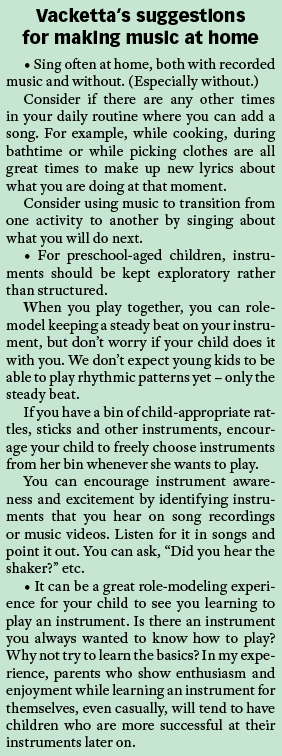
Q: Why is it important for children to see the adults in their lives loving music? You’ve said that listening to recordings or watching videos doesn’t have the same powerful effect without that participatory play, and that’s part of why Music Together requires caregivers to join in at each class.
A: The grown-ups who are closest to us are the ones who make that essential impact, under age 5 or 6. Maybe they can’t make perfect music, but perfect music doesn’t exist. Your authentic enjoyment of music – whatever that looks like for you – you’re the only one who can give that to your kid. A lot of kids entering preschool or elementary schools haven’t reached the milestones of being able to keep a steady beat, and being able to sing something on pitch. Decades ago music was something that had to be made rather than passively consumed. People had more instruments in their house.
A lot of parents might assume, “If I’m playing (recorded) music all the time at home, that is a substitute for me making music with my kid or me just singing to my kid. For example, a lot of parents will play a lullaby CD for their kid when they go to sleep. How much more meaningful is it for you to sing that imperfect lullaby? Some kids are not a forgiving audience, and that’s OK, that’s normal.
So many parents will come into class and say, “I’m not allowed to sing anymore because my 3-year-old keeps telling me ‘no no no’ every time I sing,” and some people take that personally because it’s a really vulnerable thing to sing in front of other people. That 3-year-old might be exercising their independence (and use of the word “no”) or trying to focus on a certain element of the recording you were singing along with. Be proud of that and keep singing as much as you can!
Q: You described participating in a musical masterclass led by Ghanaian musician and scholar Kofi Gbolonyo where he explored cultural difference and the experience of music. He showed a recording set up in a large room, with participants including women wearing babies on their backs and toddlers hanging out during the recording.
A: You would never see that here – nobody would bring a baby into a recording studio. The babies were relaxing peacefully there, surrounded by music. It immediately made me think of what a different upbringing that is – to be immersed so fully in music to the point that you are “trusted” (by our cultural standards) to be within range of a mic during a recording session.
The environment itself cultivates musical fluency and understanding from birth. Kofi was talking about how it was a pretty big culture shock when he went to see the Vancouver Symphony and the attendant at the door was hesitant about allowing his daughter, who was 3 or 4 years old at that time, inside. They were worried that she would make noise or be distracting to the audience. He reassured them that she would be fine, and sure enough, she did not make a peep for the entire concert. It was such a foreign thing to him, because in so many other parts of the world, kids are part of the music experience and they grow up with it.