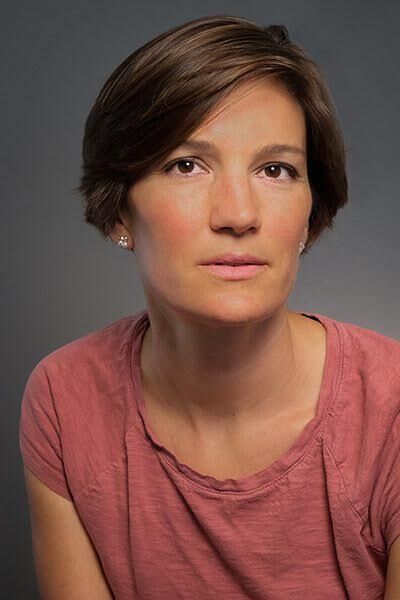
Dr. Christine Henneberg, author of “Boundless: an Abortion Doctor Becomes a Mother,” spoke with a large Zoom audience on Jan. 22 about the challenges facing supporters of reproductive freedom in upcoming months. The event, sponsored by the Silicon Valley branch of American Association of University Women (AAUW) marked what would have been the 51st anniversary of the 1973 Roe v. Wade Supreme Court decision which gave women the right to choose whether to continue a pregnancy. This precedent was overturned by the current Supreme Court’s Dobbs decision in June 2022.
Henneberg is a practicing physician, specializing in providing abortion services and counseling. She has written about reproductive rights and the repercussions of the Dobbs decision for the Los Angeles Times, The Atlantic, The New York Times and other news outlets.
“The post-Roe world is not going to be the same as the pre-Roe world,” Henneberg said. “We need to understand the differences. We are not simply trying to regain reproductive freedom for our daughters and granddaughters, but also to obtain reproductive justice for women who are not like us, who lacked access to abortion even before the Dobbs decision.”
One key difference between pre-Roe and post-Roe is the availability since 2000 of safe and reliable medication abortion, which now is used in over 50% of abortions.
A second difference is the increasing occurrence of self-managed abortions (SMA), due to the wide availability of medication abortion materials through the Internet. In most cases, SMA goes well, but in a small percentage of cases there is a need for medical backup.
This leads to the third difference, the rise of concern about reproductive justice.
“Choice is a goal for white women,” Henneberg said, “but for Black women the issue is sexual freedom – freedom to have a child, or not have a child, and to raise a child in a safe and supportive environment. The Hyde amendment [which prevents federal funds from being used for abortions or abortion counseling] effectively cut off access to abortion for many women of color even before Dobbs.”
In states where abortion is illegal, a woman who encounters problem with SMA may be at risk of being arrested if she seeks help. Even in states where abortion is still legal, women who have a fear of authority due to past experience, illegal resident status or other issues may avoid the health care system.
Henneberg began her medical practice in California’s Central Valley, where her patients were often women without a social or medical safety net and without financial means to support an additional child. “We who are meeting today have a lot in common,” Henneberg pointed out. “We are college-educated, mostly white and mostly secure. We need to be aware and actively concerned about women who are not like us.”
In the Q&A session after her talk, Henneberg was asked “In the anti-abortion world, why is there so much emphasis on the poor little fetus and so little empathy for the mother?”
“The anti-abortion movement is not really about protecting children,” answered Henneberg. “It is about controlling women. And in the bigger picture, even obstetric care attention focuses on the baby, not the mother. Once the baby is born, everyone coos over the baby, but how many stop to ask the mother how she is feeling?”
Asked about local actions the audience could take, Henneberg recommended Access RJ, a nonprofit which helps women living in “abortion deserts” where there are no local practitioners.
She also reminded the audience to vote in local elections and pay attention to candidates’ views up and down the ballot and encouraged them to volunteer in elections where abortion is an issue.
“In states where abortion is now illegal ‘except to save the life of the mother,’ there is little training and less experience with the procedures for upcoming medical students and residents,” Henneberg said. “And practitioners with experience are leaving these states because they don’t want to face a choice between proper medical treatments and possible arrest.”
When asked “What do you feel about the Supreme Court possibly ruling against medication abortions?” Henneberg replied “I am terrified.”
Attendees of the Zoom meeting included AAUW branch members from at least four Bay Area counties as well as some out-of-state members. Many prepared a pro-choice sign for display in a group screenshot at the close of the meeting to share on social media.
The AAUW Silicon Valley branch was recently formed from the merger of the Los Altos-Mountain View and Palo Alto branches.
For more information about AAUW Silicon Valley and its activities please check the website at siliconvalley-ca.aauw.net or for membership information, please contact Susan Ware, membership chair, at [email protected].