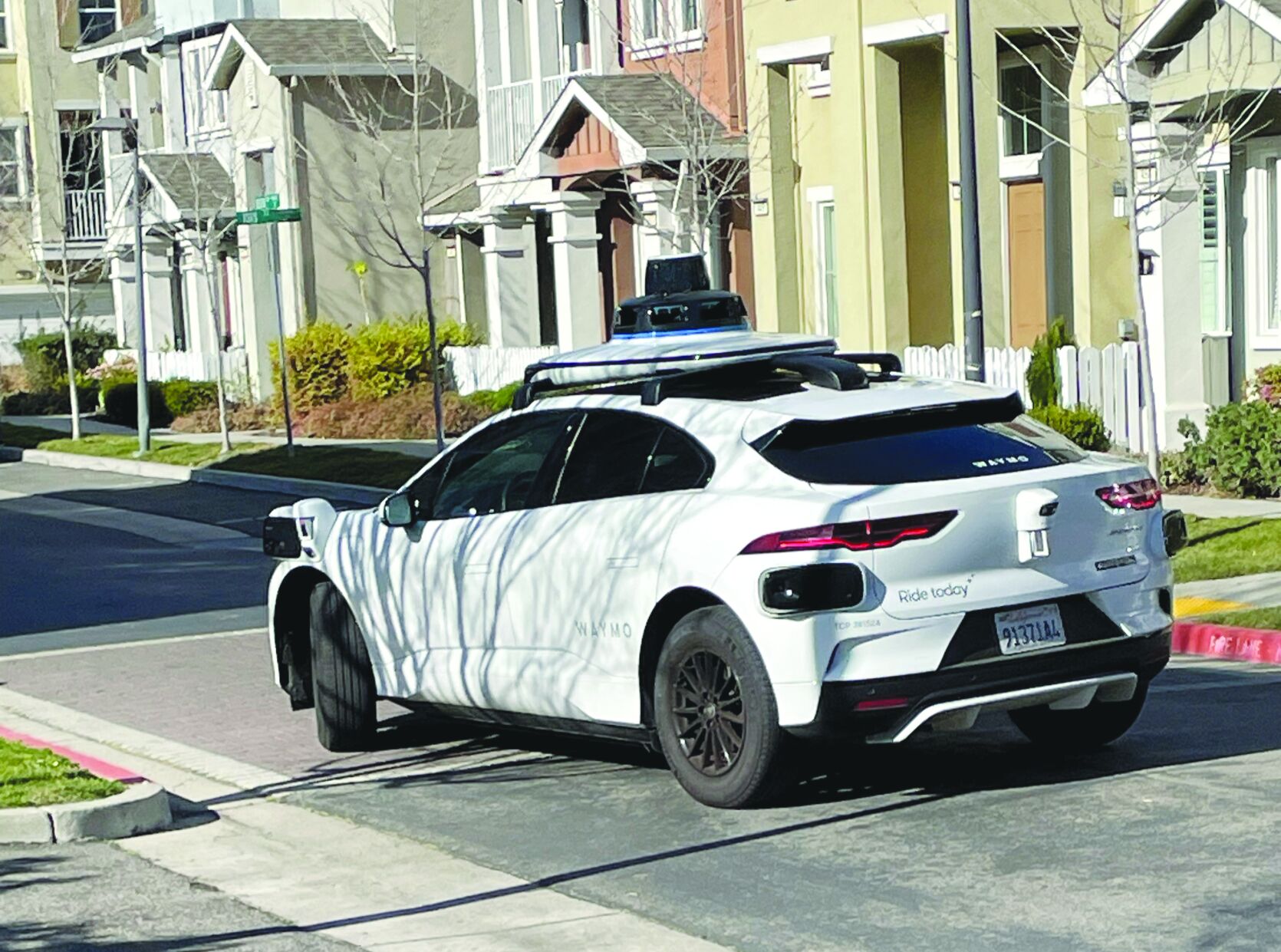
With Waymo’s autonomous cars approved for deployment across California and taking over local streets, police departments are beginning to keep an eye out for malfunctioning cars.
The Bay Area Waymo fleet – encompassing San Francisco, the Peninsula and parts of the South Bay – consisted of 800 cars as of August, according to a San Francisco Examiner report (Waymo declined an interview request).
Yet, even with the cars’ increased presence in the area, the city of Mountain View’s Chief Communications Officer Lenka Wright said in an email that problems with Waymo have been “infrequent.”
Wright said there was a recent “minor issue” that caused Waymo cars to be “confused” at a flashing traffic light where construction was taking place.
“Multiple Waymo cars … were stuck within the intersection when the signal was in flash mode,” Wright said. “Staff contacted Waymo directly with the concerns and were told that their engineers would be notified.
Approximately 10-15 minutes after contacting Waymo, the cars were cleared from the intersection, according to Wright.
Monica Leon, Mountain View’s police media and community relations analyst, said in an email that the Mountain View Police Department maintains a “direct law-enforcement contact” at Waymo and reports any improper driving to this contact. This includes malfunctions – like that of the aforementioned flashing red light – and other behaviors like speeding.
Leon noted that Waymo has historically responded to these malfunctions by dispatching engineers who then remove the autonomous cars by manually driving them out of the area.
Kevin Vitorelo, a traffic officer with the Los Altos Police Department, said Waymo support can also be contacted by tapping on a car’s window or scanning a QR code on the exterior.
“It’s a little difficult with autonomous cars right now, and we hope that eventually they do the right thing, safely, as they’re supposed to, because all the electronics are supposed to follow the rules of the California Legislature,” Vitorelo said. “However, in Los Altos, we haven’t had many instances of Waymo (cars) not following the rules of the road.”
Vitorelo noted that Mountain View police have reported to Waymo several instances of its autonomous cars misbehaving.
In terms of policing these cars, what remains up in the air is the process by which city officials issue citations to autonomous cars, according to Leon.
Vitorelo said the California Legislature does not allow law enforcement to ticket driverless cars. Per current law, a ticket must be issued to an actual, physical driver. However, Assembly Bill 1777 –already signed by Gov. Gavin Newsom – will allow law enforcement to issue warnings of noncompliance to autonomous car companies.
“It will go into effect in July 2026,” Vitorelo said. “However, it’s going to involve the DMV directly. And as of right now, the DMV has not released any information on how the process is going to work, or what it’s going to entail.”
Although Jonathan Groveman of the Department of Motor Vehicles declined an interview, he noted in a statement that the DMV has the authority to investigate any situations involving the operation of autonomous cars on public roads.
The statement also said the incidents the DMV regularly reviews with autonomous car manufacturers include operations around construction zones, extreme driving behavior, crashes, cars impeding traffic interactions with vulnerable road users and other safety-related situations.
Presently, manufacturers are only required to report crashes during testing and disengagements of autonomous cars, according to the DMV. Crashes that occur under a testing permit must be reported within 10 days. Disengagements – when a safety driver is required to take control of an autonomous car – are reported annually by Jan. 1. All collision and disengagement reports are made public on the DMV’s website.