A grade separation project on the train crossing at Rengstorff Avenue in Mountain View has had $58 million cut from its spiraling $453 million budget.
Mountain View City Council voted unanimously at the Nov. 18 meeting to reduce the project cost with a combination of cuts to construction methods, sequencing and duration, contingencies and fees and design modifications.
The city has spent more than 20 years planning for the design, construction and implementation of the project, but delays such as the COVID pandemic and mounting construction costs have ballooned the cost from initial estimates, said Assistant City Manager Dawn Cameron.
“Much of this delay was due to Caltrain project management staffing shortages as well as long decision making and contract processes as well as extensive value engineering processes,” she said.
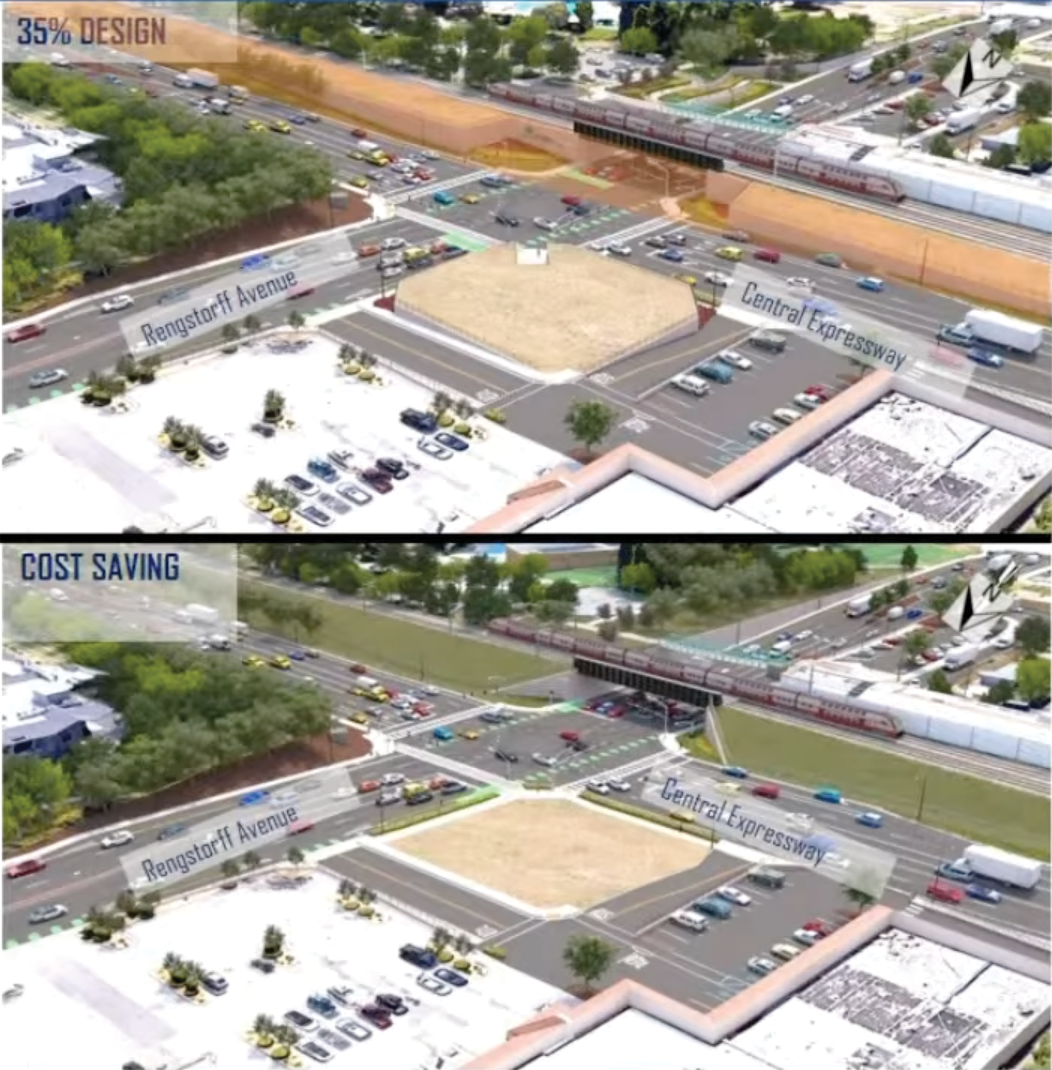
The Rengstorff Avenue grade separation project is intended to improve safety and commuter access and eliminate crossing delays from lengthy gate down times due to the passing train access to schools and business parks. The project will depress the intersection of Central Expressway and Rengstorff while maintaining the same level of the train tracks, adding bicycle lanes and aligning Leland Avenue, Cameron said.
“This is an environmental justice issue because we’re going to provide a much easier and safer environment for a part of our community that is very dense. It is important that everybody get good service and good city services like this,” said Councilmember Pat Showalter.
The cost has nearly doubled since the project began. The cost estimate has gone from $262 million in October 2022, to $325 in January 2024, to $453 million in October 2024. The shortfall of funding is $159 million.
Public Works Director Jennifer Ng said the greatest risk to the project is more delay.
“Each year of delay can cost us an anticipated $9 to $14 million dollars in cost increases for every bit of moving the start of construction beyond 2027,” she said.
The construction, fees and contingencies cuts amount to $52 million in savings. The design modifications, about $6 million, must be approved by the city council. The cuts include the removal of retaining walls on Central Expressway and eliminating a new pathway in Rengstoff Park.
“It’s always hard to figure out ways to cut costs,” said Councilmember Chris Clark.
The city still has its gripes with Caltrain.
“The city needs to be treated as a partner and not a client and brought in early for input on technical plans and studies,” Ng said.
A meeting in August with Caltrain and nine city managers from municipalities along the Caltrain corridor emphasized the need for quick project delivery and minimizing cost increases. The group will meet again in December, Cameron said.
“Bottom line, we are not alone and Caltrain recognizes (that) and we’ve been talking to them that we need progress, we need solutions,” she said.
Caltrain, a commuter rail service between San Francisco and Gilroy operates 104 trains per weekday, resulting in 17 minutes of gate down time per hour during peak hours. The Peninsula Corridor Joint Powers Board (JPB) is the owner and operator of Caltrain.
Caltrain will now proceed with completing a 65% design on the project. It will then proceed into final design and construction.