

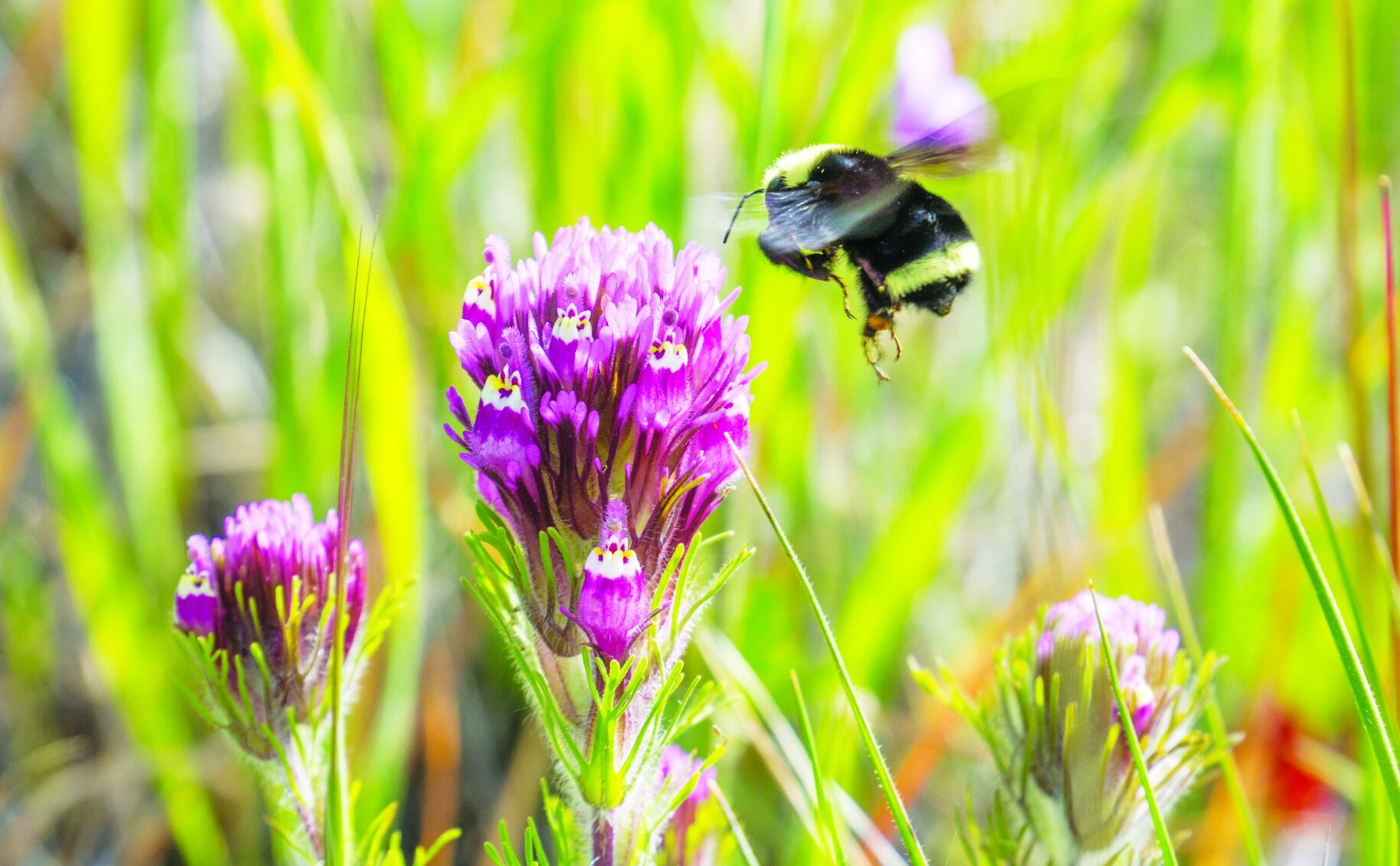
The Crotch’s bumblebee has seen a decline in population over the years along the California coast and is now a candidate for the federal endangered species list. However, there have been recent sightings of this pollinator not far from Los Altos.
A research team from the Los Altos-based Midpeninsula Regional Open Space District reported in July that it has discovered Crotch’s bumblebees in Palo Alto, including Baylands Nature Preserve and the southern part of San Jose.
“This rare bumblebee is a really great example of what makes this area really special and what makes it a biodiversity hotspot,” said Leigh Ann Gessner, Midpen’s public affairs specialist. “So, part of Midpen’s role is recognizing that about our area and working to preserve and protect that biodiversity. This little rare bumble bee that probably most people have never heard of and don’t know about is a part of that story.”
Nate Chamberlin, wildlife intern at Midpen, said a study by the Xerces Society for Invertebrate Conservation showed a decline in abundance and range of the Crotch’s bumblebee. Xerces argued that the bee warrants protection under the International Union for Conservation of Nature’s Endangered Species Act because it’s “likely the decline is a longer-term thing,” Chamberlin added.
The native Crotch’s bumblebee “is nearly endemic to California and at this point, it seems like it is only found in California,” Chamberlain said. “It has historically been found all over the Central Valley, all over Southern California and all over the Bay (Area) and into Sonoma County.”
The decline in numbers can be attributed to several factors, according to Chamberlain.
“Two big issues are pesticide use or pesticide overuse and habitat loss,” he said. “This species is losing a lot of habitat to urbanization and agricultural expansion and kind of in line with the agricultural expansion, increased insecticide use also has impacts on bumblebees and there are some insecticides that are worse than others.”
Midpen researchers are trying to identify whether the Crotch’s bumblebees are in Midpen preserves so they can manage those areas in a way that allows the bees to thrive, according to Gessner.
“Most people are only familiar with ambassador pollinators, such as bumblebees, monarch butterflies and European honeybees,” Chamberlin said. “All pollinators play a necessary role in maintaining a healthy ecosystem, and the more we learn about each species the better equipped we are to protect them.”
To track where Crotch’s bumblebees have been located, visit bumblebeewatch.org.





