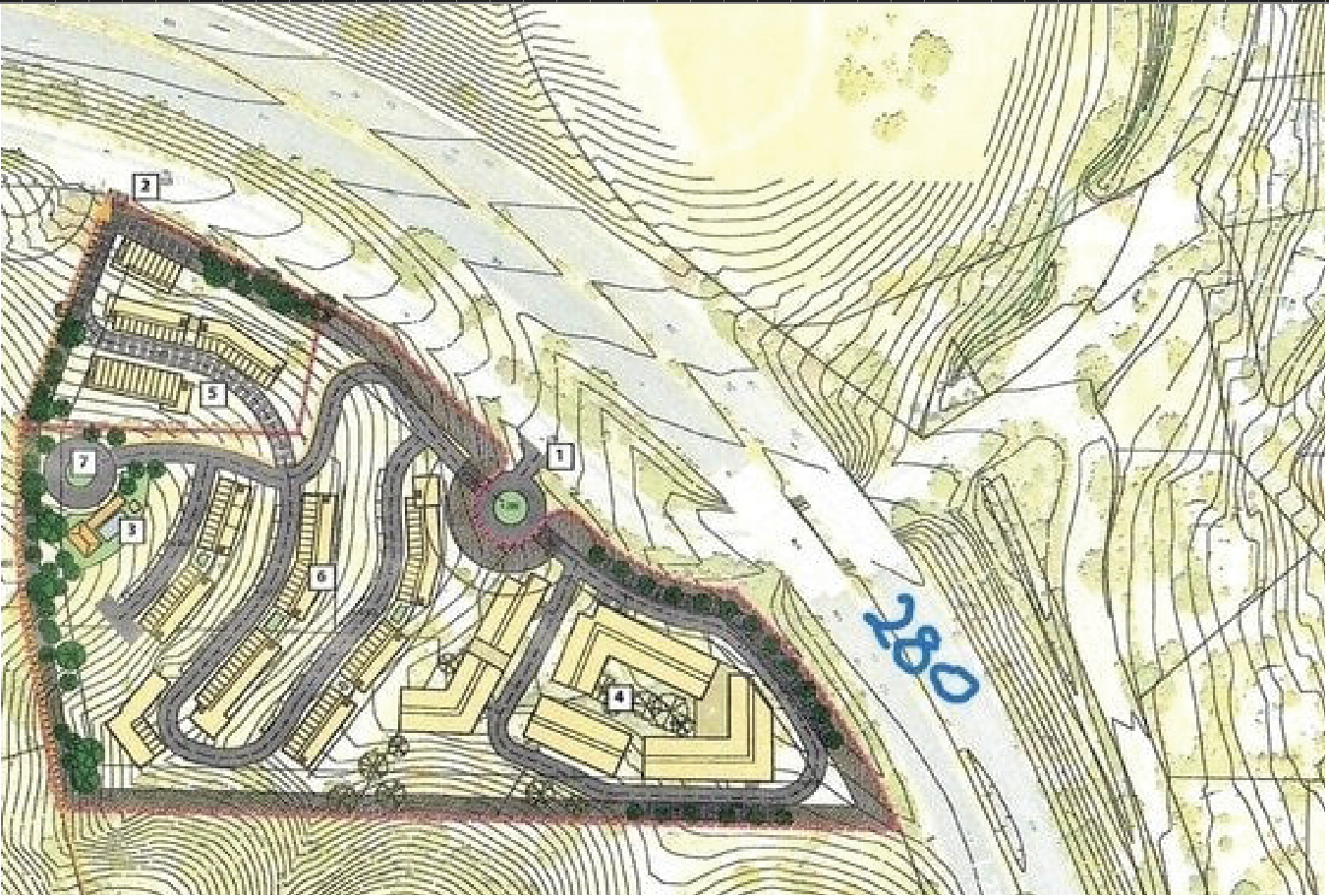
Residents in the Twin Oaks area of Los Altos Hills are concerned that the town’s Housing Element could allow for 300-500 new homes in the 15-acre area abutting Interstate 280.
That’s a far cry from the 1-acre minimum that has been part of town zoning throughout its nearly 70-year history. But a raft of state housing laws and mandates has cast such zoning aside in the name of addressing the longstanding housing crisis.
Still, Twin Oaks residents like John O’Connell and Michael Grady are wondering whether the town is going too far in its zoning to ensure housing element compliance. Housing elements are basically plans for how cities would address their housing needs.
“If they rezone all 14.5 or 15 acres, I think that there’s going to be no way for the town to control or prevent a multi-family development of perhaps as many as 500 units or more, but certainly well over 300 units,” Grady said.
He was referring to a “conceptual proposal,” discussed at a Sept. 25 community workshop on the Environmental Impact Report (EIR) process, that would develop 12.4 acres with 332 housing units. The development could benefit from a bonus density law, bringing the development past 400 units.
Residents subsequently submitted an online petition (reaching 275 signatures as of Monday), protesting what they saw as an expansion of zoning from the town’s certified Housing Element. That element listed Twin Oaks among three “opportunity sites” in town for generating more housing. It listed a potential of 92 units. The other two sites are the 17.2-acre St. Nicholas Catholic School property (which generated protest) and 14 acres at Foothill College. The town is required to provide conditions for 489 new homes by 2031.
“Conducting an EIR on 92 units on (approximately) 15 acres, then approving it, and revisiting the changes a larger development would affect (Twin Oaks) is a game, an irresponsible, disingenuous game that shows total disregard for the environment,” O’Connell said.
O’Connell and Grady want to see the town limit development to 4.6 acres and 92 homes, a number, they said, that already complies with the housing element. But City Manager Peter Pirnejad said re-doing Twin Oaks zoning at this point could decertify the Housing Element and leave the town open to even more excessive development.
“Staff is proposing a solution that maintains consistency with our Housing Element but allows flexibility in the zoning implementation,” Pirnejad said in a letter last week to residents. “One path that we heard over the course of our scoping meetings with the public was to limit the scope of the (EIR) to study a density that is lower than the maximum allowable density however consistent with the net yield we identified in the Housing Element that (state officials) certified. That means studying a net density at Twin Oaks of 92 units.
“This approach allows us to focus on the actual, more realistic development potential considering the limitations of the area and proximity to neighbor, while ensuring we remain compliant with state law.”
Pirnejad said the EIR requires the town review two additional alternative plans, which would be determined at the end of the public comment period on the EIR, set for later this month. Pirnejad did not specify a date and could not be reached for further comment Monday.