

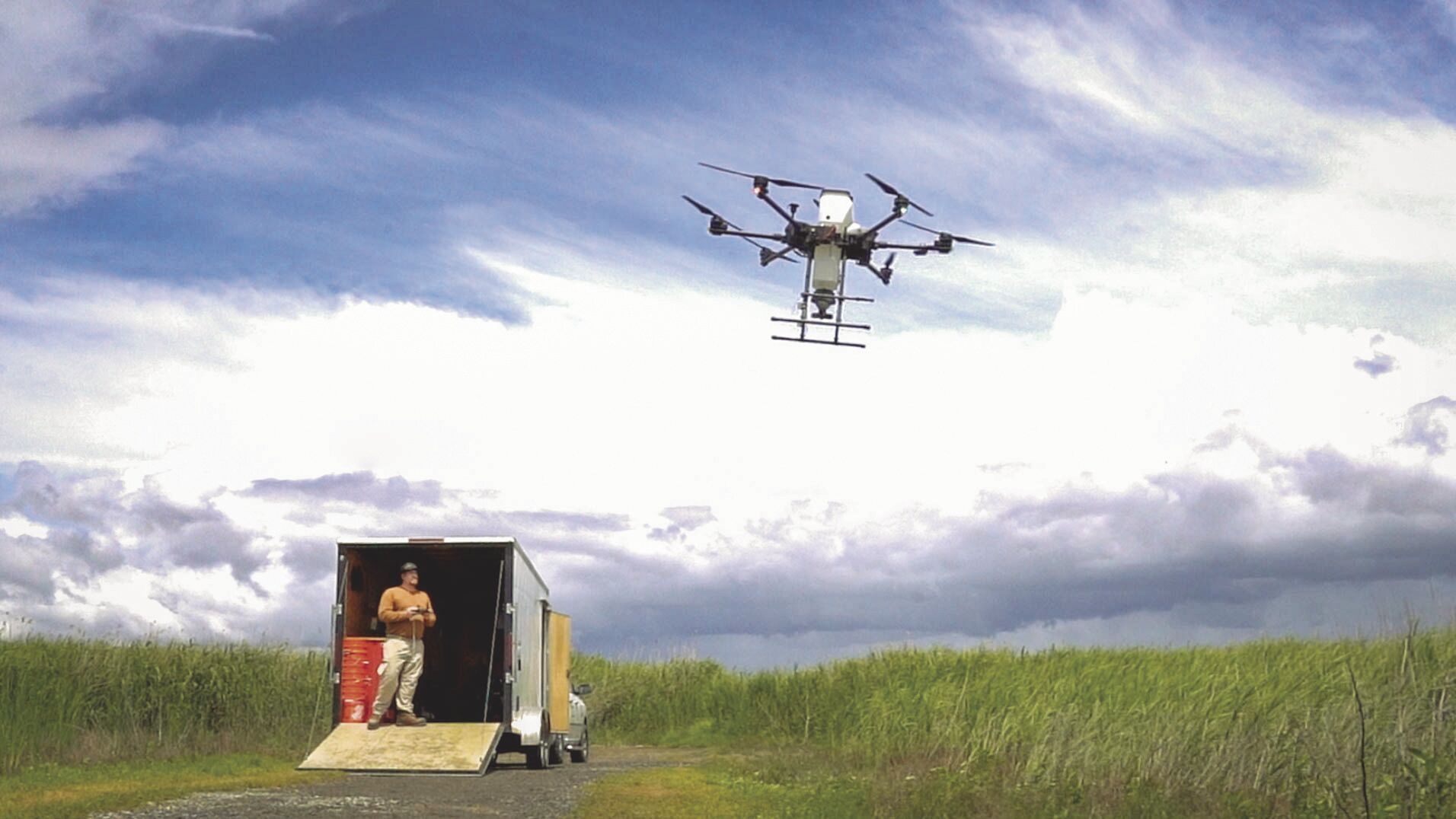
The Santa Clara County Vector Control District conducted its first mosquito larvicide drone flight last week after the County Board of Supervisors in April approved their use in marshlands and other nonresidential areas to reduce mosquito populations and control the spread of West Nile virus.
According to a May 1 press release, protecting public health is the primary goal of the project, especially for remote locations – though foot traffic may not pass through marshes, mosquitoes born there can travel up to 25 miles from their home as adults.
To date, no remote or nonresidential locations within Los Altos, Los Altos Hills or Mountain View have been identified as needing larvicide by drone, but larvicide will be deployed when needed manually by trained Vector Control District employees.
“The Vector Control District’s new drone program will protect not only public health, but also our staff and the surrounding environment,” said Edgar Nolasco, director of the county’s Consumer and Environmental Protection Agency, in the release. “Applying larvicide with drones is precise and effective and minimizes disruption to the
ecosystem along the Bay.”
An especially wet winter, the ninth-wettest on record in the past 129 years, moved the county out of drought conditions, but ample rains resulted in a number of stagnant bodies of waters, the preferred breeding ground for mosquitoes.
Female mosquitoes lay eggs on or near water, on soil or at the base of plants where water may accumulate, according to the U.S. Environmental Protection Agency.
When the eggs hatch, the mosquitoes enter the larvae phase, the second-to-last phase before adulthood, when the insects molt and usually surface for air, EPA officials report.
The larvicide the Leading Edge Aerial Technologies drones will deploy has been used in previous marsh mosquito treatments, said Aaron Kinney of the county’s Office of Communications and Public Affairs.
“It’s a bacteria and mosquito-specific hormone that, when consumed by mosquito larvae, prevents further development,” he said. “It won’t harm or hinder other aquatic insects.”
Kinney added that the type and amounts of larvicide used by the district “do not adversely affect” nontarget species.
“The larvicide program aims to decrease the abundance of mosquito larvae, which reduces the emergence of biting adult mosquitoes,” he said. “With a reduced population of mosquitoes in the environment, the risk of vector-borne disease transmission decreases, which reduces the need for adulticide treatments.”
Vector-borne diseases
West Nile virus numbers have remained low in the county – with no reported cases in 2023 as of April 6, one in 2022, three in 2021 and one in 2020 – and many who contract the virus exhibit mild to no symptoms, according to the Santa Clara County Public Health Department. Serious complications, such as meningitis and encephalitis, are rare but present a higher risk for those with certain medical conditions and older adults.
“The County of Santa Clara Public Health Department routinely monitors for occurrence of West Nile virus in humans, along with other mosquito-borne diseases that are often travel-associated, like malaria, Zika, dengue and chikungunya, in partnership with local medical providers and laboratories required to report certain diseases and conditions to Public Health,” a public health department spokesperson said.
Vector Control District and Public Health Department officials emphasized the importance of taking preventive measures to reduce adult mosquito populations in the summer.
The county provided the following tips aimed at eliminating mosquito breeding grounds on private property.
• Avoid overwatering plants and fix leaking sprinkles or water faucets.
• Drain objects that may hold water.
• Clean bird baths and pet bowls.
• Clear rain gutters.
• Ensure pools are at a water level high enough to accommodate efficient circulation and filtration.
Anyone experiencing a mosquito-related problem or aware of a mosquito breeding site can contact the Vector Control District for free assistance. To submit a service request, visit vector.sccgov.org/online-service-request. For more information, call (408) 918-4770 or email [email protected].





