

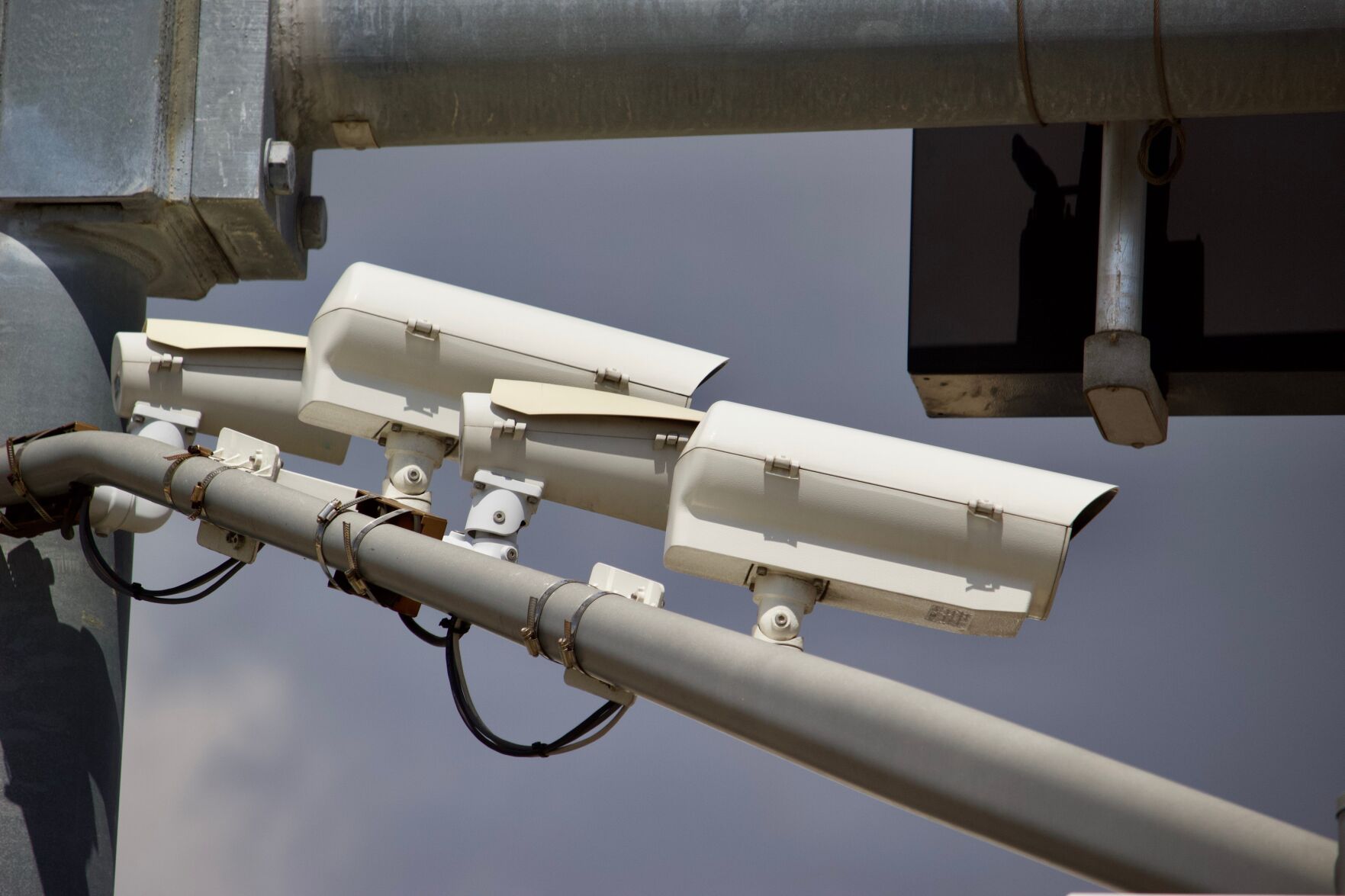
If the Los Altos Police Department is going to gain city council approval for automated license plate readers, department officials must supply more data that supports the technology’s crime-fighting capability while ensuring it is used fairly.
That seemed to be the message council members gave last week after they rejected a bid for installation of 25 ALPRs at a cost of up to $75,000.
Despite assurances from Police Chief Angela Averiett that ALPRs are effective and would be used responsibly, three members of the five-member council weren’t convinced.
Council members asked Averiett to return to a future council meeting with more specifics, including ongoing costs, proposed locations for installation of the ALPRs and projected impacts on all potential crimes. The council did not offer a specific timeline for Averiett’s return.
“It’s about getting it right,” explained Councilmember Neysa Fligor. “It’s about ensuring that before we make this big decision, incurring a minimum of $75,000 a year, and more as we know, we have the data supporting the decision.”
Pilot proposal
Up for consideration was a one-year pilot program employing the Flock Safety system, software and hardware its company says is designed to provide “objective evidence” while “protecting privacy and mitigating bias.” Also proposed was an ALPR policy, modeled after the city of Vallejo’s, that would clarify the technology’s uses – and what it could not be used for.
“It is expressly prohibited for members of the Los Altos Police Department to access ALPR data for the purposes of harassment/intimidation, use based upon a protected class or characteristic, to infringe upon First Amendment rights or as an invasion of privacy,” according to a city staff report prepared for the council. “ALPR data will not be shared with federal agencies to include Customs and Border Patrol (CBP) and Immigration and Customs Enforcement (ICE).”
The goal of the program, the report stated, was “increasing property crime solvability rates by 10%. The ALPR cameras will be placed throughout Los Altos in areas that are publicly accessible such as public roadways, public property and vehicles that are within public view.”
Police noted that ALPR technology would be especially helpful in solving crimes such as catalytic converter thefts, stolen vehicles, and residential and commercial burglaries. Averiett also pointed to effectiveness in locating missing persons through Amber and Silver alerts.
ALPRs capture the image of a vehicle, its plate and location. Passengers in the vehicle are not photographed. The image is run through databases and compared to lists of “vehicles of interest” to law enforcement. The technology is reputed to help police identify vehicles associated with suspects or victims, and to allow police to connect “serial” crime activities.
Data is stored for a fixed period, is accessible only by law enforcement, its data purposes are specified and data is subject to random audits to ensure the system is functioning properly.
Mixed reaction
Speakers at last week’s meeting were split between ALPR support for public safety and opposition due to potential errors and abuse that could target law-abiding motorists.
“ALPRs are riddled with a high error rate,” said resident Jeanine Valadez.
Added Brian Jones of the group Los Altos for Racial Equity: “Every new tool given to the police has the potential for abuse, and that somewhere at some time that abuse will take place, and that people of color will usually take the brunt of it. So, we need to be very deliberate and cautious about granting the police extra powers. In the case of
ALPRs, we’re creating a powerful database that can be misused, that has little to no empirically demonstrated effect on crime and is extremely expensive.”
However, two residents expressed support, noting they were victims of crimes. They wondered whether ALPRs could have made a difference.
“Two weeks ago, the catalytic converter from my car was stolen in front of my home,” Scott Spielman said. “There’s a dramatic increase in car crimes throughout this area, and car break-ins. … We have an elderly population that needs protection, and our police department is lean.”
Myra Orta said her Los Altos home was burglarized in 2019.
“We had surveillance cameras that couldn’t catch the license plate. And (the burglars) had parked up the street,” she said. “Perhaps they would have been caught if there was the license plate reader.”
Two council members, Lynette Lee Eng and Pete Dailey, supported going ahead with the pilot program and ALPR policy.
“I trust our chief. I trust our law enforcement members, who will be trained,” Lee Eng said. “I don’t think that we have to worry about abuse. Our law enforcement team has never made us question that any abuse has occurred within our law enforcement team, and to worry that there’s abuse of the tool, that is just very troubling for me to hear.”
Dailey said the anecdotes of ALPR effectiveness were convincing, and pointed out that Facebook likely had more information on users than any ALPR system would have on motorists.
“I believe that investing in a Flock system is an investment in equity,” he said. “I would much rather have officers responding to a flagged license plate than have them making contact with residents based on something that isn’t as definitive and objective.”
But Vice Mayor Jonathan Weinberg countered: “This is a really uncomfortable technology for me. On the one hand, there’s no question that we want to give our officers the tools that they need to be able to participate and respond to Amber Alerts … as well as keeping our community as safe. On the other hand, if we adopt the use of ALPRs, are we providing ourselves perhaps more security at the sacrifice of our privacy? And there’s no question that that’s true. And it’s concerning to me, because this technology in particular has been used in inappropriate ways – it has been used to target legally protected classes of people.”
The council’s stay of the ALPR program comes on the heels of the Los Altos Hills City Council’s vote last month to continue its ALPR program, which involves 40 cameras monitoring traffic at various locations around town.





