

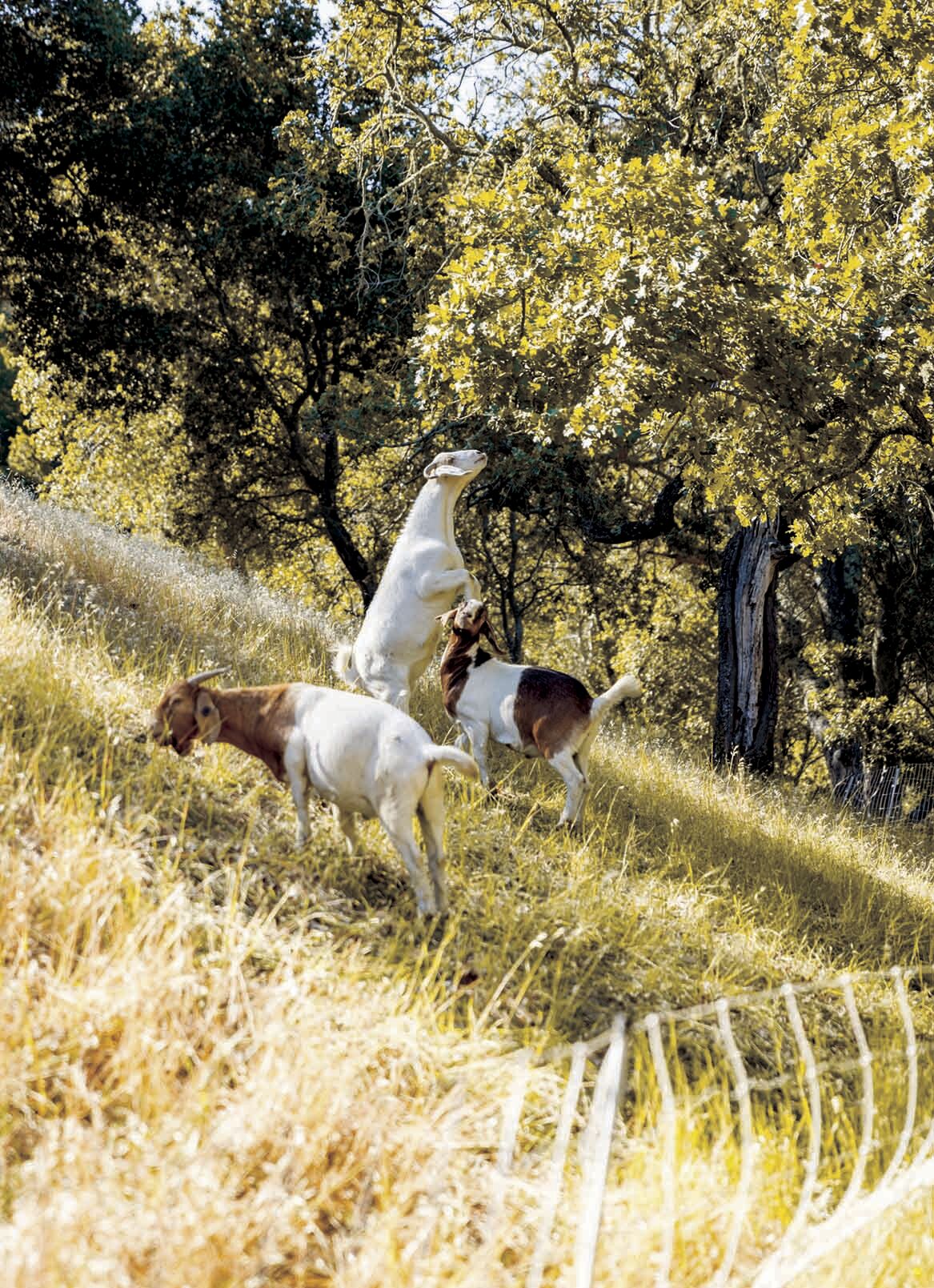
The perimeter of Los Altos Hills’ Byrne Preserve added temporary residents to its habitat last week with an annual visit from a herd of approximately 400 grazing goats.
The Los Altos Hills County Fire District’s contracted goats are multipurpose – not only do they help create a buffer zone between Byrne Preserve and local homes to control the spread of wildfires, but they’re also an excellent communications tool. The district has hired a herd to graze every year since 2006, but for the first time this year, the district and the town collaborated to bring visitors to the preserve for “coffee and pastry with the goats.”
Emergency services manager Denise Gluhan described the partnership as “agriculture meets community outreach.”
“Everybody loves the goats,” she said.
That’s important, because with the last major fire to hit the Hills in 1990, for some, fire prevention is not a big priority. Gluhan said fire awareness is very event driven – people prepare when there’s been a local fire in recent memory, but often let preparations fall by the wayside if they can’t think back to a time when their immediate surroundings have been threatened.
Alongside serving as part of the town’s vegetation management plan, this year the goats brought out a handful of hikers and Los Altos Hills City Councilmember Lisa Schmidt to hear from the fire district. Schmidt had goats growing up in Austin, Texas.
The goats are confined to a pen for a day or two, working their way around homes and critical infrastructure backing up to the preserve. Once the goats have chewed down to the roots system of an area, they move onto the next plot, until there’s a 30-foot perimeter of grazed-out land enclosing the preserve and protecting the Purissima Hills water tower. The goats aren’t left to run free, “otherwise they would eat only select tasty grasses,” said operations manager David Barnett.
Vegetation management
The theory behind vegetation management is basic – dead vegetation such as downed tree branches and dried grasses gives fuel for a fire to spread. Eliminating fuel, though “it’s not a promise that a fire is going to be controlled,” according to Barnett, decreases the probability that fire will spread. Lower grass equals a lesser chance of a fire spreading quickly from one area to another and a lower probability that jumping embers from an existing fire will find the fuel to turn into an all-out flame.
Less obvious to a layperson: Why goats?
“It’s the lowest impact,” Barnett said.
The fire district also brings in heavy machinery and human crews to remove vegetation, particularly along evacuation routes like Altamont Road; however, marshaling large groups of people and equipment in Byrne Preserve is not only generally costlier than contracting with a goat herder, but also increases the risk of erosion. Goats make ideal grazers because they weigh less than cows – creating less erosion – and are less picky than sheep.
“Goats eat everything,” Gluhan said.
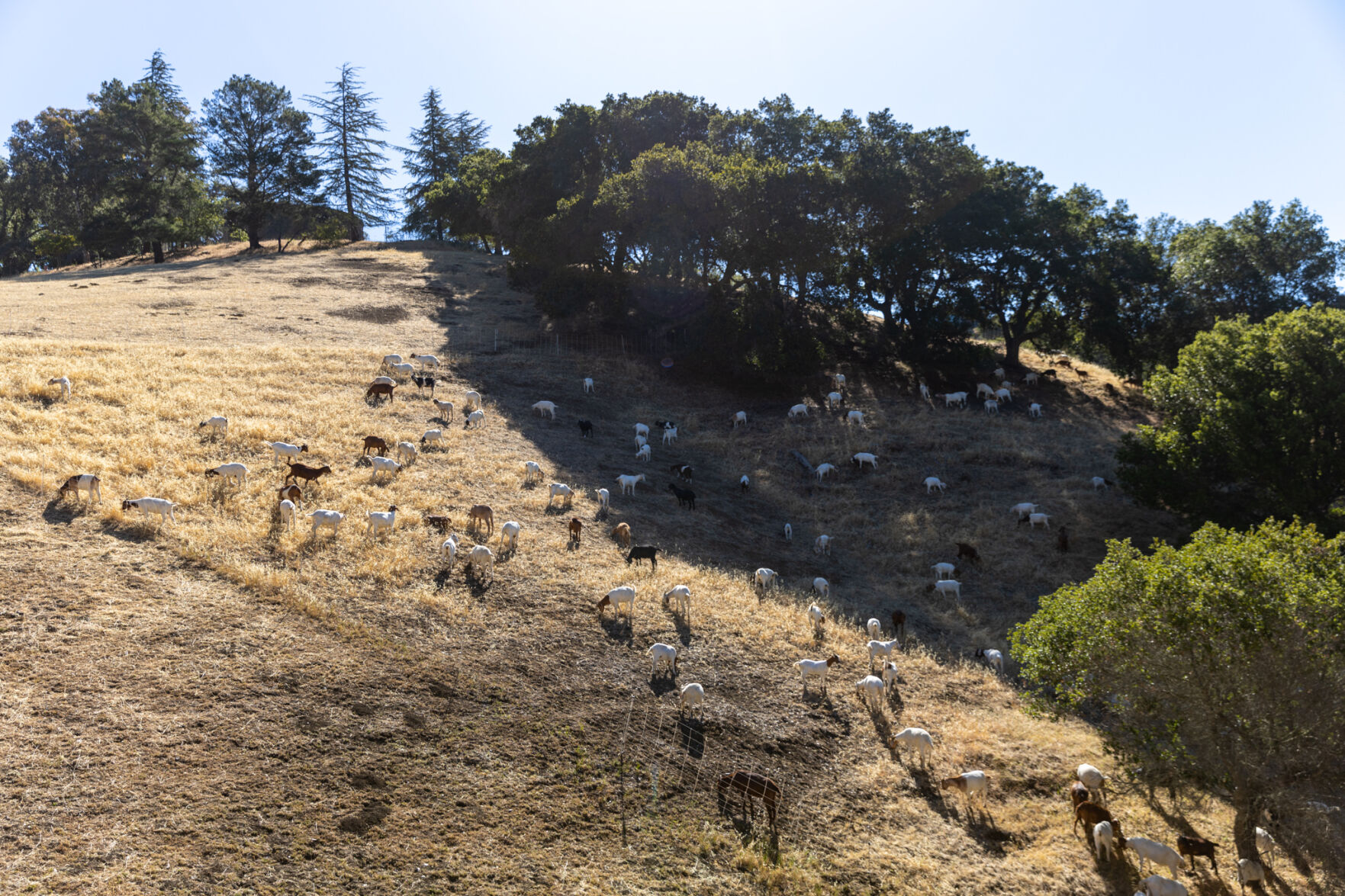
Goats can still be disruptive to the habitat. A handful of goats have been eaten by mountain lions over the years, Gluhan said, but for the most part, the use of grazers in vegetation management plans is a well-regarded tactic.
As the goats complete their perimeter, it’s also critical for property owners to take care of their own perimeter, Gluhan said. The minimum, legal standard for a “defensible area” perimeter around a home is 100 feet in all directions – and the fire district is well prepared to help Hills residents manage their property. Residents can opt to bring dead, organic material down to Foothill College for chipping.
Gluhan also encourages residents to take advantage of the free inspections offered by the district for specific recommendations on how to protect their home from fires.
For more information on the fire district’s programs, visit lahcfd.org/programs-for-residents.





