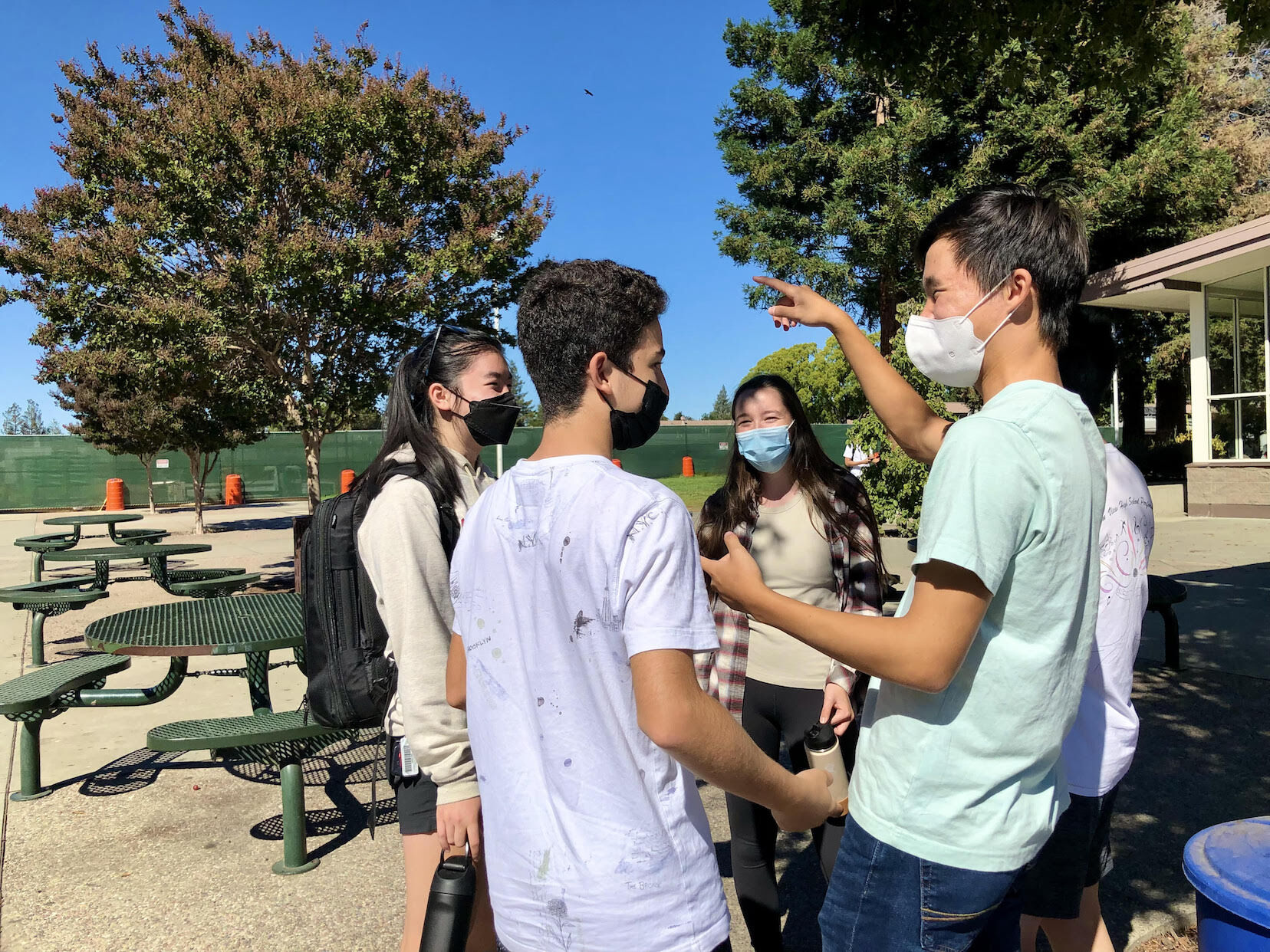
The state of California joined Oregon and Washington in announcing a new approach to masking Monday (Feb. 28), lifting requirements for indoor masking for both vaccinated and unvaccinated people and setting a date – end-of-day March 11 – on which schools and child care centers will no longer face a statewide mask mandate.
Individual counties and districts can maintain their own rules, so that doesn’t mean local schoolchildren will unmask March 12. Health-care settings, long-term care settings and jails and prisons will continue to have required masking.
The loosened requirements didn’t come with an endorsement to unmask – California Health and Human Services Secretary Dr. Mark Ghaly said masking is still “strongly recommended” and added that the state fully supported individual jurisdictions setting their own, more cautious timelines based on localized conditions.
In a press conference Monday, Ghaly described great statewide progress over the past two weeks, with case rates steadily declining, hospitalizations down nearly 50% and test positivity below 3% statewide. But he also noted that children ages 5-11 have the lowest vaccination rate of any age group in California, and children under age 5 have not had access to any COVID-19 vaccine.
“We put a lot of energy into building up testing capacity last year,” he said. “Thousands of districts have weekly testing programs that are able to help pick up cases early, understand if a school is facing an outbreak and understand whether that transmission is happening in the school or in the community.”
Going forward, Ghaly said the state would focus on group notifications of exposures, encouraging those who have been exposed to get tested and to stay home when sick. He said those practices – and masking, which he described as highly meaningful, particularly when N95 or KN95 – have helped the state control pediatric hospitalizations thus far.
Ghaly described California’s masking “off-ramps” as dependent on hospitalizations, case rates and test positivity rates, with potential future “on-ramps” to renewed restrictions as the pandemic evolves.
“It is with that data in mind that we’ll continue to see … what are the appropriate tools to apply to that situation,” he said, referencing the mitigation practices that could be recommended or required. “We must remain prepared to adjust as the conditions of the virus adjust.”