

When E. coli and other bacteria were discovered in some Los Altos water last week, officials from the local water supplier, California Water Service Co., asked residents in the affected area to stop drinking tap water and began tracking down the source of contamination.
The Safe Water Drinking Act requires public notification when any pathogens are found in water, regardless of whether they have occurred at a level so low they are unlikely to make people sick.
Eric Lacy has been following the Los Altos water testing for the State Water Resources Control Board’s drinking water division. He said the bacteria found in Los Altos’ water represented a “fairly low level of risk” over the weekend and added that the risk is now almost completely gone – “This is an indicator organism and not necessarily one that’s going to make you sick.”
Cal Water detected two forms of contaminant in a Los Altos water sample drawn July 24 – total coliform and E. coli. Total coliform refers to a group of bacteria commonly tested for as an indicator of food or water contamination. Coliform naturally occur in local soil and on the human body. Because they are also found in the feces of warm-blooded animals, their presence indicates that dirt and/or poop of some kind (in some, potentially very small, amount) may have come into contact with the water system.
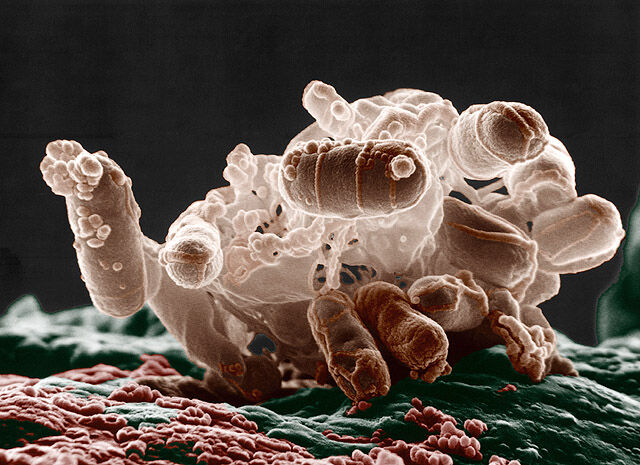
E. coli is a variety of coliform bacteria that provides a particularly strong indicator of problematic poop – it is found almost exclusively in the feces of warm-blooded animals, and suggests that contamination may be of particular concern. Most strains of E. coli are harmless and some naturally occur in the healthy human gut. However, they are not a typical ingredient in tap water.
“We rarely if ever see E. coli in drinking-water supplies, which is why we required the kind of response we did,” Lacy said. “The risks are very, very low, but the decision is always to be very conservative. Some people could be immunocompromised – there are things only they would know about their own health.”
The E. coli disease outbreaks that make the news refer to very specific strains that can cause serious illness. The water testing that triggered alerts in Los Altos was looking for any and every variety of coliform and E. coli, meaning that bacteria in the local water was not necessarily of a variety (or concentration) that would make humans sick, according to Lacy.
Cal Water worked on the site July 24, submitted a sample to a testing lab that had closed for the day, and a 24-hour test was begun Saturday morning. The test incubates the water sample in conditions that spur bacterial growth and watch for a positive result. Tests growing total coliform change color, Lacy said, and those containing E. coli fluoresce. When the Los Altos samples did both on Sunday at the end of the testing period, Cal Water notified the state drinking water agency and began to contact customers in the affected area.
All of the water samples Cal Water has tested in Los Altos since July 24 have returned negative results for E. coli, but samples taken at the original test site – a fire hydrant – continue to show coliform. Homes up and downstream of the hydrant have shown no bacteria in the water during continued testing.
“We still don’t really know what is going on, but we’re even looking at sampling technique,” Lacy said.
If a human’s hands touch the sample, they can add coliform to clean water. Cal Water initially alerted more than 800 homes near the affected hydrant, an area that Lacy described as “conservative” – “Usually it would have been within two to three blocks of the original main break,” he noted for context.
Cal Water reduced the affected area to a few blocks around the hydrant after two more days of testing. The water agency is installing a new fire hydrant Thursday and continuing to sample water before lifting the “boil water” warning entirely.





