Our current leaders and those who came before them push the boundaries of their morals and how they govern their land. The ravages of war, power instability and rivalry excite them, but also make them overlook the people who will be affected along the way.
“Henry V” is a Shakespeare play written in 1599 that heavily involves itself in the politics and passions of famous medieval figures. In the 17th century, King Henry V, alongside other famous kings who were involved in the Hundred Years’ War, protected England from the invasions of France due to the growing land disputes. For centuries, these countries were at odds with one another, and Henry V stood above the rest, being celebrated in England for having one of the most successful military campaigns against France with few casualty.
The Pear Theatre’s rendition of this Shakespeare historical play portrays the characters in a bare environment story stripped down with little costume and set design. In honest performances by the actors, who all play multiple roles and genders, we get a sense of the range of emotions they carry.
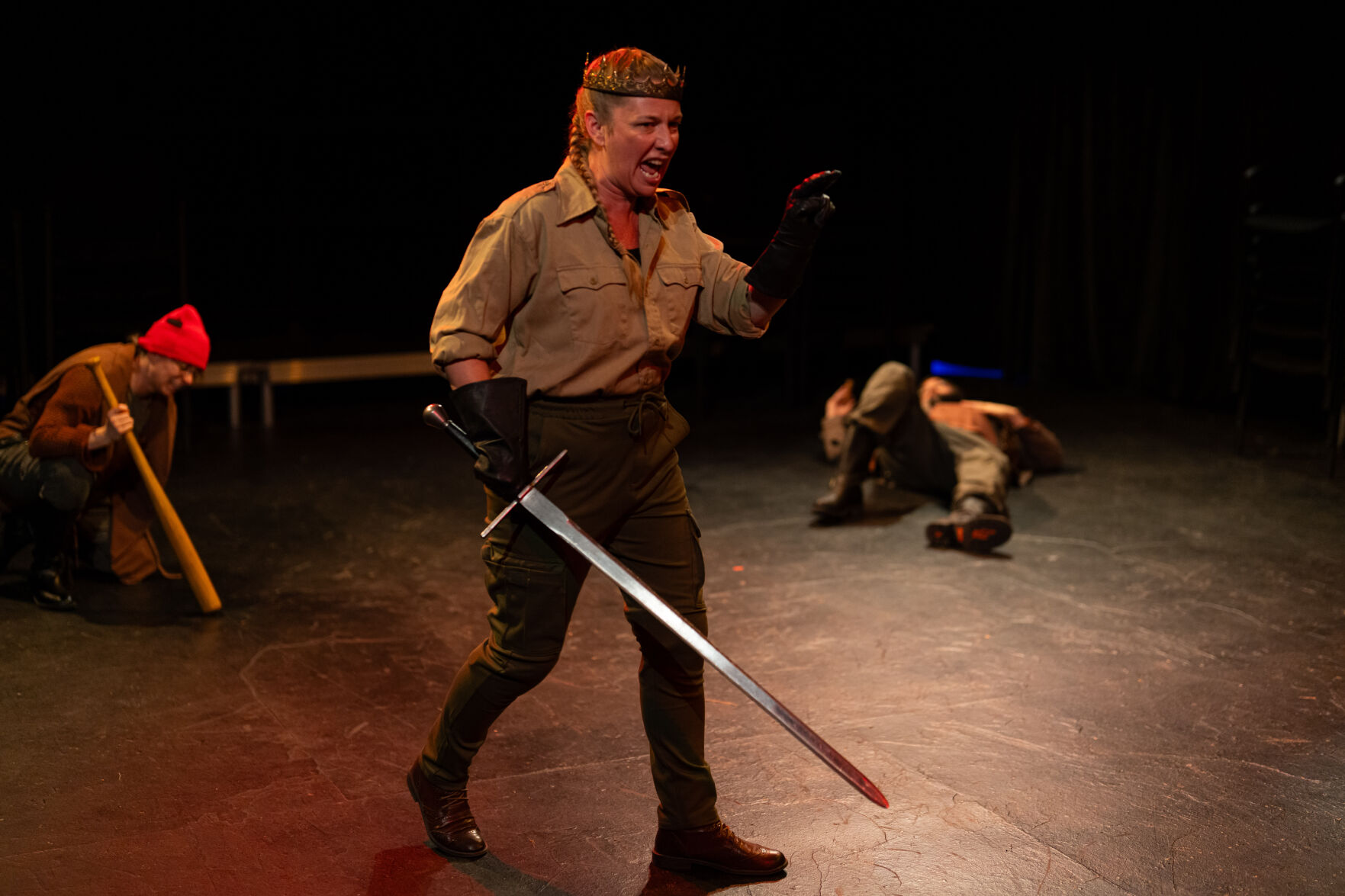
Henry V (Jennifer Le Blanc) carried her weight on stage with heavy grit. The audience can tell she is a force that studied the role and conveyed the king’s power with the anger and rage needed for her court to listen to her decisions. The play reflects the instability of the world and Le Blanc put everyone at ease with her confidence and why it was justifiable for England to conquer France.
At the beginning of the play, France’s Royal Court including the Constable of France (Georgia Ball), The Duke of Orleans (William J. Brown III) and King of France (Evan Winet) were comic relief characters who played jokes with Henry V, thinking he was not capable of his promise to receive his claims. With constant back and forth between English and French diplomats, Henry V refused to back down and dealt with the pressures by slaughtering citizens who tried to disobey his authority.
All the characters show no fear as they brace for war. The fall of man is displayed as characters are in an environment of death, but still manage to hold on and live another day for the protection of their king. The king’s position in the war was, however, put to the test by Michael Williams, an English soldier involved in the Battle of Agincourt, as he speaks with a disguised king about the cruelty of war and questions whether the king even has the right to fight France.
It was important to note in the story when the king claimed he was nothing but a man. Henry V has a major dilemma with himself while he is alone; he wants to know whether he should stop the suffering of war or fight until he receives the praises he is hoping to receive. In his inner circle, they support whatever the king decides since they will continue living a life of comfort and ease, but after learning the opinions of the war from commoners, he realizes his defeat if he can’t convince his kingdom to fight for him.
“Henry V” stirs the characters and the audiences to be motivated and take action in the world around us and allows us to question the position of leaders. After seeing this performance, I was eager to go out about into our modern world, listening carefully to our leaders and critiquing the absurd nature of their actions.
The Pear Theatre’s “Henry V” runs until Sunday, May 11. To learn more about this play and to buy tickets, visit thepear.org/whats-playing.