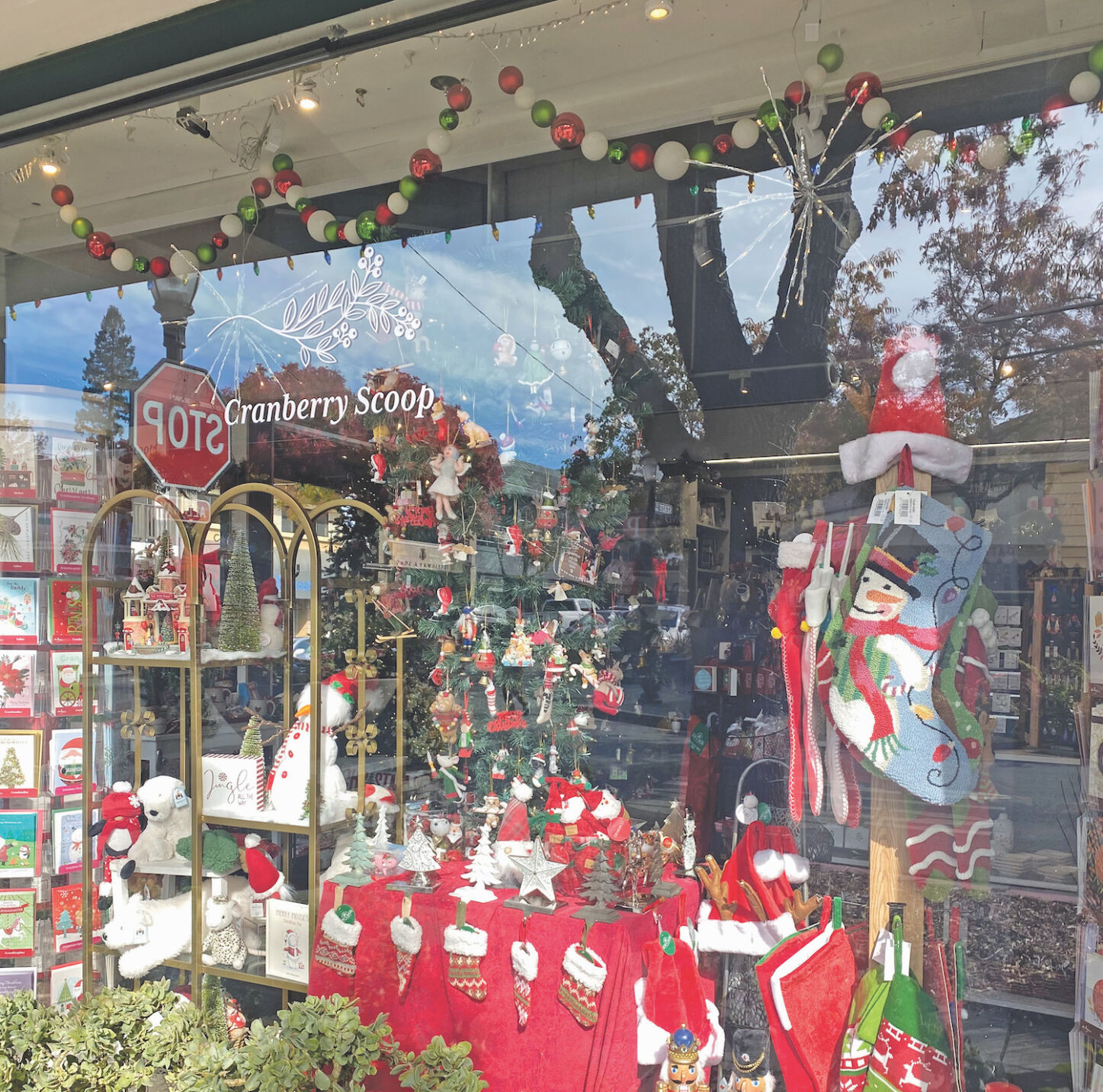
Although she pointed out that not every empty storefront is an unrented space, Los Altos Economic Development Manager Jennifer Quinn expressed concern about the vacancies in downtown Los Altos.
“I’m always concerned (about vacancies), but I do know that we’re not alone in dealing with them,” she said. “A lot of cities are dealing with the changing retail landscape.”
It is generally accepted that online shopping has hurt brick-and-mortar retail sales. Internet sales in the U.S. totaled more than $341 billion in 2015, according to the U.S. Department of Commerce. That represents approximately a 15 percent increase from 2014.
A more local symptom can be found at The UPS Store on Main Street. Standing next to a tall stack of boxes bearing Amazon tape, store manager Mickey Pandit estimated that 70-80 percent of the boxes people send through his store are Amazon or Zappos returns.
Some have estimated that 20 storefronts are vacant downtown, but Quinn deemed that estimate “a little high.”
No direct cause for empty stores
Quinn is not flummoxed by the vacancies, however. She pointed out that there is rarely a single cause in a complicated economy.
“Vacancies are a difficult thing to completely understand, and the reasons for the situation are often misrepresented,” she said. “Vacancies are not always the canary in the coal mine that people think they are. Reasons for businesses closing are myriad and dynamic, and with small businesses, often very personal.”
Quinn said Los Altos residents who shop in Palo Alto or Mountain View make it difficult for downtown to compete.
“Retail leakage,” the term for local residents going elsewhere to shop, “is a real big part of the equation,” according to Quinn.
“The amount of disposable income available to be spent in Los Altos does spread around to neighboring cities quite a bit,” she said. “We do not retain all of the available dollars within our boundaries. The competition for retail dollars is fierce.”
Quinn uses CoStar, a real estate management service, to determine where retail is having trouble and which stores are thriving.
“I’ve been tracking downtown closely” with CoStar, she said, “figuring out what our rental inventory is.”
Quinn also noted that just because a storefront is empty does not mean it will be empty for long.
“There are several places that appear vacant but have activity going on behind the paper and are anticipating opening within a month or two,” she said.
Byington Winery has not yet begun renovation on its new Main Street tasting room, and Kiwi Crate plans to open a kid-friendly space on State Street by the end of 2016. A new restaurant is moving into the space formerly occupied by Maltby’s Public House on Plaza North once the lease is finalized and the space renovated. Another new eatery, Morsey’s, is set to open at 138 Main St. early next year.
Visioning to the rescue?
Quinn is optimistic that RRM Design Group, which in September signed a contract with the city to consult on the downtown visioning process, will help plot a path toward a thriving downtown.
“My guess is that increased office and residential will be encouraged,” Quinn said.
Many cities have a higher proportion of office space and downtown residential space than Los Altos, which means more people are running errands or grabbing a drink after work and before heading home.
“The ratio that we’re in is lopsided,” she noted. “Within our downtown, we are heavily retailed. When the ratio between retail and other commercial uses is tipped toward retail, it makes it harder for businesses to thrive.”
After more than a year on the job, Quinn was quick to say that she has no magic wand and few levers to pull to lure businesses.
“What we can offer,” she said, “is the story of Los Altos.”