Author and journalist Julian Guthrie made her fourth appearance at the Rotary Club of Los Altos Oct. 22, discussing her newly released book that chronicles the race to cure a devastating blood disease.
In “Good Blood: A Doctor, a Donor, and the Incredible Breakthrough That Saved Millions of Babies,” Guthrie presents the true human-interest story of two people whose efforts led to a medical breakthrough that has subsequently saved the lives of millions of babies with Rh disease.
Guthrie’s prior appearances at the Rotary Club covered three of her earlier best-sellers, “Alpha Girls,” “How to Make a Spaceship” and “The Billionaire and the Mechanic.”
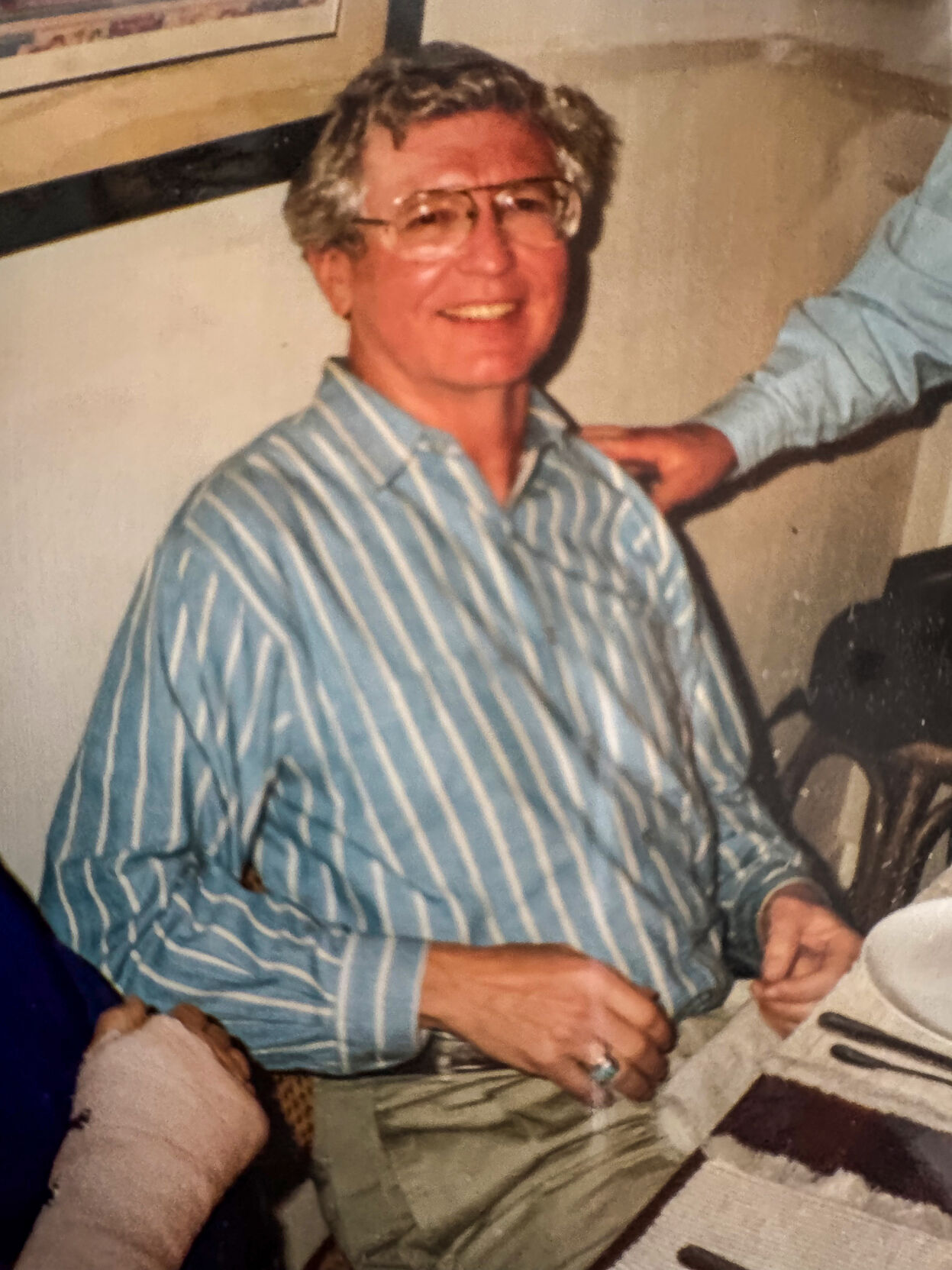
Over Zoom, Guthrie introduced Dr. John Gorman, a research immunologist who came from Australia to do his residency in clinical pathology at Columbia University in 1950. Gorman and his colleague Dr. Vincent Freda developed the successful treatment for Rh disease.
Approximately 15% of pregnant women are Rh-negative. A fetus can inherit Rh status from its Rh-positive father, causing the mother’s body to create antibodies that can cross the placenta and attack her own baby’s blood, resulting in miscarriage or brain damage in the baby.
Guthrie said Gorman’s “brilliant yet contrarian idea” in 1960 was that “injection of convalescent plasma into the mother can trick her body into not producing the immune response that harms the baby, because it thought it had already produced it.” In other words, the mother-to-be was injected with the same antibodies – though weaker and not harmful – that would attack the fetus, thus causing the mother’s body not to launch its own defense.
Clinical trials were conducted, including tests on 36 Rh-negative volunteers at New York’s Sing Sing prison. The race was on, and the U.S. Food and Drug Administration approved use of the drug in just eight years. The result is considered one of the most cost-effective medical treatments of all time. Gorman has been quoted as saying, “I still marvel at how such a low-tech solution can have such impact.”
Life-saving cure
In 1951 in Sydney, Australia, 14-year-old James Harrison was Rh-negative and in very poor health. He received blood transfusions that saved his life and gave it new meaning. Because Harrison received so much Rh-positive blood, it enabled him to become a “super donor” capable of giving an astounding number of blood donations over 60 years. The press dubbed him “the man with the golden arm,” as shown in a trailer Guthrie screened at the Rotary Club meeting.
Harrison, a railroad worker, persevered to make 1,173 blood donations, saving 1.4 million lives with his “magical blood.” Other blood donors who contributed to curing Rh disease included researchers and women who had lost their babies to Rh disease. Today, Rh disease is 99% eliminated in developed countries, though it is still a problem in developing countries.
Just as with Rh disease, drug companies today are racing to develop a COVID-19 vaccine, and they can’t afford to spend eight years in clinical trials as they did for Rh disease. Gorman explained that the vaccine from Regeneron recently used to treat President Donald Trump’s COVID-19 infection was developed using a similar process.
“Because the risks of using blood plasma are very small, why isn’t this technique being more broadly used?” Gorman asked.
Gorman is optimistic that a breakthrough will return the world to normalcy. However, he warned it will depend on how fast manufacturers can make millions of doses and opposition from what he called “the anti-vaccine people.”
Marlene Cowan is a member of the Rotary Club of Los Altos. For more information, visit losaltosrotary.org.