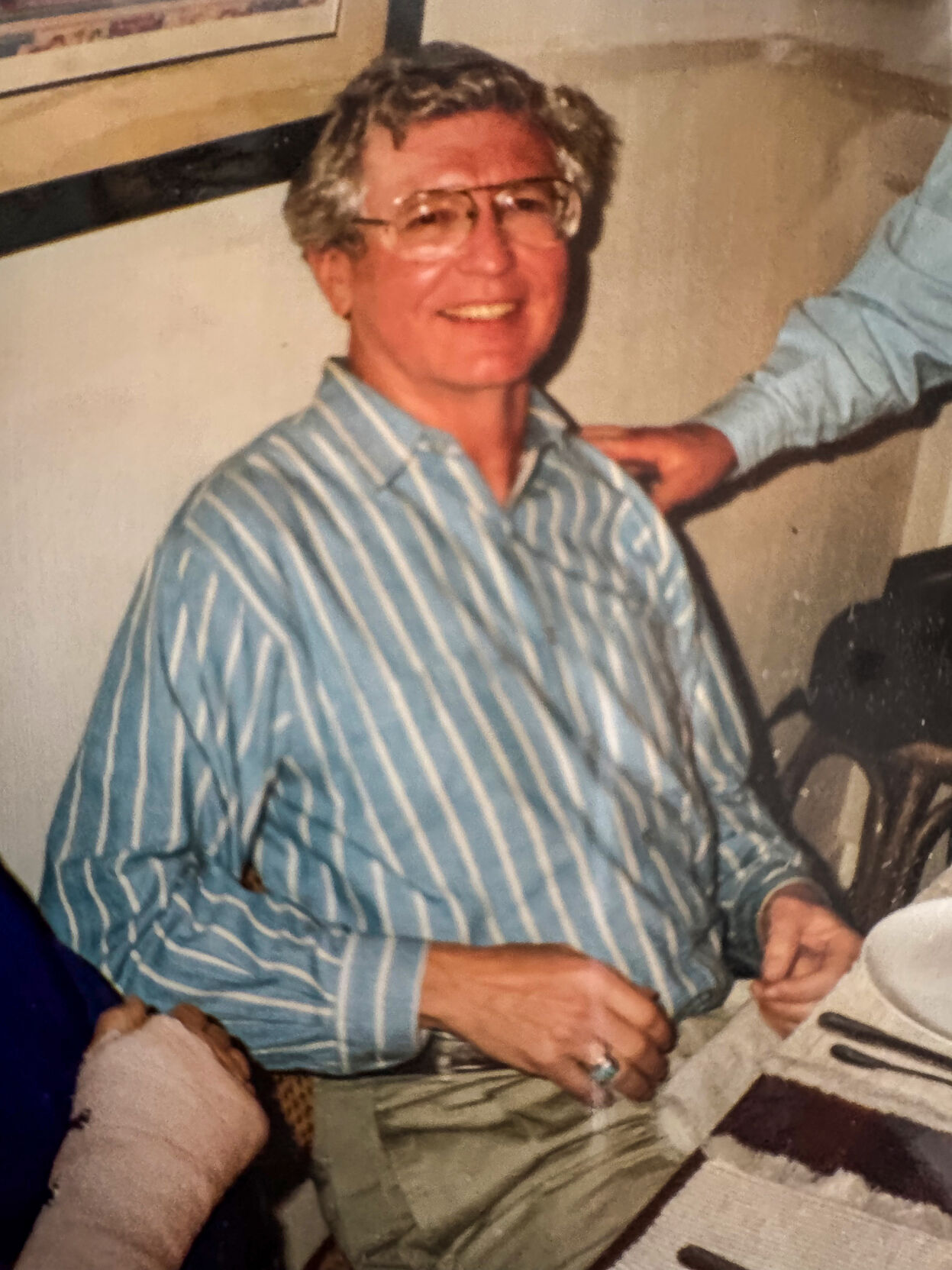
When 87-year-old Los Altos Hills resident George Craford invented the modern high-efficiency LED in 1972, he changed the landscape of sustainability for decades to come.
“George Craford and a handful of others have done more to decrease the risk of global warming than almost anybody,” said Dr. Bernardo Ferrari, a friend of Craford who grew up with his kids and occasionally helps him around the house. “These LEDs are 95% more efficient than the incandescent bulbs I grew up with.”
Craford’s passion for STEM and innovation began in the basement of his childhood home, located in an Iowa farm town.
“From the time I was in junior high school or before, I was interested in science. I had a small chemistry lab in my basement that I expanded into a larger laboratory,” Craford said. “I was initially interested in chemistry and then I became fascinated by physics after taking high school physics.”
Craford began working on his technology after meeting Nick Holonyak, who invented the first LED in 1962. Holonyak demonstrated his work at the University of Illinois Urbana-Champaign (UIUC), where Craford was earning his master’s.
“When he showed his work, the whole room lit up with excitement,” Craford said. “I immediately switched over to work with him.”
The LED Holonyak invented did not provide much light and was deemed unsuitable for commercial use; it wasn’t until Craford’s discoveries as a lead researcher at Monsanto that the modern LED was born. His LEDs were not only 10 times brighter, Craford said, but he also invented orange and yellow lights in addition to the original red by adding nitrogen to the gallium arsenide phosphide.
“I still remember looking through the microscope after I made the first yellow LED,” Craford said. “I didn’t know what to think besides, ‘That’s pretty neat.’”
At 40 years old, Craford continued his breakthroughs at Hewlett-Packard. Craford said he managed a larger team that created the first aluminum indium gallium phosphide LED, which made the lights another 10 to 100 times brighter and visible in sunlight. This technology is now used for a multitude of purposes, such as traffic lights, scoreboards, brake lights and billboard displays.
“Still, when I drive down the road and see flashing lights, I think about how we made that basic technology,” Craford said. “That is really, really cool.”
Craford has earned a slew of accolades for his work, including the Queen Elizabeth Prize for Engineering in 2021, the National Medal of Technology and Innovation in 2002 and the Charles Stark Draper Prize for Engineering in 2015.
“A lot of people think the Nobel Prize should have been given to George,” Ferrari said. “He’s about the most least-seeking-recognition person that could possibly be.”
Craford also noted that his accomplishments and awards would not be possible without his team.
“It’s nice to be recognized, and I’ve tried to always emphasize that it was a team. When you’re involved in engineering, you don’t do new things alone,” Craford said. “True collaboration is really important. Even when you come up with something new, you’re really standing on the shoulders of the giants that came before you.”
Ferrari said he believes Craford’s story is deeply inspiring and should be shared with the world. After a long, highly reputed career, he hopes the next generation will look up to Craford as a pioneer in physics and engineering.
“When people understand that the older people around them have done these unbelievable things, it gives them the courage to innovate on their own. Learning from our neighbors can really benefit people’s lives,” Ferrari said. “It’s important for many reasons to bring this story to light.”