In 2006, there were two items related to college admissions that were only whispered about and never discussed aloud – using an outside college admissions advisor and learning-different accommodations. Even when hiring an independent educational consultation for college admissions, families would hesitate to share the use of accommodations for concern the student would be disadvantaged in the college admissions process. Today the approach is more open and much healthier for students.
Families are much more likely to request diagnostic testing, follow up actively with accommodations and openly discuss the accommodations with educational partners (school, teachers, counselors, tutors, college admissions advisors, etc.). Still challenging, however, is determining when it might be worthwhile to go through the evaluations. Many younger students are bright enough to mask their learning differences and advance their way through sheer determination.
Often, these students start flailing in late middle school/early high school, as the content and complexity of academics and life begin to overwhelm their coping mechanisms. This can be reflected in many ways, including: dropping grades, significant changes in personality (a very open, friendly student becomes difficult and surly), extreme disorganization about most things while also obsessing deeply on specific random, targeted actions/concepts and feigned indifference. Unfortunately, this can also look like typical teenager behavior and discerning the difference can be frustrating. It is very rewarding to be able to laud a student for their resilience and self-learned coping mechanisms, rather than admonishing them for laziness and attitude, while providing new guidance and tools for success.
Once it’s decided that diagnostic testing is appropriate, administering and interpreting the results should be done by a qualified diagnostician. Pediatricians, therapists and school resource centers should have a list of qualified professionals in your area. Getting the right diagnosis and accommodations is critical to students’ success. For example, if handwriting is an issue, having the ability to use a keyboard/computer during exams would be far more effective for the student than extra time.
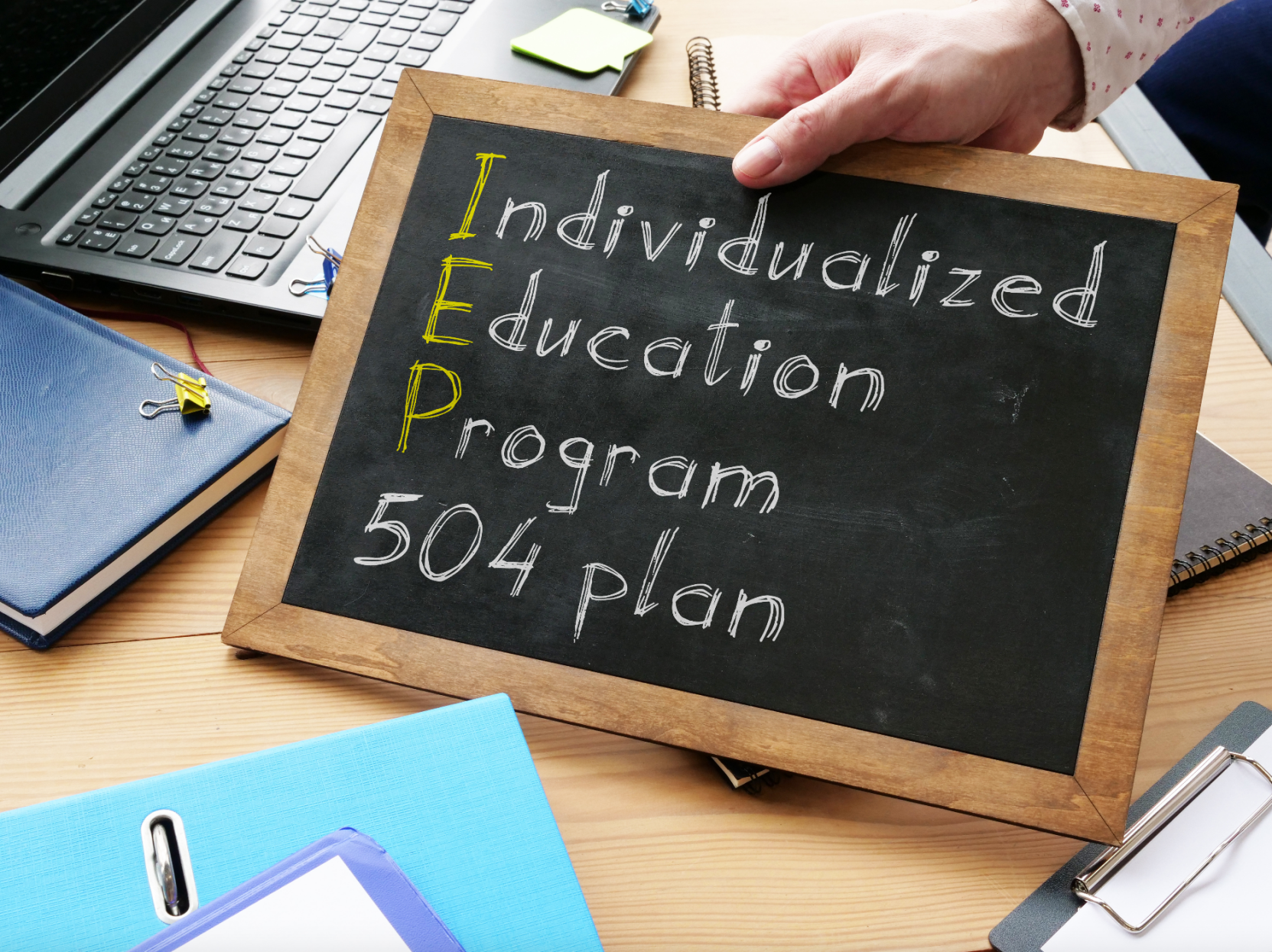
Typically, there are two different types of accommodation plans, referred to as an IEP or 504 plan. While there are accommodations that can overlap between the two programs, they are meant to serve different constituencies.
An IEP (Individualized Education Program) – is a customized plan for a specific student, usually to address specific educational needs, perhaps by even altering the curriculum. It must be reviewed and updated each and every year.
A 504 plan, on the other hand, is meant to define specific alterations to the educational process in general, such as the use of a keyboard, some sort of note taker (human or digital), executive functioning skills or extra time which can be used in any classroom but does not change curriculum. There is no mandated period to renew a 504, however, standard practice is approximately every three years and most colleges/universities will require one that is less than three years old at the time of enrollment. It is important to note that private K-12 schools may handle the use of the plans differently than public institutions.
When accommodations are granted for in-school use, it is fairly easy to get those same adjustments for SAT/ACT testing. The most utilized process is to request accommodations through the K-12 school administration as they can streamline the process by providing the documentation and forms directly to the testing agency. In a vast majority of cases, this is all that is required to receive accommodations on test days. The key here is to make sure these accommodations are requested on a timely basis according to the agency’s schedule.
The biggest change happens in college, where the student must now be fully accountable for managing the request and scheduling requirements for receiving accommodations. Most colleges will have an office of support services but will only take requests properly completed directly from the student. Privacy laws and regulations prohibit direct parental involvement. Therefore, students must be trained in self-advocacy and deadline management before attending college.
Hollis Bischoff is a college admissions adviser for College Unlocked. For more information, email [email protected].