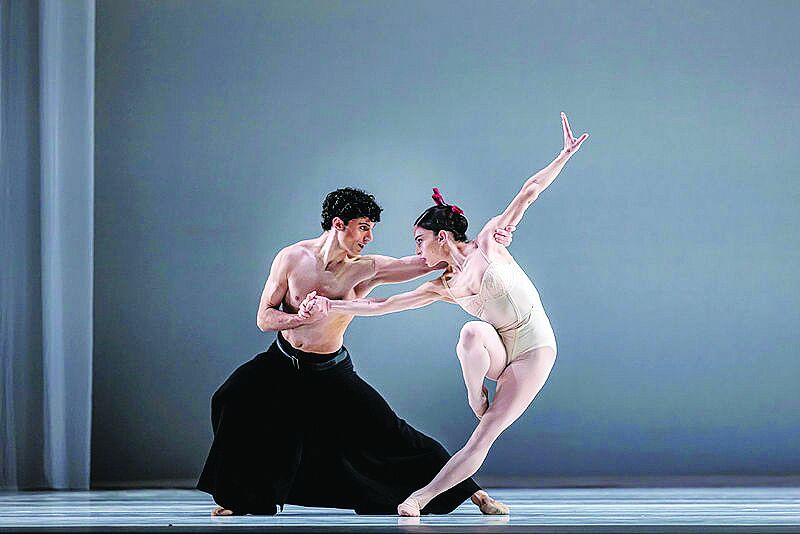
Two dramatic and distinctive productions were on stage at San Francisco Ballet in mid-April, highlighting towering figures in the arts and performing arts history: “van Manen: Dutch Grandmaster,” celebrating the legendary work of the groundbreaking choreographer; and “Broken Wings” (first piece in “Broken Love”), creating a surreal dreamy world narrating Frida Kahlo’s love and loss.
Considered one of the most important living choreographers of this time, Hans van Manen, 92, is a revolutionary Dutch choreographer in contemporary ballet, blending classic technique with modern dance movements exemplifying power dynamics and visual impact on stage. Eschewing decorative frills and traditional narrative plots, van Manen’s distinctive choreography focuses on clarity of structure and space, clean and strong forms and precise and athletic movements set against dynamic scores from classic to contemporary compositions to showcase musicality.
Featuring four pieces from his 150 choreographies, this production showcased “Grosse Fuge,” “Variations for Two Couples,” “Solo,” and “5 Tangos,” which was a San Francisco premiere this season. First premiered at Nederland’s Dans Theater in 1971, “Grosse Fuge” feels just as modern and refreshing more than 50 years later. One of van Manen’s most famous works, it explores interpersonal relationships between men and women via group and duet dance movements to depict tensions and conflicts and eventual intimacy and connections. Set to Beethoven’s Grosse Fuge, Op. 133 and Cavatina, Op. 130, the music not only frames the choreography but also the emotional underpinning of the work. The minimalist set and costume design was groundbreaking for its time with a completely white stage, neon lights, women in white leotards and bare-chested men in black skirts. Men and women first danced on their own, then together. The dynamics culminated in men removing their skirts, revealing only belts and shorts with women holding onto their buckles and sliding across the floor in a breathtaking flow. Gender roles, sexuality and erotic dynamics were fully explored in “a dramatic ballet without a story.”
Performed during the same week, “Broken Love” featured two heartbreaking love stories. My favorite was “Broken Wings” by Columbian-Belgian choreographer Annabelle Lopez Ochoa, which was commissioned by artistic director Tamara Rojo for English National Ballet in 2015 and had its North American premiere at San Francisco Ballet in 2024. The Mexican ballad “La Llorona” was performed live by Geo Meneses and Los Macorinos. Costume design stood out in this production, highlighting the vibrant art world and Mexican heritage. Inspired by her bigger than life artistic journey, the production featured Frida Kahlo’s self-portraits parading on stage with 10 male dancers in color-saturated traditional dresses and matching headdresses and a female deer based on Kahlo’s self-portrait “The Wounded Deer.” Diego Rivera was included in the narrative – a rather subdued presence dressed in a plain jacket and pantsuit. Rather interesting were black-clad skeletons in contrasting tight bodysuits with white strips, white head and black hollow eyes, appearing as spectators at various times of the narration, symbolizing darkness, pain and death.
The two productions could not be more distinctive in narrative styles, costume and stage designs and music settings, but both explored human relationships and gender dynamics through the innovative languages of contemporary ballet – two triumphs of the second season under artistic director Tamara Rojo at San Francisco Ballet.
Duanni Hurd is a Town Crier columnist covering arts, culture and lifestyle. Find her coverage of arts and performing arts on Instagram @duannihurd9.