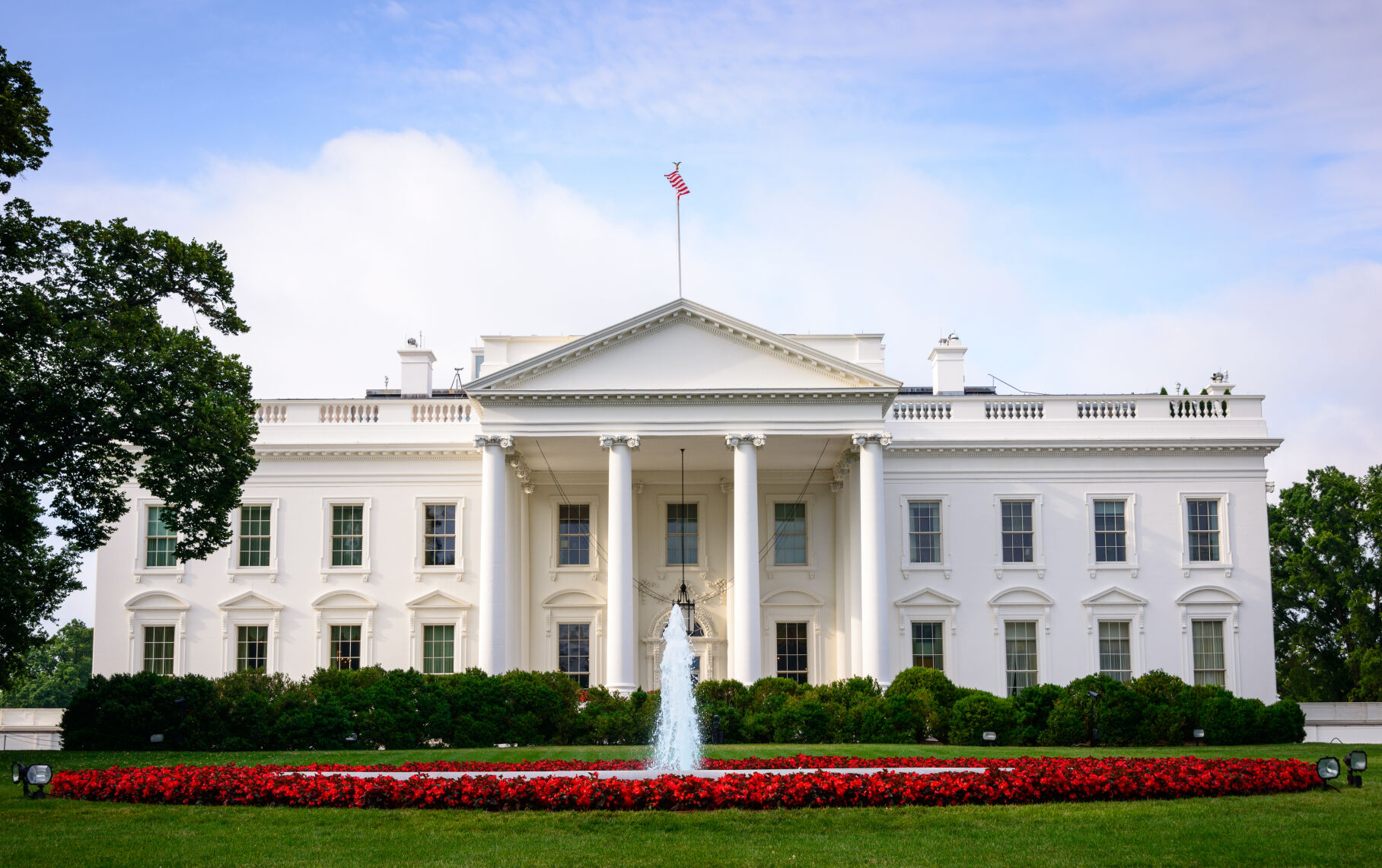
On Oct. 1, the White House sent the “Compact for Academic Excellence in Higher Education,” which outlines a proposal and agreement for colleges to adopt in exchange for potential access to “substantial and meaningful federal grants” and “increased overhead payments where feasible,” to a select set of initial educational institutions.
The proposal outlines the administration’s vision for higher education priorities in eight categories: Equality in Admissions, Marketplace of Ideas & Civil Discourse, Nondiscrimination in Faculty and Administrative Hiring, Institutional Neutrality, Student Learning, Student Equality, Financial Responsibility and Foreign Entanglements.
Highlights include the following:
Equality in Admissions
• Banning the use of demographic information, such as gender, race, socioeconomic status, etc., in the admissions process. Potential impact: universities with less diversity.
• Reinstating the use of SAT, ACT and other standardized tests in the admissions process. Potential impact: With the correlation of standardized test scores to higher income, this would create a bias toward students from higher income families.
• Determining admissions on the basis of publicly published objective criteria as to GPA, coursework, etc. Potential impact: Currently most institutions use a holistic approach to reviewing applicants rather than rigid admissions standards. This starts at the student’s local level, allowing for the consideration of opportunities available to students rather than raw numbers. This will skew admissions towards students who attend well funded high schools, allowing them more opportunities.
Marketplace of Ideas & Civil Discourse
• Mandating viewpoint diversity, to ensure no single ideology is taking precedence, not only on the campus level, but down to the individual program/department level. Potential impact: Specific areas of study will be defunded and removed from curriculum, like gender studies, religious studies, peace studies.
• Committing to the use of “lawful force” to maintain defined conditions of civility, such as preventing demonstrators/protesters from disrupting activities, classes, public/private spaces and heckling students. Potential impact: suppression of free speech and possible escalating violence with increased police presence.
Institutional Neutrality
• Committing across all university facets to “abstain from actions or speech relating to societal and political events.” Potential impact: censorship and chilling effect on free speech.
Student Equality
• Accepting the government’s definition of gender as it relates to bathroom/locker room usage and women’s sports.
Financial Responsibility
• Freezing tuition for five years, allowing for increases for students from “families of exceptional means.” Potential impact: better budget planning for families, potential minimum of extremely wealthy families.
• Waiving tuition for those pursuing “hard science” at institutions with endowments exceeding $2 million/per student. Potential impact: continued flooding of the employment market with computer science and engineering students.
• Providing students with possible earnings by major as determined by historical statistics of prior graduates’ earnings. Potential impact: ability to calculate an ROI on particular career fields. Some students may make a career decision based on earning potential rather than career fit.
• Making first-semester tuition refundable. Potential impact: reduction in college revenue as approximately 33% of first year students drop out. Provides a lower barrier to entry, with less consequences for first year students.
Foreign Entanglements
• Capping the percentage of international students at no more than 15% of the total student population and no more than 5% from any single country. Currently there are about 120 higher education institutions exceeding the 15% distribution, including New York University (26%) and Carnegie Mellon (23%). Potential impact: less funding for college institutions, who rely on high tuition received from international students, therefore higher tuition costs for domestic students.
Nine institutions were selected to be included as “initial signatories,” according to the letter accompanying the agreement, which invited feedback before the contract language is finalized and have been requested to provide a decision by Nov. 21. The nine institutions are University of Arizona, Brown University, Dartmouth College, Massachusetts Institute of Technology, University of Pennsylvania, University of Southern California, University of Texas, University of Virginia and Vanderbilt University.
Governor Newsom responded quickly, warning that any California institution would instantly lose state financial support, including California grants which provide approximately $2.8 billion in financial aid to California students. In a strongly worded statement, Newsom also stated, “… (California) will not bankroll schools that sell out their students, professors, researchers and surrender academic freedom.”
Responses varied among the nine universities. Dartmouth President Sian Leah Beilock, declared, “We will never compromise our academic freedom and our ability to govern ourselves,” while the head of the Texas board of regents was considerably more congenial toward reviewing and participating in the agreement.
On Oct. 10, MIT became the first institution to officially reply, rejecting the compact with a letter to the U.S. Education Secretary, clearly outlining its position that they disagree and that it would “restrict freedom of expression and our independence as an institution. And fundamentally, the premise of the document is inconsistent with our core belief that scientific funding should be based on scientific merit alone.” As of Oct. 17, Brown University, University of Southern California and University of Pennsylvania have joined MIT in rejecting the compact.
On Oct. 10, 2025, MIT became the first institution to officially reply, rejecting the compact with a letter to the US Education Secretary, clearly outlining its position that they disagree and that it would: “restrict freedom of expression and our independence as an institution. And fundamentally, the premise of the document is inconsistent with our core belief that scientific funding should be based on scientific merit alone.”
On Friday, the Education Secretary and other Trump officials, in response to criticism and the rejections, met with numerous university representatives, and added Arizona State University, The University of Kansas and Washington University of Saint Louis in those meetings.
By Monday, Brown University, Dartmouth University, University of Southern California, University of Virginia, and University of Pennsylvania had joined MIT in rejecting the compact.