Everyone has a unique story. One must look into themselves or their community to find meaning in their lives. For a young student, many are still figuring out who they are and it takes a lifetime to find the answers one needs to make sense of the world.
Michelle Gannon, a 7th-grade writing teacher at Pinewood School, assigned her class to record a podcast for the 2024 NPR Podcast Challenge. Gannon was teaching her class lessons on personal identity and challenged her class to use the podcast medium to be introspective in their ideas. Gannon said many students interviewed their family or grandparents and dove into a topic about their own journey.
“The goal of the podcast is for the students to uncover some element of their identity that they didn’t know previously, or what they wanted to share with the world,” Gannon said. “The idea is to celebrate who we are.”
Gannon said in the past, she had assigned her students to create podcasts that were more “informational and research-based,” but she chose this year to put students “exploring their identity” at the forefront.
“I had found out about the contest many years ago, and I’ve been submitting for a lot of years, so I was a little worried that they had forgotten about us,” Gannon said. “But this year in particular, I think was an impactful year for our podcasts, because I changed the nature of it and learned about identity in lots of different ways.”
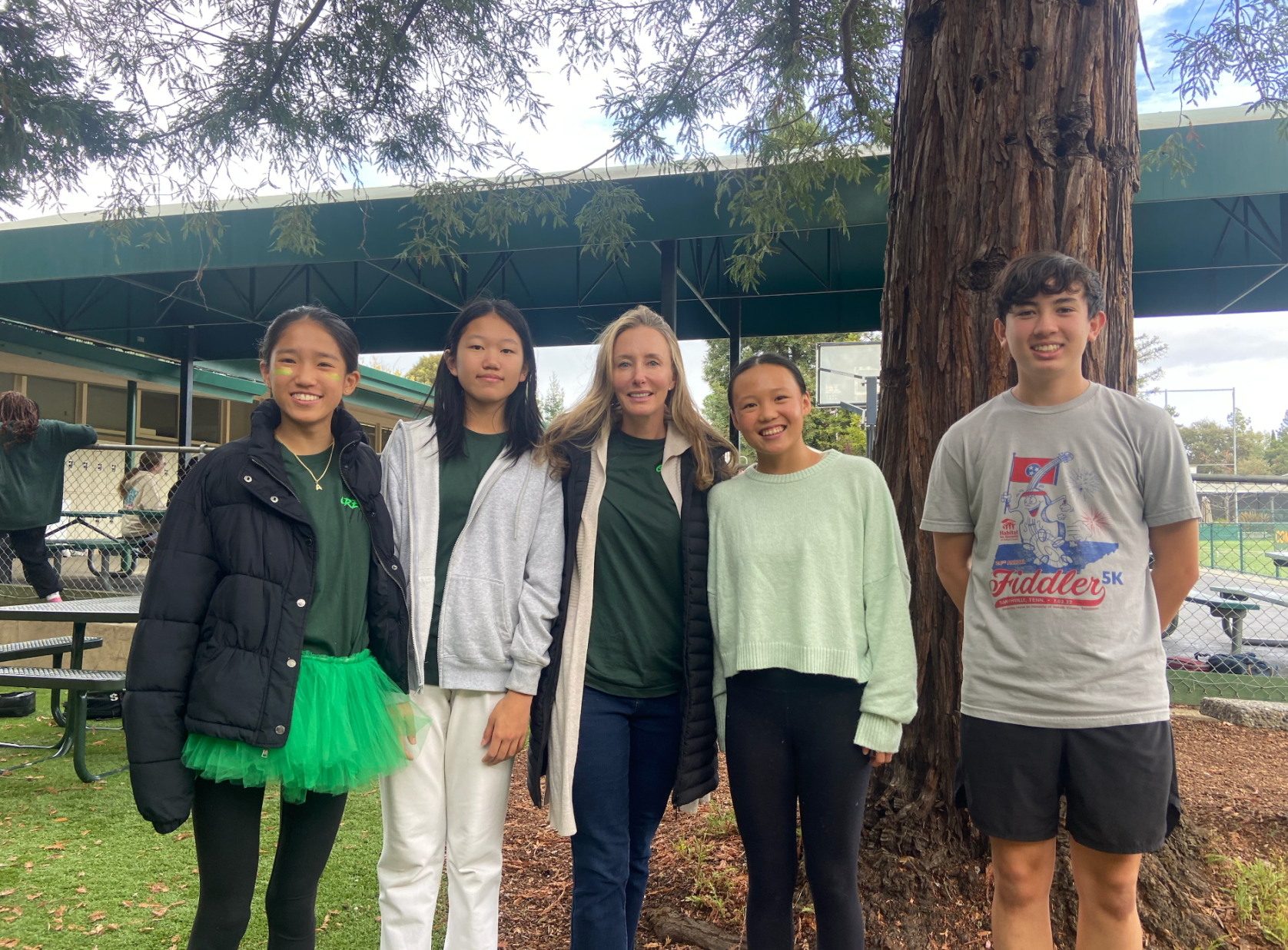
Four of Gannon’s students were finalists in the contest and each of them asked in-depth questions about their family history and the traditions they hope to preserve. Emma Hsieh and Adelynn Wang both centered their podcast around their families’ cultures and Blake Armistead interviewed his grandfather on his early childhood in Hawaii during World War II. Joyce Yan, however, did a more personal approach for the competition and chronicled what it is like to have a busy schedule. Yan said she thought this topic would apply to how a lot of her peers are feeling and how they balance their extracurriculars.
“I think identity is how you also view yourself,” Yan said. “I came up with the title of the double-edged sword to explore how busy schedules could be good and bad, and sometimes, at least from my point of view, it could also be like a privilege because no kids get to do all these activities at their school.”
Armistead found through the contest that he got to connect with his grandfather and learn accounts of his life that he tended to keep to himself. Armistead said he usually speaks to his grandfather about the Warriors game but after interviewing him about his early life, he began to look at him differently. He didn’t realize how much he didn’t know about him.
Armistead’sgrandfather grew up in Hawaii at the start of World War II and faced discrimination as a Japanese American. Although his family was not placed in an internment camp, since most of Oahu was of Japanese descent, many of his peers stopped talking to him.
“I think people should ask their grandparents more about their stories because they’re not going to be around forever,” Armistead said. “It’s important to remember those stories and write them down to pass them on.”
Hsieh said she chose the topic of hot pot to symbolize the love that she has for the meal and how it brings her family together. She explains hot pot is a dish that creates strong bonds with her extended family and a chance to catch up with them during the week. She is grateful for how the dish has helped her continue her family’s culture, shaping her into the person she is today.
“I know a lot of people think they’re just supposed to love their family, but I want people to think harder about it,” Hsieh said. “Think about what they love about their family and how much their family impacts who they are. That’s what I learned from this and I hope other people think about that too.”
Wang, a third-generation Chinese American, embraces both of her cultures in her podcast. She hopes people can learn from her story, no having to hide behind one background but to combine every part of themselves. She said every story is worth sharing and it was important for her to dive deeper into her grandparents’ immigration story. She said they built their life from nothing but were still able to hold onto their roots after they came to the United States.
“I think identity is what I value and like about my culture,” Wang said. “I chose it because I wanted to learn about the Chinese side of my family and the balance between them. I learned from my grandma like, ‘You can’t shake your leg, otherwise you’re shaking the money away,’ or ‘If you eat long noodles on your birthday, it symbolizes a long life.’”
All the students are hopeful to expand on their initial stories or focus on new areas they are curious about. Yan hopes to look more into the stress behaviors that she and her peers face within the competitive environment of the Bay Area. Armistead hopes to find out more about his other side of his family and learn about his grandfather’s career working as a nuclear engineer at the Pentagon. Hsieh wants to expand more of the stories of her parents’ early immigration years and Wang would like to share the story of her
great-grandfather hiding in a wheelbarrow during the Hiroshima bombing in World War II.
“I think telling stories is important because it’s just something that we can all connect to and will make us all feel comfortable, complete and safe,” Wang said.
To learn more about the NPR contest and to
listen to the podcasts, visit npr.org/2024/10/24/nx-s1-5126648/student-podcast-challenge-2024-honorable-mentions.