As I mentioned here in October, I drive 104 vehicles a year but only have space to share 24 here at the Town Crier and losaltosonline.com, and that means some very good cars haven’t had nearly enough attention.
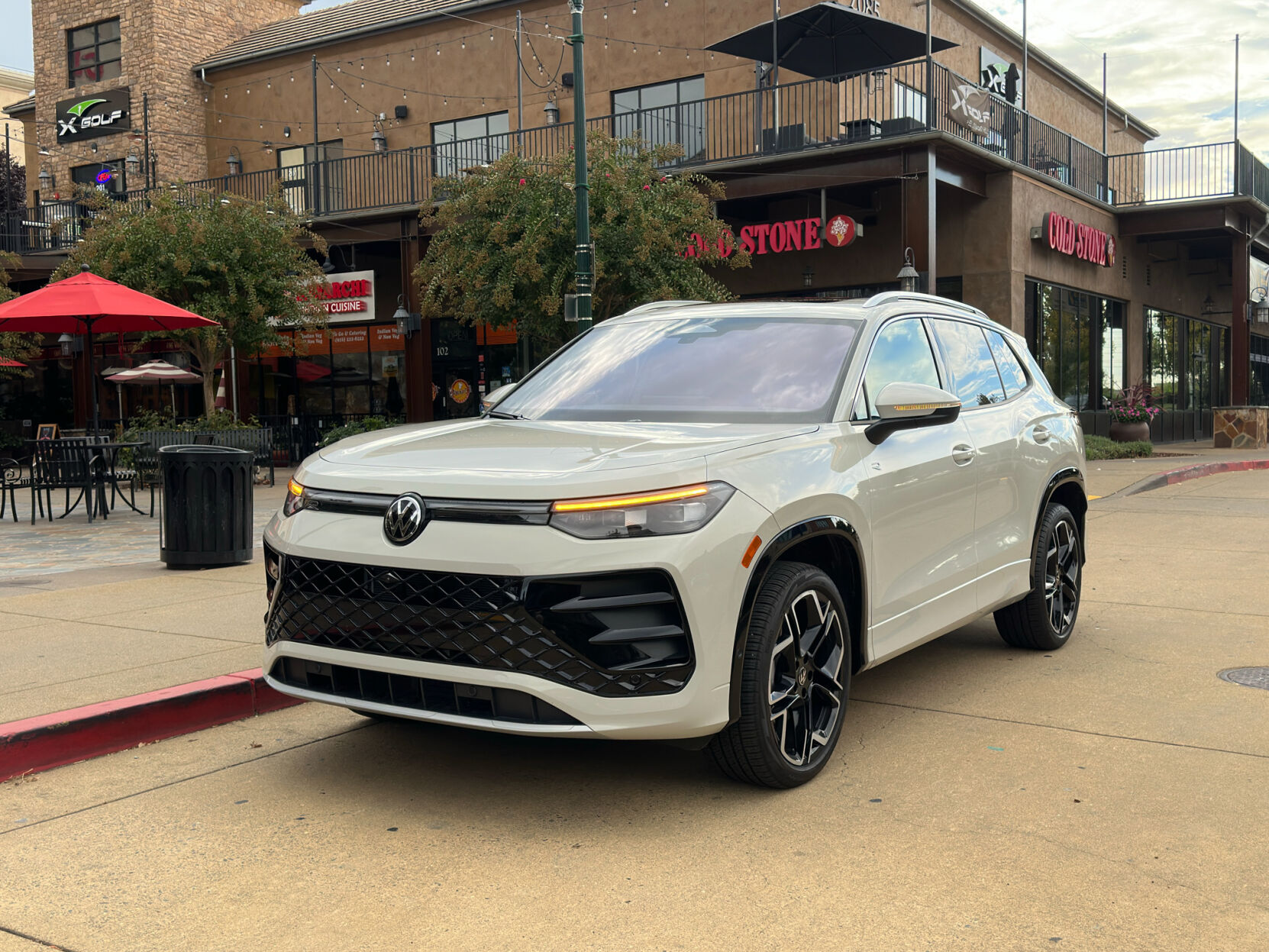
One of the most egregious absences has been the Volkswagen Tiguan, which last made an appearance in “On the Road” when my predecessors, the late Gary Anderson and his wife Genie, wrote about it in … (gulp) … April of 2017.
Yep. Darn near nine years. If you read that review, remember what a good writer and lovely man Gary was, and forget nearly everything about the Tiguan, because a lot has changed.
The 2025 model year began the third generation of Tiguan, and it is 10 inches longer, nearly two inches wider and about half an inch lower than the 2017. The styling, as is the trend, has become blockier and more muscular, suggesting off-road ruggedness. With only 6.6 inches of ground clearance for front-wheel drive models and 7.0 for all-wheel-drive, I wouldn’t test that suggestion too strenuously.
The interior is unrecognizable – a quantum leap in overall design, materials and, of course, tech.
Power hasn’t changed much – 200 horsepower from a two-liter turbocharged four-cylinder then, 201 now (the 2026 model year will see a new R-Line Turbo model with 268 horsepower). Fuel economy has improved from 22 mpg combined city/highway to 25.
And what a nice machine to drive. I did a 220-mile round-trip from Folsom to Alameda and found it responsive, quiet and smooth. I ended the day with zero fatigue and could easily have done the run again.
There are four trim levels of Tiguan, starting at $30,245. The one I drove, the SEL R-Line, begins at $39,755. That’s a 2025 model price; the 2026 will likely be higher.
That money buys a lot of standard equipment, including all-wheel drive, 20-inch alloy wheels, automatic LED headlights, taillights and daytime running lights, dynamic cornering lights, fog lights, power folding, heated, power adjustable side mirrors with position memory and puddle lights, a power panoramic sunroof, rain-sensing wipers with heated washer nozzles, a heated windshield with UV protection plus additional heat and sound insulation, a rear window wiper and washer, three-zone automatic climate control, with a second-row control panel, heated, leather-wrapped steering wheel, heated and ventilated power-adjustable front seats with lumbar and massage function and position memory, a heated rear seat, Varenna leather seating surfaces, USB-C ports in the front and second row, illuminated, carpeted cargo area with 12-volt power port and removable privacy cover, underfloor cargo storage, an auto-dimming interior rearview mirror, footwell lights, reading light, illuminated vanity mirrors, a configurable digital driver display, head-up display, keyless access, proximity locking and unlocking, push-button engine start, remote engine start, an anti-theft alarm with engine immobilizer, a hands-free power liftgate, a 15-inch color touchscreen with navigation, a three-month trial to SiriusXM satellite radio, wireless Apple CarPlay and Android Auto, wireless phone charging, a Harman Kardon premium audio system with center speaker and subwoofer and a robust suite of active safety features.
And that’s it. There were no extra-cost options on the test vehicle, so with destination charges, the bottom line of the window sticker reads $41,180. That’s considerably less than the average new car price these days, and the Tiguan is considerably better equipped, more nicely appointed and more pleasant to drive than the average new car.
Mike Hagerty, past vice president of membership for Western Automotive Journalists (waj.org), has been writing about cars since 1997. Read more of his reviews at MikeHagertyCars.com.