Visitors to native plant gardens often ask, “what smells so good?” One of the underappreciated delights of native plants is the sensory pleasure of scented leaves. Merely brushing past a shrubby sage along a path can release its fragrance. For hands-on gardeners, aromatic foliage is an added bonus when planting or pruning.
Considering the placement of fragrant shrubs adds another dimension to garden design. “So much of mainstream gardening is devoted to how a garden looks” or whether a plant flowers, Arvind Kumar said in a Naturehood webinar on aromatic native plants. But “fragrance is a way to bring people closer to plants,” and “California is full of fragrant plants,” he said. Kumar, who has been growing natives in his yard for a couple decades, is a past president of the Santa Clara Valley chapter of the California Native Plant Society.
Each native sage has its own distinctive fragrance, though Cleveland sage (Salvia clevelandii) has “the most beautiful fragrance” of all the shrubby sages and has many garden-tolerant cultivars.
Planting a fragrant shrub on the path to your front door can help bring the fragrance indoors. Tastes differ; sniff a bunch of different plants before you plant a fragrant one in a prominent location.
Kumar listed the following “bulletproof” aromatic natives that are easy to grow in home gardens and that have thrived in his garden’s clay soil.
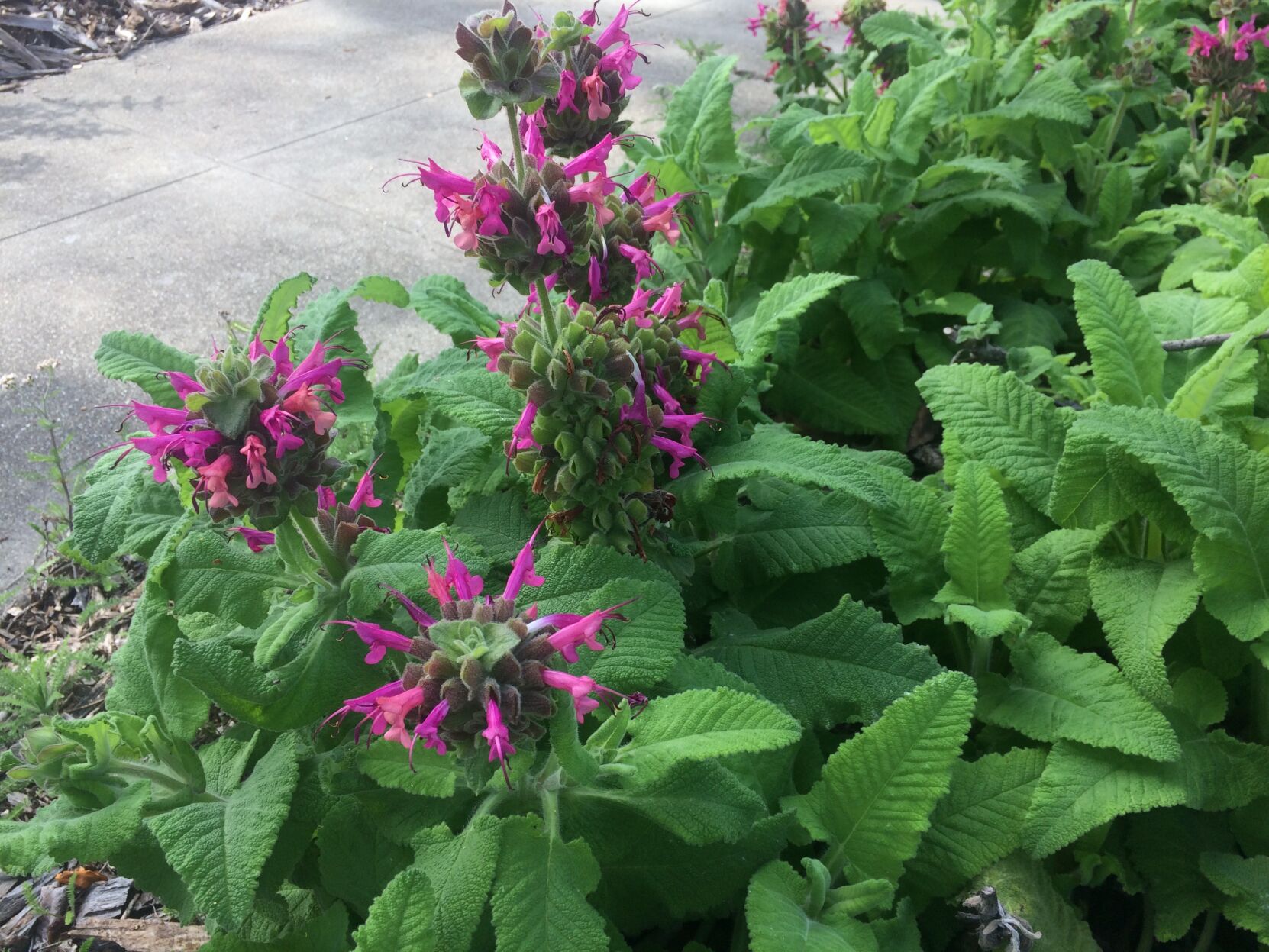
The spring-blooming pink flowers of hummingbird sage (Salvia spathacea) are a magnet for hummingbirds. The large, resinous leaves have a fruity fragrance and can be used for tea. In gardens, though the plant will survive with no summer water, it can be kept green all year with some supplemental water. It does best in part shade.
Purple sage, black sage, and white sage (Salvia spp.) are larger shrubs that all thrive in full sun. Each has a distinctive aroma. Purple sage has pink flowers. Its new apple-green spring leaves are replaced with smaller, silvery white leaves in summer. Black sage has small, textured dark-green leaves, with scents ranging from sweet to musky and bitter. The tall, arching flowering stems of white sage are especially distinctive, as are the long silvery white leaves. Its scent has been described as pungent and powerful.
Fragrant pitcher sage (Lepechinia fragrans) is related to the salvias, with large, soft leaves and a fruity to medicinal aroma, as well as a taller and more open habit.
The “quintessential fragrance of California coastal scrub” comes from California sagebrush (Artemisia californica), which has a “sagey” aroma but is not related to the sages. Its dense mounded feathery blue-gray foliage supports a diversity of insects. It’s an excellent small erosion-controlling shrub for dry, sunny slopes.
Coyote mint (Monardella villosa) is a woody subshrub whose purple flowers attract many pollinators. The leaves have an alluring minty aroma.
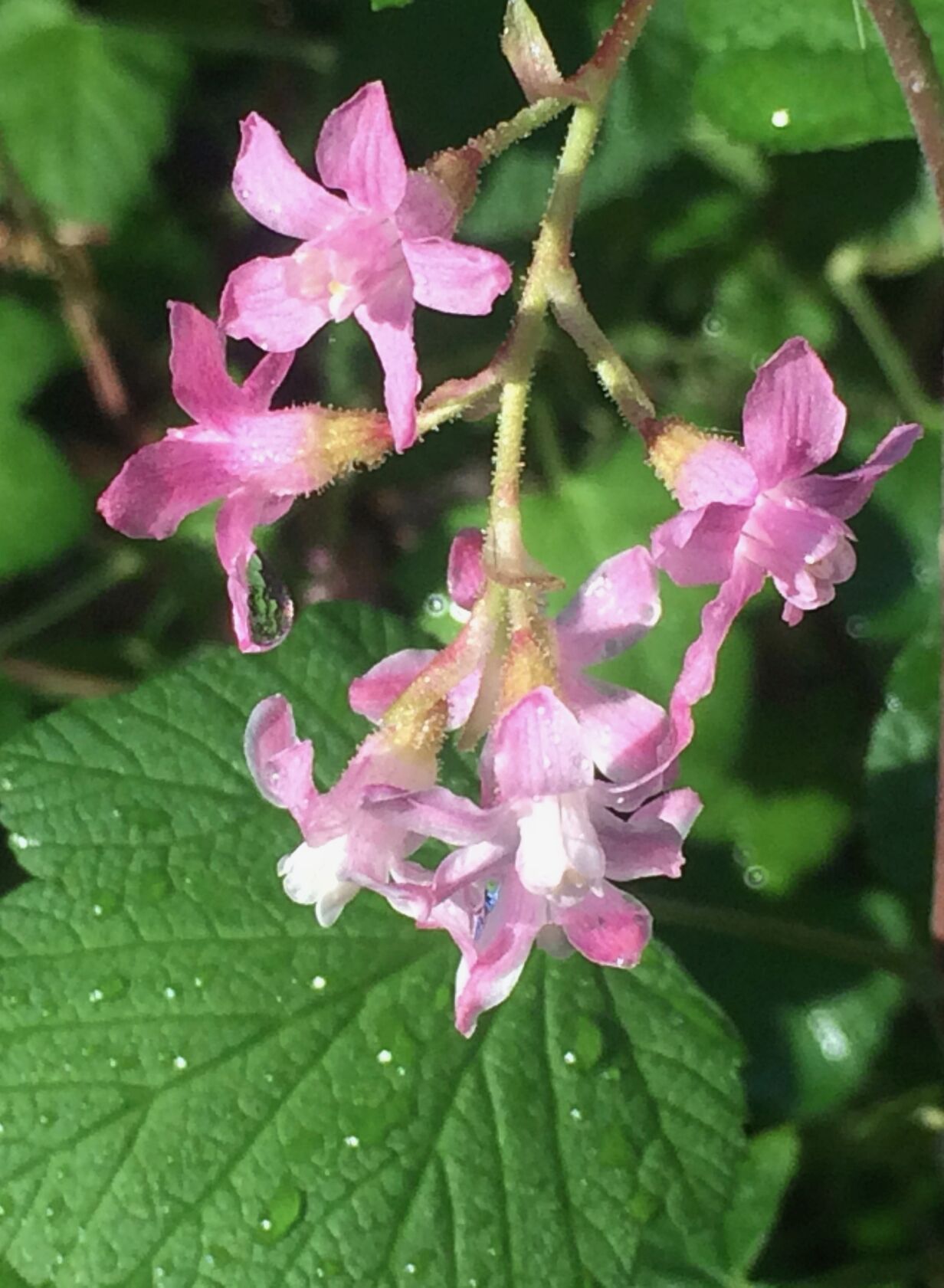
Pink-flowering currant (Ribes sanguineum glutinosum) has sticky leaves with a mild, spicy and pleasing fragrance. This shrub grows best in bright shade and with monthly summer water. Its pendant flower clusters are especially attractive. For a sunnier location, try chaparral currant (Ribes malvaceum).
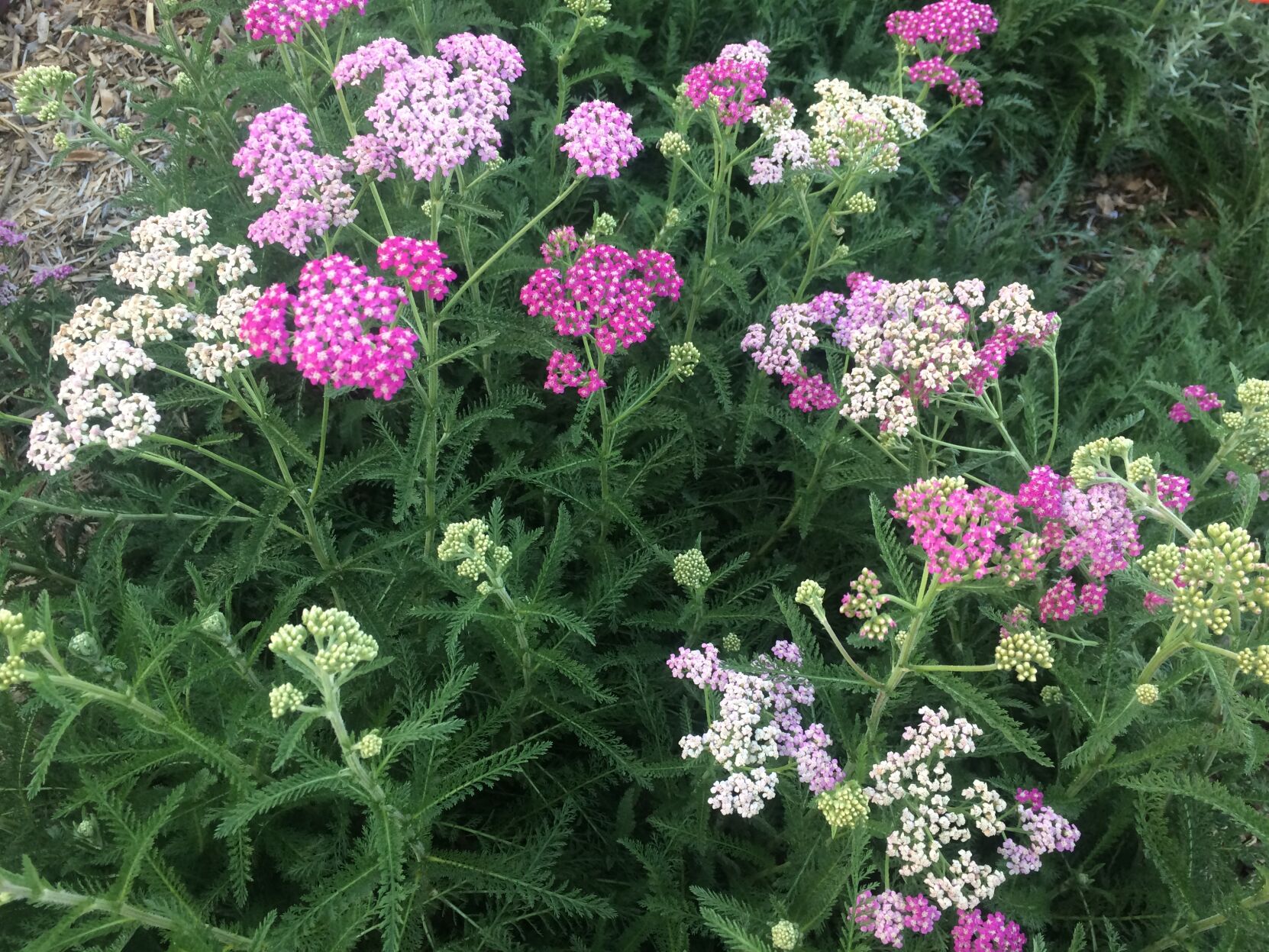
The delicate-looking ferny foliage of yarrow (Achillea millefolium) has a subtle, distinctive fragrance. Many beneficial insects are attracted to the aggregation of tiny flowers atop each flowering stem.
Tanya Kucak gardens organically. Email her at [email protected].