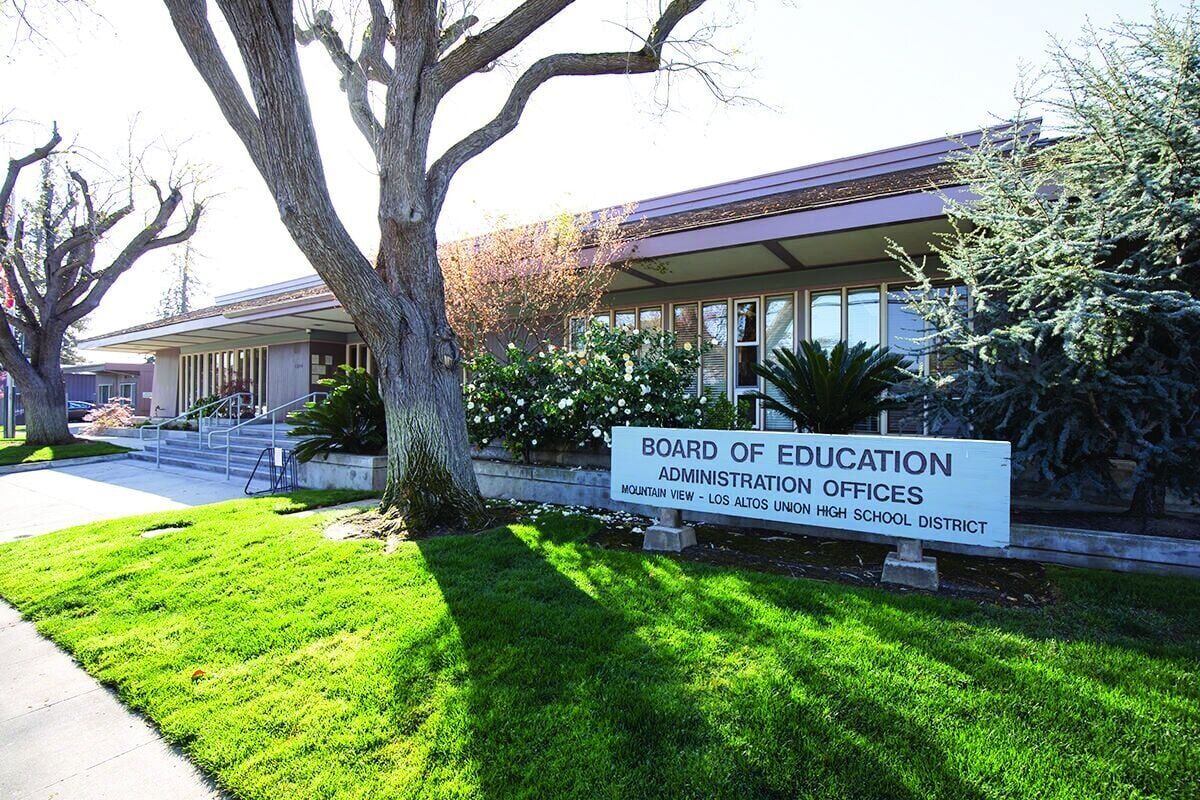
Teachers and department leaders urged the Mountain View Los Altos Union High School District Board of Trustees at a Jan. 12 meeting to consider a proposal restructuring ninth-grade social studies to pair ethnic studies with world history, warning that recent board actions could affect student learning and teacher jobs.
The board voted in October to shorten its ethnic studies graduation requirement from a yearlong course to one semester, beginning in the 2026–2027 school year. The 3-2 decision followed months of public debate and drew opposition from students, parents and teachers who argued the change would weaken instruction and disproportionately affect students of color. District leaders said the shift aligns with the state’s definition of ethnic studies and allows room for other required courses.
During public comment, Los Altos High School social studies instructor Kevin Hiken described a proposal that would divide the district’s existing world history course into two semester-long classes – one paired with ethnic studies in freshman year and the other completed in sophomore year. He said the approach aligns with California’s A-G requirements and mirrors models used in nearby districts.
“So MVLA would not be distinguished or strange for doing this approach,” Hiken told the board.
Hiken said the freshman-year course would emphasize skill-building, global analysis and the use of primary and secondary sources, covering topics from the 19th century through World War II, including the rise of antisemitism in Europe.
Nate Bowen, department coordinator of social studies at Mountain View High School, described the second course in the sequence, which would focus on social movements, the decline of the Soviet Union and globalization. He also raised concerns about the process surrounding ethnic studies decisions and the impact on staff.
“This might all seem kind of unconventional,” Bowen said. “But if you think about it, this is an unconventional situation from the get-go.”
Bowen said nearly all district social studies teachers support the proposal and asked the board to give it formal consideration. Quoting Hungarian political scientist Bálint Magyar, he told trustees, “Deliberation is an expression of our obligations to one another.”
Julie Yick, a Mountain View High School social studies teacher, criticized the board’s earlier decision to eliminate a semester of ethnic studies and said teachers were excluded from the process.
“As the board deliberated on the future of ethnic studies, they did so with limited information about classroom instruction and minimal teacher input,” Yick said.
Yick also urged the board to move forward differently.
“This proposal brought forth by (the District Teachers Association) is an opportunity to hear teachers’ perspectives, respect our professional judgment, and take action to move forward in a positive way that supports students and staff,” Yick said.
Bowen said the reduction of the course to five credits comes as the district prepares its annual staffing projections, a process that can result in teachers being reassigned or laid off.
“That’s an unconventional situation,” Bowen said, adding that social studies teachers could be moved or, “worst-case scenario, lose their job.”
Yick said the October vote had broader ripple effects.
“When the board voted 3–2 to eliminate a semester of ethnic studies, it caused many negative impacts,” Yick said, citing staffing instability, the possibility of layoffs and fewer opportunities for students of color to see themselves represented in the curriculum.
The board did not take action on the proposal, which was raised during public comment and was not agendized for action. Teachers asked that it be placed on a future agenda for formal deliberation and a vote.