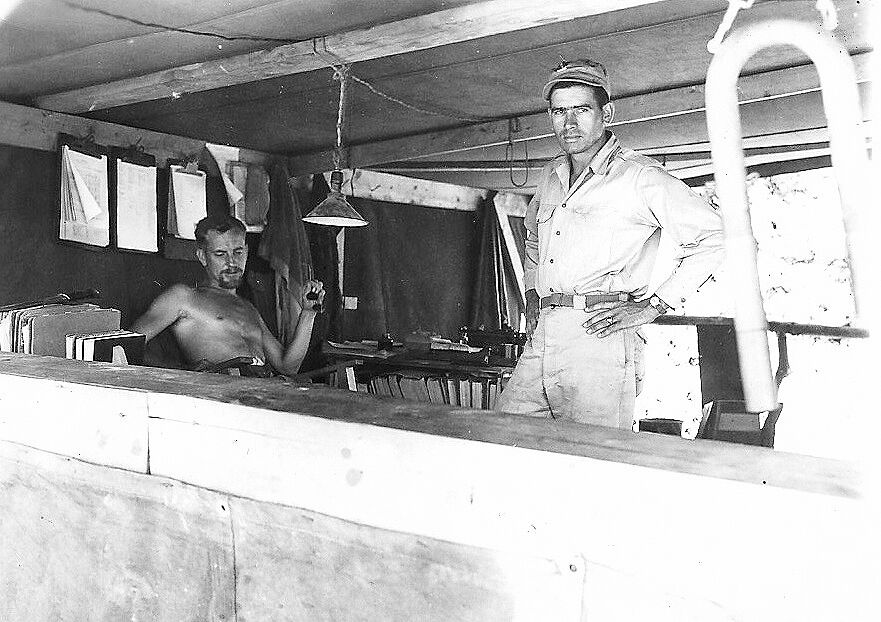
On the evening of August 8, 1945, from an American air base on Ie Shima – now called Iejima and part of the prefecture of Okinawa – Captain William Ashley Chapman wrote to his wife back in the States: “At this time we are hearing of the first use of the ‘Atomic Bomb.’ It seems to be destructive beyond human comprehension.” An atomic weapon was so alien to him, he put the words “Atomic Bomb” in capitals and quotes as if it were a phrase in a foreign tongue.
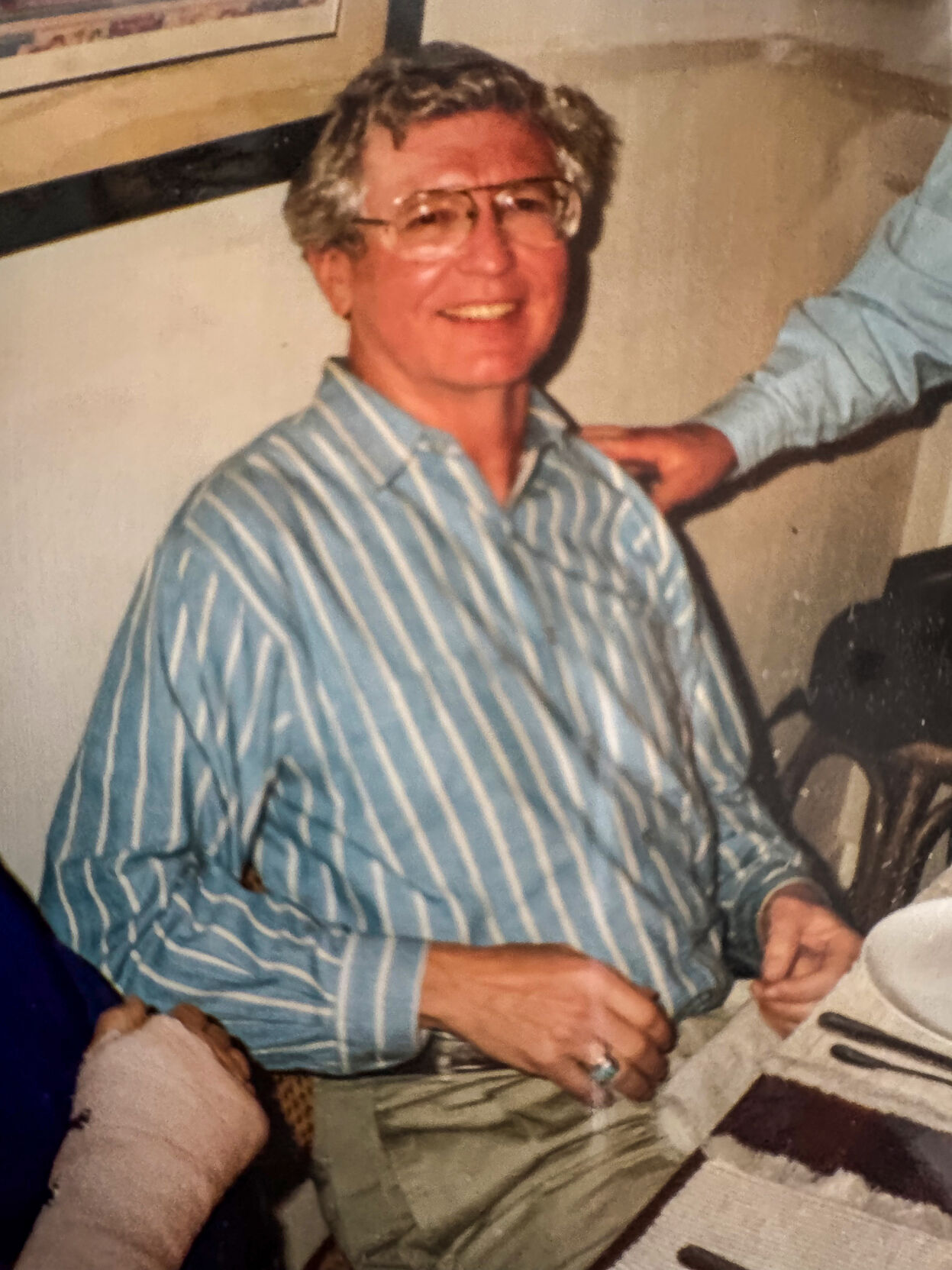
Capt. Chapman was my father, who served as a combat engineer in World War II. I knew little about his service in the Pacific because he hardly ever spoke about it. Then, after his death in Los Altos in 2010, I came across an old trunk in the family home. It was filled with the wartime letters my father had written my mother that she had carefully preserved.
The letters from August 1945 are especially timely as we mark 80 years since the end of World War II. The war in Europe had come to an end in May of that year. War planners in America believed it might take an invasion of Japan’s home islands – and millions of casualties – to end the conflict. In my father’s letters, he bears witness to this momentous time.
“I sincerely hope this bomb does not have to be generally used to get them (the Japanese government) to quit,” he continued in his August 8, 1945, letter. “Atomic power can be used to a tremendous advantage in the peacetime world, and I hope it can soon be turned toward creative use rather than destruction.”
On August 11, two days after the U.S. deployed a second atomic weapon, there was still no word of the war’s end. “Will tomorrow bring peace once again in the world,” he wrote, “or will we settle down to the routine of killing and laying waste?” On August 14, there were still only rumors to report: “We eat, drink and sleep rumors these days,” he wrote.
Finally on August 15, 1945, American soldiers all over the world learned Japan’s government had agreed to quit. “The War is Over!” my dad wrote that day, as if it were a news headline. “Faye dear, I’m going to thank heaven tonight that the war is over and this killing and destruction are at an end. Won’t it be wonderful to have Christmas together again?” My parents had been married only a few months before his deployment and had spent just one Christmas together.
He did not get home immediately. He and his battalion were first sent to Sasebo to restore an airfield across the bay from Nagasaki. When he toured that city with another engineer, he found the devastation almost beyond description. “Anyone who had the starting of a war in mind should see Nagasaki, and I think he would change his plans,” he wrote in a letter to his parents that was quoted in his hometown newspaper.
Just days before the official end of the war in September 1945 he had written my mother about the peace he saw ahead: “It is something we can never be thankful enough for. We must do all in our power to keep peace so that our children won’t go through these strains which seem so futile. I’m so glad the war is over.”
My parents did find the peace they sought in Los Altos, where they lived for more than 60 years. That’s why I don’t think my dad would mind my sharing his words with you. The life he lived after World War II was a sort of paradise to him which the conflict had given him the wisdom to appreciate. Though he was still a young man when I was born, he was a young man who had grown old witnessing history.
Robin Chapman is a longtime journalist, a Los Altos native, and the author of three books about California.