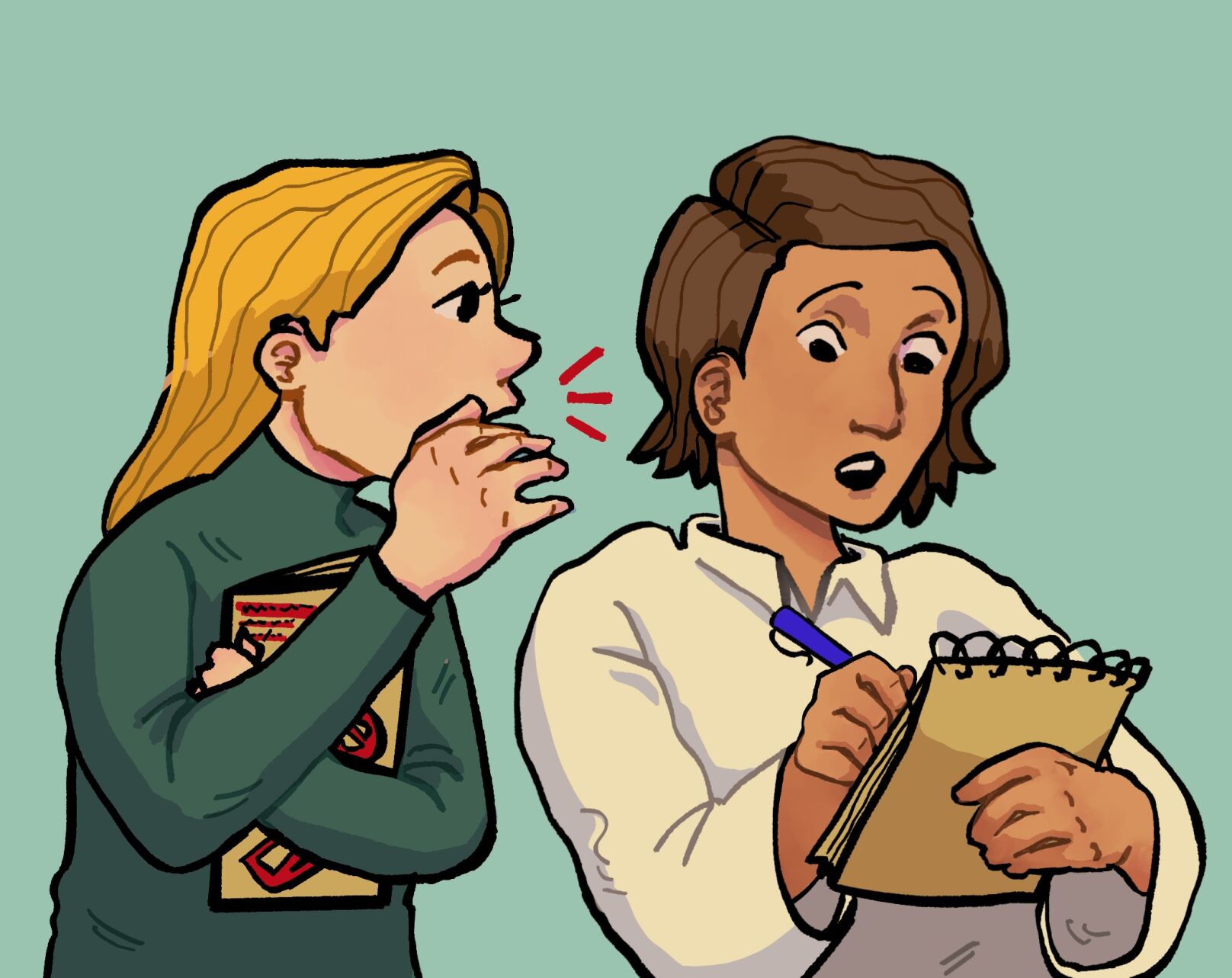
People should never feel ashamed for speaking up for what is right. However, in many companies and government agencies, some feel pressured to conceal the truth from the public. Many of those who challenge authority are unaware of the ramifications they could face when they leak information, leading them to isolate from society or face mental health challenges.
Chloe Wang, a 16-year-old student from Homestead High School, said mental health has been a big part of her life. Wang witnessed many peers and family members struggle with anxiety and depression.
After losing a close friend, she soon realized how big of an issue the mental health crisis was and how it is a topic no one wants to talk about. After the incident, Wang looked to her passion for coding to find solutions for suicide. Wang later entered a hackathon contest and won with a new prevention model.
“The rate of innovation of suicide prevention seems to have slowed,” Wang said. “That’s when I kind of started to teach myself how to code because I want to look into noninvasive solutions, and hopefully be able to contribute to designs or solutions for the crisis. The first kind of breakthrough I had was at the Neurotech International Hackathon where I proposed a human-centered design for suicide detection and prevention, and I won. And I thought that was inspiring, because this was a hackathon for collegiate engineers from top universities, so I was really surprised, but that’s kind of the first big step for me.”

Wang continued experimenting with mental health solutions in a lab but found the topic of whistleblowers to have struck her after learning about their importance in society. She began to watch a lot of documentaries about them and investigated why their death toll with suicide was higher compared to other populations.
“Whistleblowers are the heroes that are essentially trying to create a sustainable future and for them to be taking their own lives because they don’t have the right support or they’re facing psychological barriers,” Wang said. “That’s something that I knew I had to fix, especially with climate whistleblowers. They’re the people that are exposing this conduct, and that’s important to me. So, I realized that I had to do something about that, and I started brainstorming technological solutions.”
Wang found the best way to help whistleblowers was to share their stories. Wang wants to empower people to live in a sustainable future where they don’t have to feel alone and ostracized for doing what is right. Wang said she had a conversation with Tyler Schultz, a whistleblower with Theranos who exposed the company’s fraudulent practices, where she learned about the backlash he faced when he spoke out.
“A lot of them struggle to reach out for help,” Wang said. “They usually just keep to themselves until it’s too much, and that’s kind of where their mental health issues stem from. I think one of the hardest parts is just even stepping up. That’s one of the biggest barriers.”
Wang said the most important thing for young people and people in the workforce is to educate themselves on how to be empowered by whistleblowers and support them even when it is not the popular thing to do. Wang says through her work – and what she hopes to plan on doing in the future – is to advocate for people who want to be part of change and to make fact-based informed decisions when speaking about sensitive subjects.
“I hope as a society, we can foster that environment and ecosystem that they feel comfortable speaking up in,” Wang said. “We need to empower whistleblowers because they are the change that we need, and I hope that, just as a society, we can foster that environment for them.”
Wang also hopes to encourage girls to find jobs in the STEM field and find solutions to everyday needs. She said she does not want girls to shy away from transformative jobs thinking they don’t belong because they feel discriminated against or the minority. Even in her STEM courses at school, there is a significantly smaller number of females in the class.
“I want to create a society where all girls will be able to grow up believing that no paths are closed off for them simply because they’re girls, where we shouldn’t be considered anomalies in whatever we pursue,” Wang said. “Society still has a long way to go in addressing this dream gap, but I believe we can progress collectively. Our voices are our gifts to catalyze positive change, and we should empower one another to speak up for these marginalized topics.”
To learn more about Wang’s work, visit tinyurl.com/3b968ukp.