By Kaitlyn Huang
Town Crier Editorial Intern
I
t all started when Los Altos Hills native Russell Yang began helping his grandparents with technology.
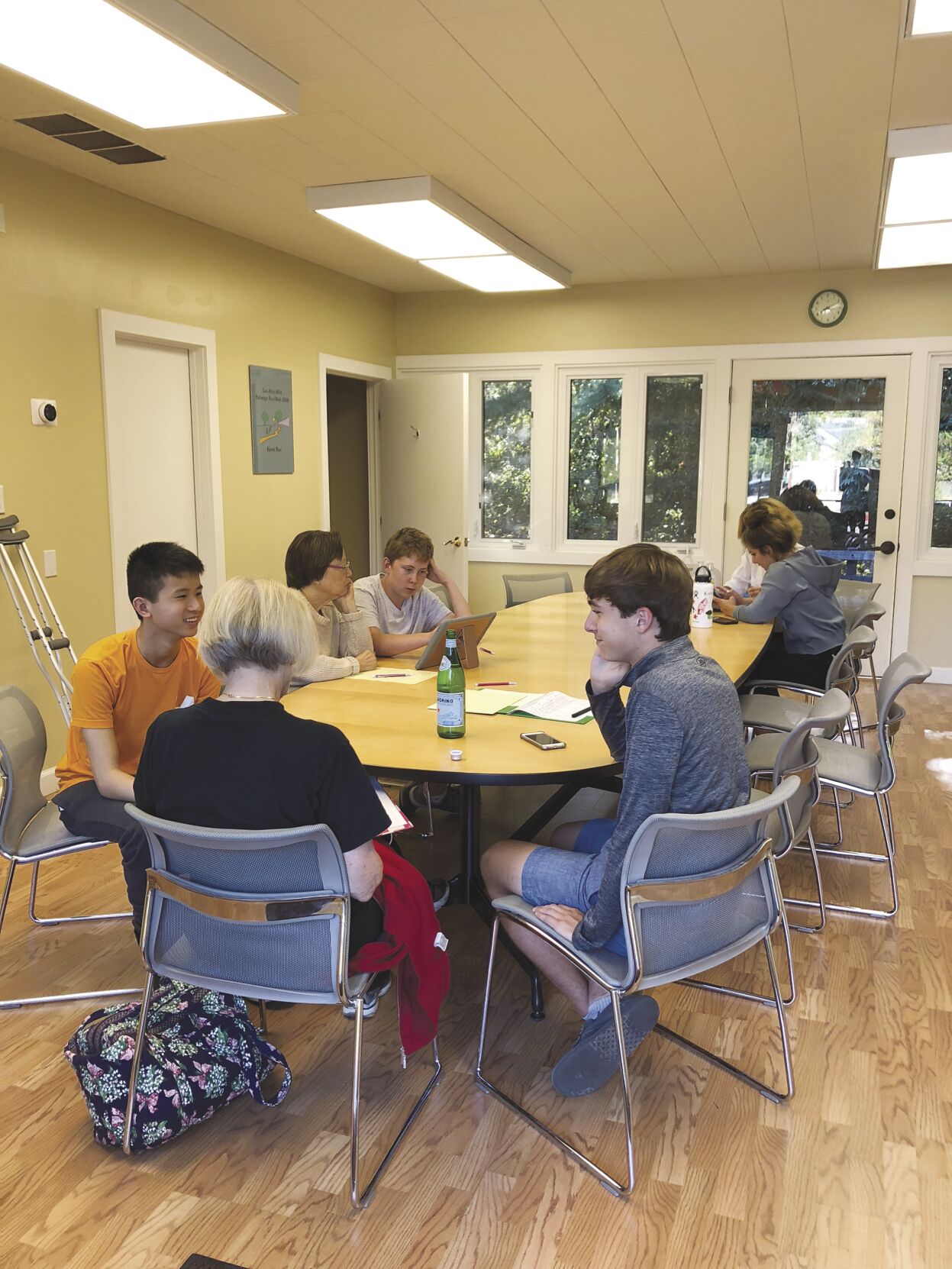
Years later, in 2018, the Harker School student and a group of high school volunteers began answering seniors’ technology questions under the organization Engage STEM at the Los Altos Hills Parks and Recreation building.
The next year, Engage STEM became a student-run nonprofit that, at its peak, had 43 chapters nationally and abroad.
“Engage STEM really arose from me looking at my community’s needs and the people around me, and the ways in which I might be able to help them,” said Yang, now a sophomore at Yale University.
This year, however, Engage STEM is slated to dissolve. According to Yang, he no longer has enough time to run the group.
From its founding to its dissolution, Engage STEM offered free programs such as Tech Literacy for Seniors workshops and STEM outreach programs for middle and high school students. Over the years, with support from the Hershey Foundation’s Heartwarming Project Action Grants and MIT AgeLab, the programs impacted thousands of youth and older adults.
Yang led the first senior tech workshop in the Los Altos Hills chapter, which provided free technology help for
seniors.
“Being able to use FaceTime or just being able to call or text really were instrumental in helping a lot of our participants be able to connect with
their loved ones and connect with their communities,” he said.
Los Altos resident Nancy Franich, who attended Yang’s workshop, said the one-on-one system – with one high school volunteer paired with one older adult – “seal(ed) the deal” for her, because unlike group classes offered by companies such as Apple, the tech help was more personal.
“That was what was really nice – to have someone young, who knew what all these things were,” said Franich, who teaches aerobics.
She added that Engage STEM made a lasting impact on her technology use. For instance, during the height of the pandemic, when Franich moved all of her aerobics classes online, Yang made an instructional video for Franich’s students on using Zoom video calling.
“Not all of us are really adept at using a computer, and he made it step by step, as if he were sitting next to you,” she said. “Three years from the time we started, we’re all used to using Zoom.”
Strengthening bonds
The workshops also had a lasting impact on the chapter presidents leading them.
“It has been a transformative experience, where these high school students are able
to get really hands-on in terms of leading an organization (and) serving their community, but also being responsible for a lot of the administrative and logistical things that they might not otherwise have had a chance to explore just by volunteering with an organization,” Yang said.
Ultimately, Yang noted that the program’s most important accomplishment was the “intangible” aspect of creating intergenerational friendships between older adults and high school students. He recalled that after sessions, some high schoolers would often stay back and chat with the seniors, or go through photos together.
“It was really cute seeing those kinds of bonds being formed,” he said.
Yang added that fostering intergenerational bonds is important, because while youth can provide certain knowledge that can “contribute toward the livelihoods and quality of life of older people,” he believes that “young people also have a lot to gain” from older individuals.
In addition to senior technology help, Engage STEM also offered chapters specializing in STEM outreach.
Promoting equity
Chapter president and director Hilary Le founded her San Jose/Morgan Hill chapter in 2020 after she noticed something strange while researching public school funding for an English essay.
“Ninth-grade me was shocked to read about the disparities and inequalities in the education system,” Le said. “So, when I had the chance to do something, I decided to focus my chapter on finding ways to support students without all the resources.”
As a result, Le and her chapter offered free, online, one-on-one tutoring for math, as well as classes in coding, biology and physics tailored toward youth from kindergarten through eighth grade.
“I loved seeing all the students asking questions about the lessons, and developing interests in different subjects and topics in a way that is different than a traditional school environment,” said Le, who is now a freshman in college.
Le said the most rewarding aspect of leading the chapter came from witnessing parents sign their children up for classes again.
“I just think it’s heartwarming that parents continue to come back and support our organization as we support their children in education,” she said.
For the duration of the chapter’s operation, more than 1,000 youth attended the programs.
Le emphasized the importance of accessible education in “giv(ing) kids a chance to learn.”
“Giving kids the resources like different classes or programs is super important for them to find their interests in whatever it might be,” she added – without the monetar
factor.
As the Engage STEM era ends, Yang advises high schoolers seeking to make an impact in their communities to “reach into their communities and try to understand: What are the needs? – and what they might have to offer in order to meet those needs.”
For more information, visit engagestem.org.