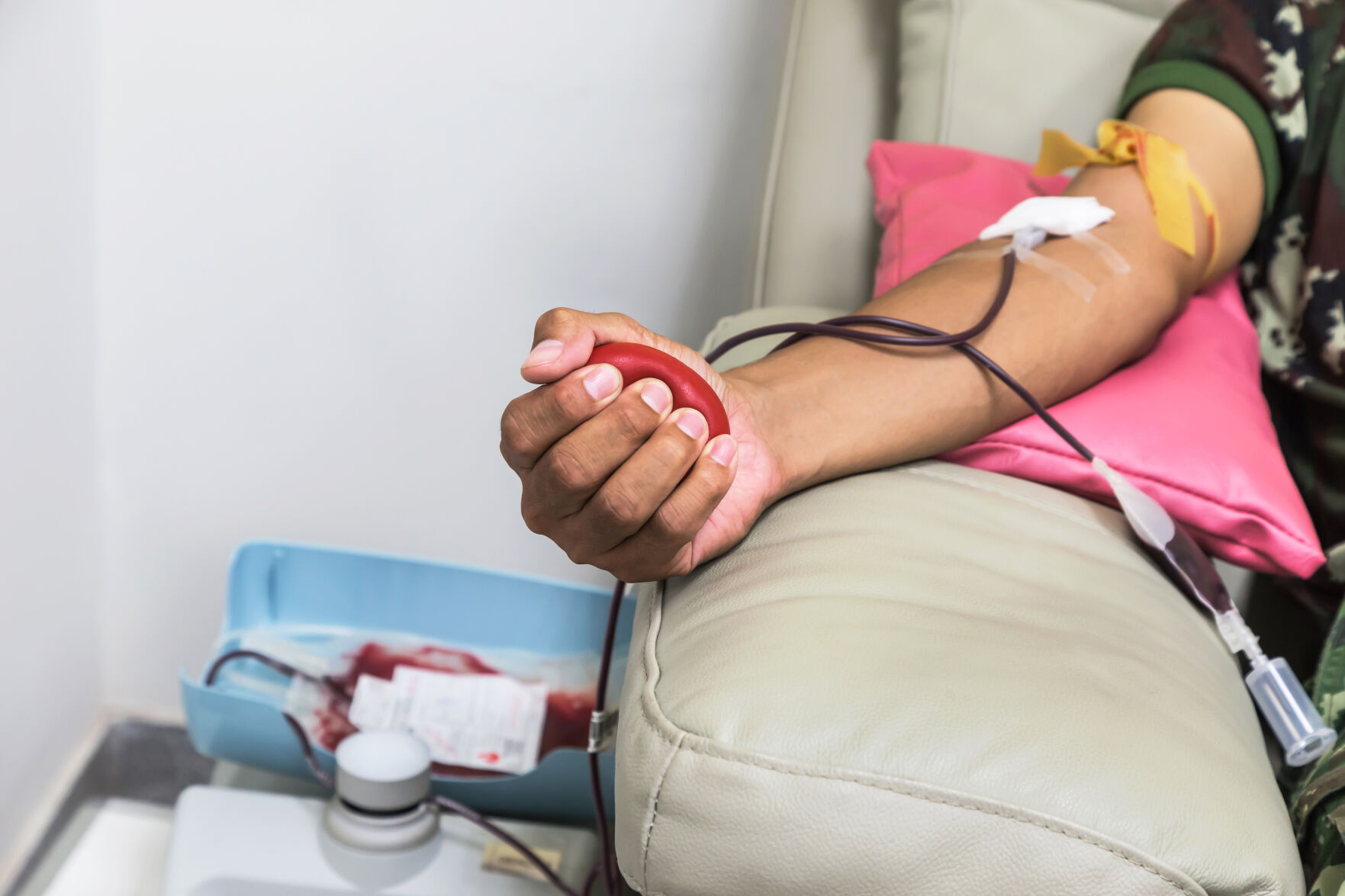
Plasma donation is an impactful, meaningful way to give back to the community this summer. By donating plasma, you can help people like Machelle Pecoraro.
Pecoraro lives with Hereditary Angioedema (HAE), a rare disease that can cause attacks of swelling, and often pain, in specific parts of the body, including the stomach, hands, feet, arms, legs, genitals, throat and face. Like with many serious and rare diseases, the therapies used to treat HAE require human plasma donations.
“Plasma donors directly impact my ability to live a full and productive life,” Pecoraro said. “Therapies made from these donations allow me and my son, who also lives with HAE, to receive ongoing treatment for our conditions.”
Plasma, a straw-colored liquid that carries red blood cells, white blood cells and platelets, helps maintain a steady level of blood pressure, supports the immune system and delivers critical nutrients to cells.
Plasma donations are used to replace crucial proteins people living with rare and serious diseases lack, and to produce therapies that treat diseases such as primary immune deficiencies, hereditary angioedema, hemophilia, Alpha-1 Antitrypsin deficiency and various bleeding and neurological disorders.
There is a critical and ongoing need for plasma donations, as these life-saving medicines treat people in more than 100 countries around the world. Every year, it takes more than 1,200 plasma donations to treat one hemophilia patient, more than 900 plasma donations to treat one Alpha-1 patient and more than 130 plasma donations to treat one primary immune deficiency patient.
“Plasma donors do the amazing, as plasma is used to develop life-saving therapies for people living with rare and serious diseases,” said Rachpal Malhotra, M.D., head of plasma donor safety at CSL Plasma, which has locations in Hayward and Stockton. “We encourage those who can donate to visit a nearby CSL Plasma donation center.”
Eligible, qualified plasma donors also receive payments in connection with donating plasma.
To donate, individuals must be in good health, between the ages of 18 and 74, weigh at least 110 pounds and have had no tattoos or piercings within the past four months. Donors must also meet the health and screening requirements and have valid identification with a permanent address.
The collection process takes approximately 90 minutes after the first donation.
Donors should drink four to six 8-ounce glasses of water, fruit juice or other caffeine-free liquid at least two to three hours before donation, avoid caffeinated beverages, avoid alcohol of any type for 24 hours beforehand, eat a meal prior to donation and get adequate sleep.
“I thank all donors and encourage anyone who is considering donating to remember that doing so does make an impact for people like me and my son,” Pecoraro said.
For more information on plasma donation, visit cslplasma.com.