The first time I tried making asparagus for a spring brunch, I picked Easter, and then played that trick of putting too little water in the steamer. We ended up with something that even the addition of a few grains of hickory-smoked salt wouldn’t allow me to pass off as a deliberately smoked asparagus creation – some new hit in the culinary world. Despite my blunder, I maintain that asparagus is ideal for a springtime brunch menu. The first reason is seasonal – asparagus reaches its prime in March and April.
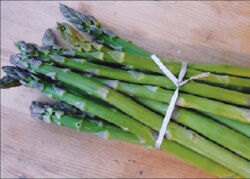
Tidy bundles of its fresh green spears call to us from farmers’ market stalls and produce displays just as we’re enjoying the profusion of new growth outdoors. Botanically, asparagus belongs to the lily family, and is thus a close cousin to that sturdy white blossom that epitomizes the springtime ideals of purity and rebirth. Culinary affinities tie asparagus closely to the second great springtime symbol of new life, the egg. Asparagus is a wonderful companion to any egg dish – from omelets and scrambled eggs to quiches and savory tarts, which have eggs for their base. Eggs form the base of Hollandaise sauce, which adds a luxurious touch when ribboned across asparagus spears. When making a solo appearance, asparagus is simple and elegant in shape, with its long lines and delicate, ornate curling bud tips. Until the 19th century, it was known in England as “sparrow grass,” as though it were the simplest, most ordinary thing in the world. But it has also long been associated with sophisticated cuisine. The French Sun King, Louis XIV, reportedly had a fondness for the vegetable, and the “potager du roi” (the Kitchen Garden of the King) at the Palace of Versailles was not without its forced asparagus plot from September onward. Asparagus’ whimsical shape makes it the subject of esoteric plate compositions. Its finicky growing patterns (it’s only viably productive in its third year and then only for a few growing seasons) and general fragility once harvested drive high the market price. White asparagus, painstakingly “earthed up” so the shoots are deprived of sunlight and stay pale, is a delicacy in Belgium, Germany and parts of France. Still, should the king himself demand asparagus at his most elegant feast, cooking methods should remain simple. It is at its best when boiled or steamed very briefly, lest it become mushy and lose its vibrant color. The most basic French recipe calls for asparagus shoots to be plunged briefly in salted boiling water, then folded with butter while they’re still sending up tendrils of steam. It can also be served cold with vinaigrette. Grilling adds a wonderful smoky flavor. In his book, “How to Pick a Peach: The Search for Flavor from Farm to Table” (Mariner Books, 2008), Russ Parsons recommends refrigerating the spears upright in a container of water like cut flowers, and draping them with a plastic bag. This method respects their need for moisture, but also offers a wonderfully seasonal vision: asparagus bunches as bouquets of springtime flowers. Eve Hill-Agnus teaches English and journalism and is a freelance writer. Her interest in specialty pastries is influenced by her French roots. Contact her at [email protected].