There are many highlights of my Peru and Ecuador trip this summer. Among them: The alpacas roaming on the ancient ruins of Machu Picchu; the ceremonial feast of Pachamanca at an Ollantaytambo organic farm in the Sacred Valley; the festive parade with marching band and fireworks celebrating Fiestas Patrias at the town center of Aguas Calientes.
Cusco in Peru and Quito in Ecuador stand out artistically as two historic Andean capitals immersed in thousands of years of history.
From the flutter of prayer flags in Cusco’s San Blas to Quito’s iconic opulent golden church La Compañía, art, embodying indigenous roots and colonial influences, is woven into daily life.
Traveling through Cusco and Quito offers an immersion into the artistic souls of the Andean region. Both are UNESCO World Heritage sites like living museums, with shared historic foundations showcasing Andea Catholicism combining pre-Columbian indigenous traditions and Spanish Colonial influences.
Prolific art by the Cusco School possesses a unique artistic style that fuses the European artistic techniques, such as oil painting, with the indigenous Andean styles and subjects. A famous painting of the Last Supper at the Cusco Cathedral, created in 1753 by Marcos Zapata, depicts a roasted guinea pig (a local delicacy) on the table instead of the traditional European Paschal lamb or a platter.
Similarly, Syncretism is the soul of the Quito School of Art, assimilating Spanish, Italian, Moorish, Flemish and indigenous art with inherent cultural references such as Andean flora, fauna and cosmological symbols.
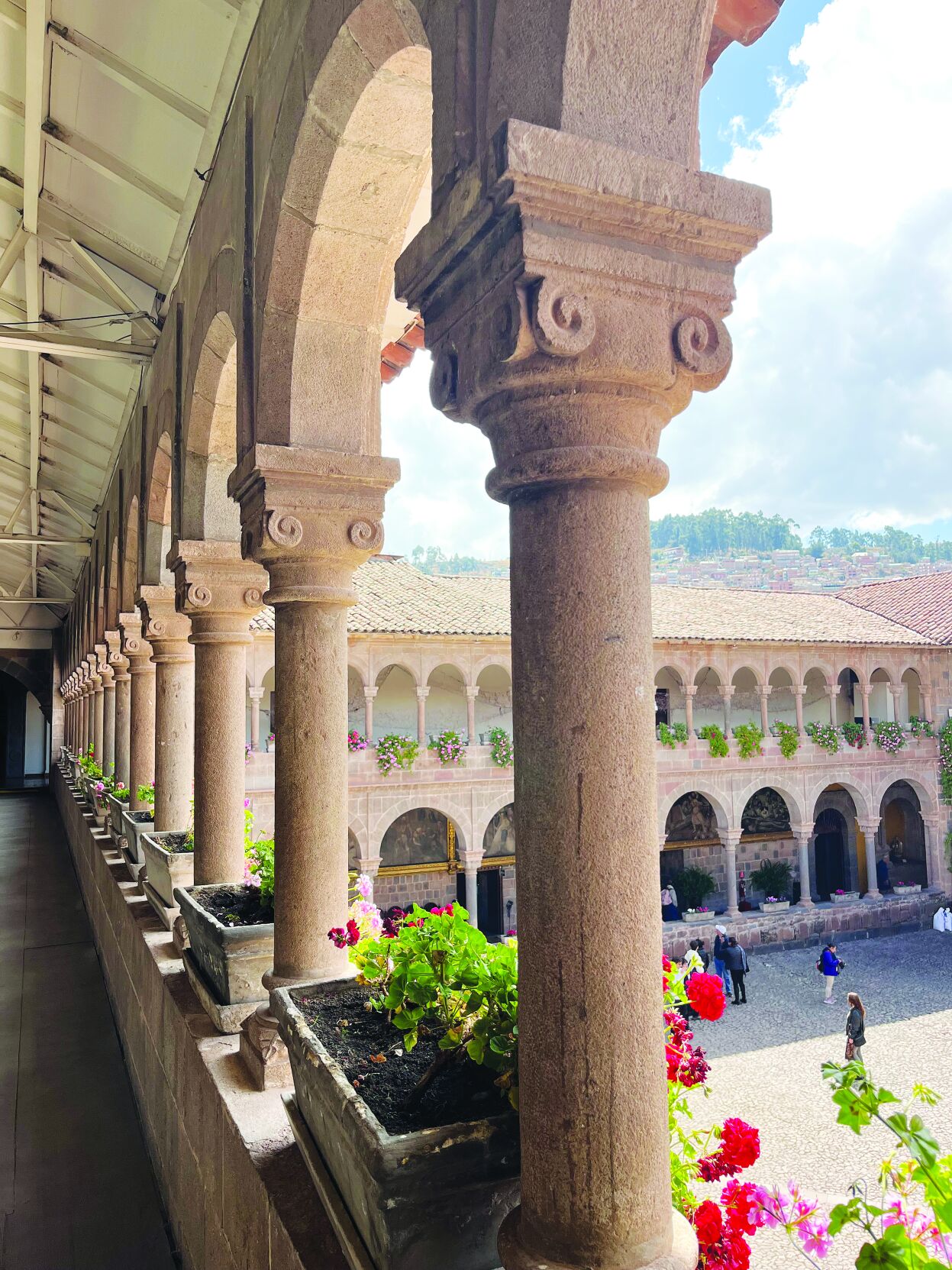
Stones tell stories. Cusco, the culture capital of the Inca Empire, has a distinctive Andean Baroque style in its architecture showcasing in numerous churches adorned in elaborate and rich decoration intervened with indigenous influence.
I spent hours visiting artwork and the bell tower at the Church and Covenant of Santo Domingo, which was built on the ruins of Inca Temple Qorikancha with a distinctive mix of Inca stonework and colonial architecture style.
In the old town of Quito, the Crown of Andes, Baroque genius permeates gilded Jesuit churches showcasing exuberant ornamentation and fusion of styles mixing in indigenous symbols.
It was awe-inspiring to walk through lavishly carved facades of volcanic stones and gaze up at the dome of La Compañía Church, marveling at its combination of Christian and Islamic artistic elements, particularly visible in the geometric designs and intricate patterns.
Outside the grandeur of the magnificent historic architecture, streets, neighborhoods and town squares are full of living traditions infused with community art and indigenous crafts.
Textiles using Quechua weaving features like pallay, weave in messages and stories depicting natural subjects such as lakes, flowers, birds, llamas and heroic figures like Tupac Amaru in vibrant colors.
Cusco’s ceramics featuring Inca motifs, local flora and fauna, deities and sacred animals like condors and pumas, made for both everyday and ceremonial uses.
Quito boasts several vibrant artisan hubs such as San Antonio de Ibarra, which is particularly well-known for its exceptional wood artisans carving distinctive saint figures.
Both Cusco and Quito have a contemporary edge in its street art, demonstrating identity, history and resilience. Cusco’s San Blas artisan neighborhood blends ancient Inca heritage with vibrant Bohemian energy. Its muralism is a newer addition; murals are framed by colonial-styled blue-trimmed houses, showcasing Andean motifs, Quechua identity, Incan cosmology and contemporary local themes.
Quito’s street art scene exemplifies in its La Floresta neighborhood where colorful murals are everywhere, exploring Ecuadorian identity reflecting both local heritage and global influences.
From stones of the Inca Empire to the crown of Andes, Cusco and Quito are two South American cultural capitals with distinctive artistic identities uniquely blending indigenous traditions with colonial influences. They are true pleasures to visit and explore.
Duanni Hurd is a Los Altos resident and Town Crier contributor.