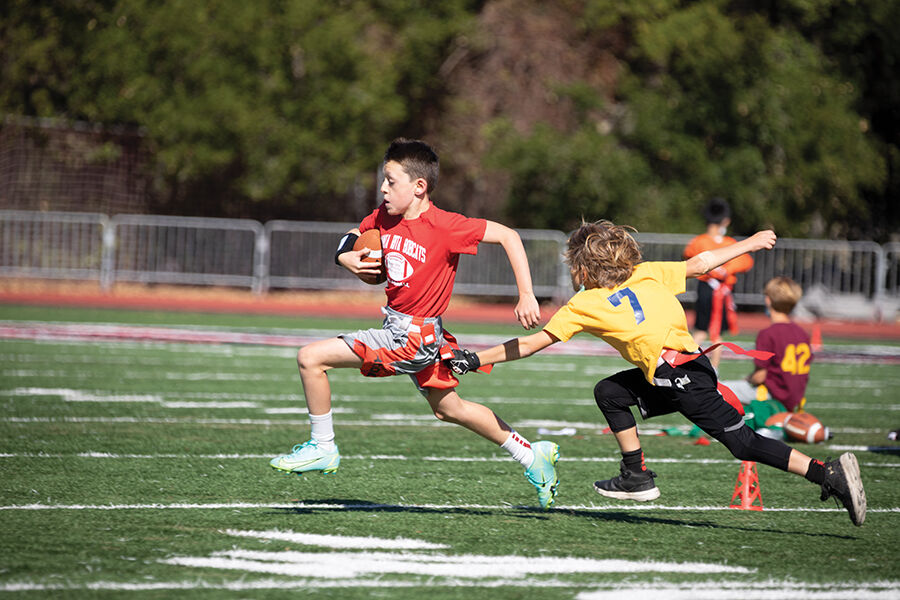
Parents play a major role in empowering their children to achieve athletic success.
Interestingly, research published in the Journal of Sport Sciences shows that family members impact an athlete’s achievement as much as their coaches. This influence obliges parents to be mindful of the extent to which their behavior affects the student-athlete.
Additionally, it is important that parents practice responsible behavior, as their actions are frequently mirrored by their children. When student-athletes observe their parents involved in their sport in a positive way, their chances of having an enjoyable sports experience dramatically increase, as do their levels of athletic performance, according to a study published in Psychology of Sport and Exercise.
A child’s athletic success is strongly influenced by parents expressing encouragement. Not only is athletic competence increased by parental praise, but the child’s enjoyment and motivation to stay with the sport is enhanced. In sports, encouragement is a powerful gift parents can give their child.
While encouragement enhances athletic success, parents also can assist their children in coping with inevitable athletic adversity. Starting with themselves, parents should be mindful of how they react to frustration stemming from an athletic loss. Expressions of disappointment are reasonable, but succumbing to emotions that produce excessive verbal outbursts denouncing the referee or criticizing the coach is not productive. Such an excessive reaction signals to the child that this behavior is acceptable. Parents are role models and must keep in mind that responsible and irresponsible behavior affect their children’s relationship to the sport.
In fact, a conscientious parent will attempt to promote a positive interaction with coaches. If a parent’s interaction with coaches is respectful, so likely will be the actions of the child.
Another valuable lesson is communicating with the child not to lose heart in the face of a painful loss. When confronted with a heartbreaking defeat, the best reaction a parent can have is to acknowledge and praise the child’s effort following the loss. A parent supports his or her child with advice not to lose heart in the face of a painful loss. The effort exerted before and during the competition and the lessons learned in victory and defeat can be skillfully applied in the future and define the true character of an athlete.
In addition to offering encoura-gement and constructive behavior, it is helpful for parents to create an opportunity for their children to participate in a healthy athletic group environment. This provides the basis for children to experience the benefits of working together to achieve a common goal. The child’s joy is intensified as the group develops and demonstrates heightened athletic proficiency.
Ensuring that children have the opportunity to work closely with others to achieve a mutual goal is a special gift a parent can share.
A child’s athletic competition has a payoff for parents, too. Time spent
watching their child compete is thrilling. Cheering loudly is exhilarating. The social aspect of interacting with other parents is a positive.
But maybe the biggest benefit a parent can have with their child is the chance to interact on a subject of intense mutual interest. Frequently, interactions between parents and children center on parental authority. But with athletic activity, the playing field is nearly leveled. When the conversation turns to athletic competition, the child may be even more knowledgeable.
Behavior parents should avoid
It is important not to be an unrealistic, lofty appraiser of your children’s athletic ability and to be aware of their strengths and weaknesses. Be tactful; refrain from giving inappropriate critical observations. Such callousness may damage relationships and can diminish a child’s enthusiasm for the sport and result in excessive levels of anxiety in the child. In some cases, student-athletes may actually quit the sport completely.
In fact, lowering parental pressure may result in increased enjoyment from the sport, reports the Journal of Sports Sciences.
Additionally, coaches report that parents who crudely interject themselves in the athletic lives of their children create tension for coaches and poor sportsmanship skills in the child, according to a study published in The Journal of Psychology.
Being a role model
In athletics, it is crucial that parents are mindful of the formidable role they assume. Young athletes look to their parents as role models and mirror their parents’ behavior, especially in a sports environment.
Responsible parents offer heartfelt encouragement, as it pays large dividends in performance and other aspects of their children’s well-being.
A role-model parent refrains from excessive emotional outbursts when disappointment strikes, as this destructive behavior likely may be copied and result in poor outcome and performance for the student-athlete.
Accountable parents allows coaches to do their jobs without interfering, demonstrating to their children a respect for knowledgeable authority.
Reliable parents know they played a part in providing their children the opportunity to experience self-growth through group participation and the joy of being part of a high-achieving team.
Parents also benefit from positive behavior and healthy support of their children. Through these recommendations, parents can provide their children an opportunity to experience joy and accomplishment through sports.
Danielle Kamis, M.D., is a lifestyle psychiatrist who treats patients in her private practice in Los Altos. She specializes in the treatment of sleep problems, women’s wellness and athletes, as well as practices cognitive behavioral therapy.
For more information, email [email protected] or visit kamismd.com.